A show that serves a visual feast and food for thought
The Hindu
Experience "Yela Oota" by Vishwakiran Nambi Dance Company at RVF, a captivating blend of folk and contemporary dance exploring food insecurity.
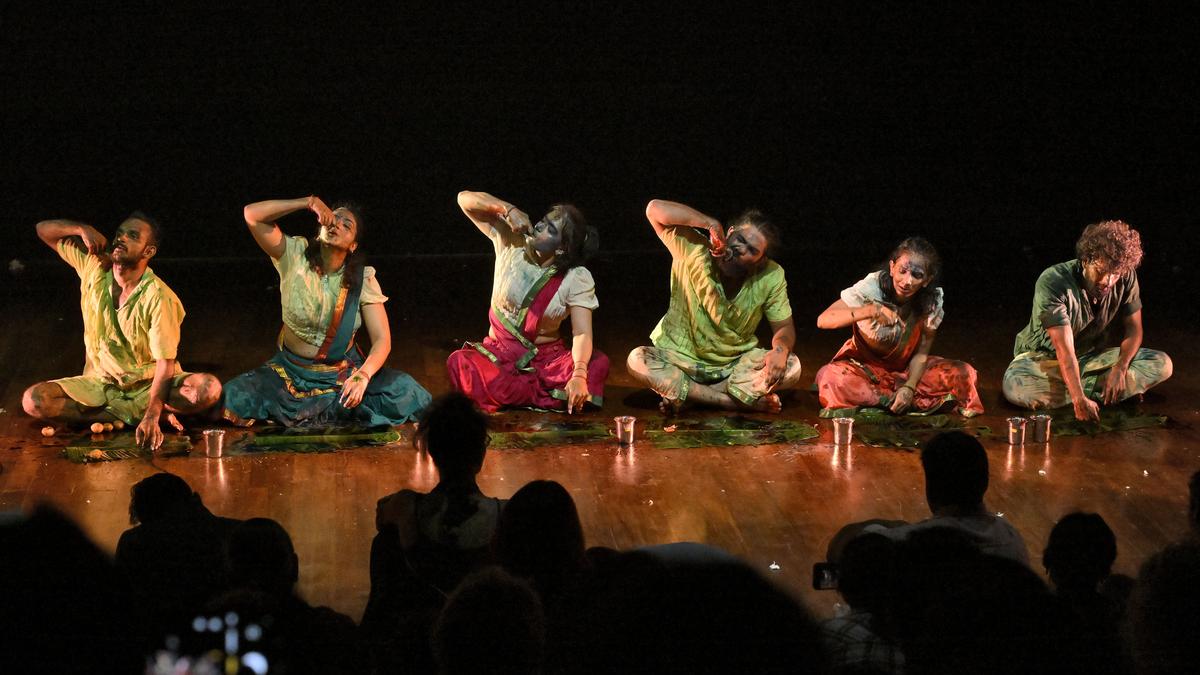
Even as it forged connections with the heartbeat of the agrarian lifecycle, “Yele Oota”, a production of Bengaluru-based Vishwakiran Nambi Dance Company, trained the spotlight on food insecurity and the access gap in basic nutrition, in a show that blended folk rhythms and contemporary dance movements at the 11th Remembering Veenapani Festival (RVF), hosted by Adishakti
“Yela Oota”, (which in Kannada stands for grand meal served on a plantain leaf), is both a feast for the eyes and food for thought, as it explores humanity’s primal relationship with food through a choreographic juxtaposition of the polarities of affluence and abundance (perhaps even wastage) on the one side and hunger and deprivation on the other.
The seven-piece ensemble of men and women artistes in traditional agrarian attire, alternate between movements of a balletic grace and bursts of raw energy; a syncretic amalgam of synchronous dance moves, rolls and slides across the stage floor.
The action progresses against the backdrop of Gopu Krishnan’s medley musical arrangement — folk melody, heavy bass guitar riffs, percussion, even a couple of sloka utterances centred on the philosophical tradition of regarding food as the ultimate truth.
The hybrid of styles is hardly surprising given that the training background of the artistes — Shrijani Rao, Kalpana Devaprasad, Thejas Kumar, Priyanka Saxena, Junafar and Dinesh Kumar — are as varied as the classical, contemporary and the aerialist genres.
As the troupe founder-choreographer Vishwakiran Nambi would say later, the project was originally inspired by the idea of a community feast that everyone partakes in together irrespective of caste or creed. The project, initiated in 2019 was interrupted by the COVID-19 pandemic, and the experiences of that difficult period also set off a change in course, thematically speaking, he adds.
“What we noticed during the pandemic was the conspicuous discrepancy in the distribution of food...such inequality of access to a basic need”.


The government plans to amend the FCRA, introducing new regulations for NGO asset management and accountability for key functionaries.

The draft policy for “Responsible Digital Use Among Students”, released on Monday by the Department of Health and Family Welfare, has recommended that parents set structured routines with clear screen-time rules and prioritise privacy, safety, and open conversation with children on digital well-being.

Police Observer Sushant Kumar Saxena conducts surprise inspection at Shencottai police station, reviewing warrants and security arrangements ahead of elections.

Andhra Pradesh government to launch key projects in April, focusing on industrial growth and infrastructure development, says Nara Lokesh.

Lok Sabha refers the Corporate Laws (Amendment) Bill to a JPC amid opposition concerns over CSR provisions dilution.

SHG members in Kanniyakumari use snakes and ladders to raise election awareness and boost voter turnout.

Government accelerates consultations for early implementation of the Women’s Reservation Act to ensure women’s representation in 2029 elections.

CM A. Revanth Reddy distributes ₹1 crore insurance cheques to families of deceased Electricity department employees, enhancing financial security for workers.

The Bengaluru Traffic Police (BTP) registered 634 cases of drunk driving during a week-long special enforcement drive conducted across the city between March 16 and March 22.

GHMC intensifies action against property tax defaulters, seizing properties and offering a One Time Settlement scheme for payments.

CCB arrests three drug peddlers in Mangaluru, seizing ₹2.5 lakh worth of MDMA and other valuables.

TVK's 28 candidates in Puducherry include former BJP MLAs, a sitting Independent, and a retired police IG.

BRS submits notice on private member bill to Speaker