A separate classification for denotified tribes | Explained
The Hindu
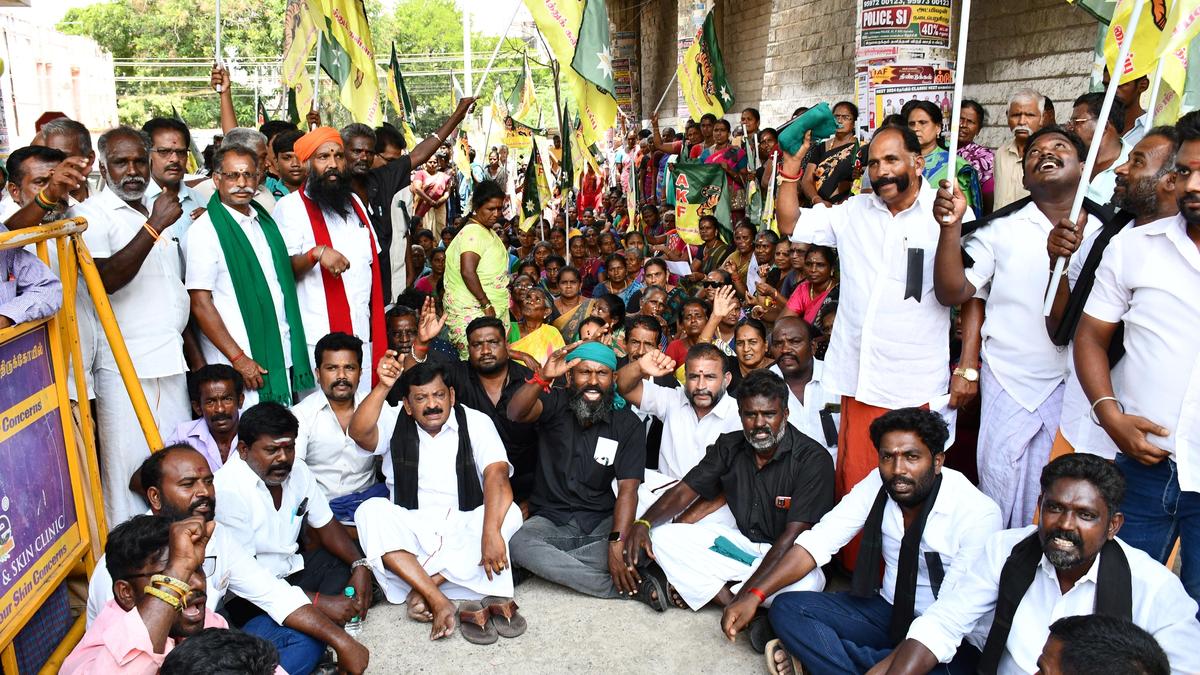
Community leaders advocate for a separate classification of Denotified, Nomadic, and Semi-Nomadic Tribes in India's upcoming Census.
The story so far:
On January 30, the Union government assured community leaders from Denotified, Nomadic, and Semi-Nomadic Tribes (DNTs) that the Office of the Registrar General and Census Commissioner of India had agreed to enumerate these communities in the upcoming second phase of the Census due in 2027. However, with no clarity on how this enumeration will be conducted, leaders of these communities are organising to push for their demand for a “separate column” for DNTs in the Census form. This demand has found support from academics and scholars, who have noted that the demand for a Census count of DNTs has been reiterated time and again by successive Commissions that have been set up to examine their condition in society.
The communities referred to as denotified, nomadic, and semi-nomadic tribes were, at one point, classified as “criminal” by colonial administrators, who had concluded that there were certain communities “addicted” to committing crimes. This was codified in the Criminal Tribes Act (CTA), first introduced in 1871, the same year that synchronous Censuses began in India.
The CTA, 1871, was introduced for the “registration, surveillance and control of certain criminal tribes and eunuchs”, describing “criminal tribes” as a “tribe, gang, or class of persons” that are “addicted” to committing non-bailable offences. While introducing the legislation, then Member of Law and Order, T.V. Stephens had said that, “the special feature of India is the caste system... Keeping this in mind, the meaning of professional criminal is clear. It means a tribe whose ancestors were criminals from times immemorial, who are themselves destined by the usages of caste to commit crime and whose descendants will be offenders against law...”
It was only in 1952, that the Government of India officially repealed the CTA, which had by that time been amended a couple of times. The repeal of the Act had led to the denotification of communities classified as “criminal” under the CTA, leading to these groups becoming known as the DNTs.
However, in the same year, India saw the introduction of various habitual offender laws throughout the States, which, while doing away with the hereditary definition of people being compelled to commit crimes, classified certain people as “habitual offenders”, leading to the continued targeting of these communities — this time not as “criminal” but as “habitual offenders”.


U.S. Ambassador Sergio Gor emphasizes the strengthening Indo-U.S. defense partnership crucial for a secure Indo-Pacific region.

Bihar Congress trains observers to strengthen its organization amid ongoing delays in naming a legislature party leader.

BJP demands Priyank Kharge's apology for negatively portraying the coastal belt and making communal allegations against the party.

Over 175 people, mainly children, fell ill from food poisoning at a Jharkhand fair celebrating Mahashivratri.

Maharashtra's new task force aims to tackle climate change and prevent farmer suicides through integrated solutions and support systems.

New Bangladesh government to take oath today; full Cabinet and Ministers’ portfolios in Manipur will be decided soon, says dept. CM, and more in Morning Digest on February 17, 2026.

Join space pioneers Rakesh Sharma and Shubhanshu Shukla at Mumbai Climate Week 2026 to address urgent climate action.

National conference on AI and veterinary medicine in Chennai gathers over 130 delegates to explore emerging trends and technologies.

Mani Shankar Aiyar asserts M.K. Stalin can unite the INDIA bloc to support Rahul Gandhi's bid for Prime Minister.

Karnataka BJP leaders criticize Priyank Kharge for attacking RSS, claiming it's an attempt to gain favor with Congress leadership.

67% of Chennai Metro Rail's phase II stretch is complete, set to open in June, enhancing connectivity between networks.

Odisha government to catalogue Shree Jagannath Temple's jewellery inventory after HC directive, ensuring transparency and security.

Delhi L-G and CM inaugurate a multi-level parking facility in Nehru Place to ease congestion and enhance urban infrastructure.