5 years on from COVID, what's changed and what hasn't in P.E.I.'s long-term care homes?
CBC
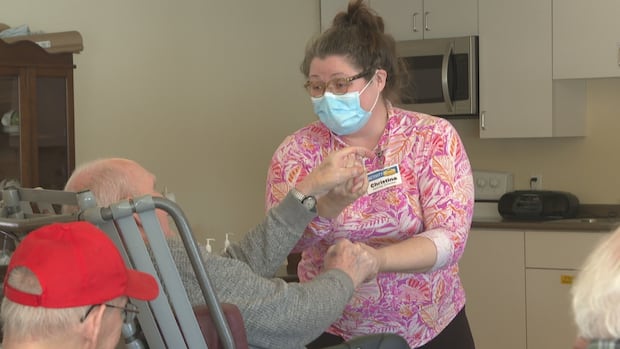
It's a lively March day at the Dr. John M. Gillis Memorial Lodge in Belfast, P.E.I., as residents tap their feet and sing along with a guitarist performing The Black Velvet Band in a common room.
Gatherings like this were banned five years ago.
COVID-19 was spreading, and provincial officials were scrambling to control it. There were a lot of unknowns for those living and working in places like long-term care homes, given how deadly the disease was proving to be for people with compromised immunity elsewhere in Canada and around the world.
"When the global pandemic was going on, a lot of people here didn't realize that was happening on the outside. They started to think that maybe they had done something wrong and that their families weren't coming to visit them anymore," said Christina Linton, the activities director at Gillis Lodge.
"In long-term care, the staff is often like family members to the residents, but during COVID-19 we literally were their family members."
It was March 9, 2020, when P.E.I. Chief Public Health Officer Dr. Heather Morrison stood on a podium and gave her first briefing on a new respiratory illness to a room full of reporters.
At that point, no pandemic had been declared, and there had been no COVID-19 cases in the province.
Things moved quite quickly after that, though.
By the following Saturday, March 13, the Island's first case of COVID was confirmed in a person who had recently returned from travel. The next day, the decision was made to close schools and daycares for a while.
Eventually, in an effort to control the virus's spread, long-term care homes like Gillis Lodge were locked down and family members were no longer allowed to visit.
At the end of that year, a geriatrician on P.E.I. questioned what impact the isolation was having on seniors, suggesting the health of many older Islanders — both those living at home and people in long-term care — had declined because of pandemic restrictions.
Linton and the rest of the Gillis Lodge staff saw the mental health struggles first-hand. They did what they could, hosting socially distanced holiday parties, organizing bingo in the hallways with the caller using a megaphone, and facilitating meetings with loved ones standing outside the windows.
"[Residents] struggled a little bit mental-health wise. We went from group activities to even having residents have to stay in their rooms because we didn't know how it spread," Linton said.
"With so much isolation, it really showed you how important community is and how important contact and socialization is to people."


The government of Saskatchewan has announced plans to reduce the length of non-resident game bird hunting licences to combat illegal guiding.

An 87-year-old Alberta man is fighting extradition to the United Kingdom to stand trial for historical allegations of physical and sexual assault involving minors.

Eight casinos across southwest B.C. have been sold to First Nations in the last two years, with the province's gambling scene set to be reshaped as a result.

Hamilton hosts the Junos Sunday, and the musical awards show is bringing tourists, musicians, concerts and a ton of themed events to the city this week.

The multi-million-dollar deal at the heart of a high-profile fight between the Canadian government and one of the world’s biggest carmakers contains multiple clauses about the company’s footprint in Ontario, according to a copy obtained by CBC Windsor.

In recent months, Calgary police have carried out three day-long safety blitzes, parading out dozens of officers to flood an area with their increased presence — at least, temporarily.

A national organization is seeking people with experience in Canada's forestry sector as they put together a working group that will examine ways to improve forest recovery following wildfires.

Ella Heyder is bracing for a breakup, even though she already moved out decades ago.

Shawne Hopkins never saw it coming.

Politicians return to Queen’s Park Monday for a shortened spring session, as Premier Doug Ford prepares to unveil his eight budget amid heightened global economic uncertainty.

Despite a recent announcement that a water supply pipeline will be build in Oneida Nation of the Thames, some members of the community say that's no excuse for taking water for granted.

As scandal has swirled around former prince Andrew Mountbatten-Windsor, questions and curiosity have also focused on his ex-wife, Sarah Ferguson, and their daughters, Princesses Beatrice and Eugenie.

Friday may have been the first day of spring, but winter storms are not over yet for Newfoundland.