Zoopharmacognosy: the study of how animals self-medicate Premium
The Hindu
Nature journal article explores animals' self-medication with plants for health benefits, influencing traditional medicine practices worldwide.
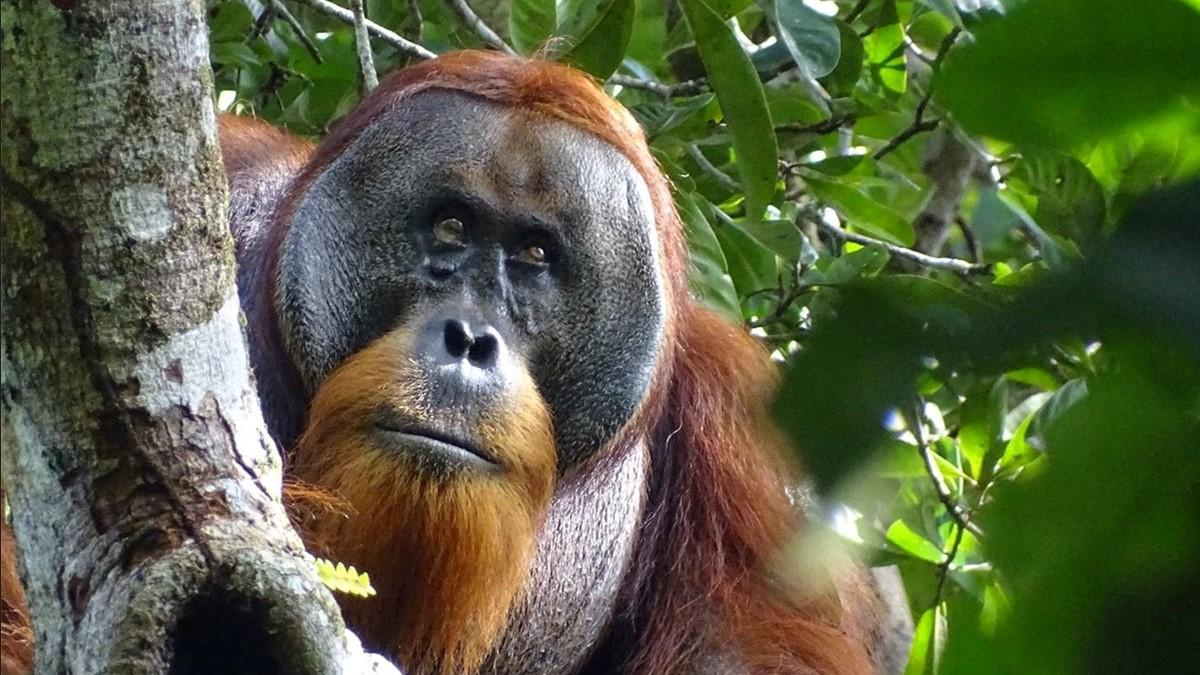
In the May 2, 2024, issue of the journal Nature, an article titled: ‘Active self-treatment of a facial wound with a biologically active plant by a male Sumatran orangutan’, Laumer et al. report on how this primate in Indonesia treats a wound on its face by making a paste of the local plant Fibraurea tinctoria, and applied it to the wound. A 2012 publication by Matt Kaplan in Nature, titled: ‘Neanderthals ate their greens’, analysed the dental plaque of some Neanderthals from Northern Spain, and found that they used plants such as yarrow and chamomile, to rid themselves of infections and for their general health.
Several such plants have been used by people across the world in traditional medicine, to overcome infections and for general health. The comprehensive review by R Raman and S Kandula in (Resonance, 245-253, March 2008) points out that the ecologist D H Janzen from the University of Pennsylvania, coined the term ‘zoopharmacognosy’, and was the first one to compile a list of animals that self-medicate by ingesting or topically applying specific plants, soil and insects. Besides offering essential molecules for metabolism and growth, these also offer disease treatment and protection from parasites. (‘zoo’ refers to animals, and pharmacognosy to the study of drugs and tonics for health). Dr E M Costa-Neto of Bahia, Brazil, in “Environmental Science, Biology” in 2012 titled: ‘Zoopharmacognosy: the self-medication behaviour of animals’, as also Joel Shurkin from Baltimore, in the Proceedings of the National Academy of Sciences have listed several plants and their roots, leaves and fruits that apes, monkeys, reindeer, bears and some birds (starlings) eat to stay healthy. Dogs medicate themselves by chewing grass and vomiting it to get rid of infections in the stomach. Pregnant lemurs nibble on tamarind leaves to aid milk production, and pregnant elephants in Kenya eat the leaves of some plants of the Boraginaceae family to induce delivery. The Roman natural historian Pliny pointed out 2,000 years ago that many animals had made medical discoveries from certain plants that they eat, which became useful knowledge for indigenous people. Many of these medicinal plants have been known for over 3,000 years in Africa, Egypt, Middle East, India and China, and are still used today.
The medicinal plant Fibrourea tinctoria that the Sumatran orangutan used for wound healing contains the anti-inflammatory molecule berberine. Called ‘Akar Kunyi’ locally, the plant is used in the traditional medical system there. And in the southern subtropical regions, its equivalent is called Oleander and is used as a curative for jaundice. The shrub aloe vera, which is found in India (where it is called ‘gwar patta’ in Hindi and ‘katrazhai’ in Tamil) and many parts of Asia and Africa, has antimicrobial, anti-inflammatory and wound healing properties.
Several civilizations have recorded and used natural systems of medicine for thousands of years. China has had the Zhongyi system for the past 5,000 years, Arabia for 4,000 years and the Indian Ayurvedic system for 5,000 years. They all use various plants, fruits and roots such as Rauwolfina serpentina (sarpagandha in Hindi), and holy basil (tulsi), aloe vera, wild garlic, onion, oregano, artichokes, camphor, coconut and castor oil. The natural products-based ‘Chyavana Prasha’ is popular in India; a formula for it is recorded in the Charaka Samhita from around 700 BC. We now look forward to biochemists and drug companies for new natural product molecules.


Explore 2026's wallpaper trends in India, highlighting botanicals and handmade designs that enhance modern homes with nature-inspired aesthetics.

Mercedes-Benz CLA 250+ with EQ Technology review: design, performance, range and features explained. Discover how the new electric CLA combines advanced AI, long range, fast charging and futuristic styling for the next generation of luxury EVs.

AI tool for sparrow conservation

BTS’s comeback with ‘Arirang’ marks a major global music event. When does the album release, and where can you watch their concert live stream? We have all the details

The 2026 U.S. cholesterol guidelines urge starting screening and treatment at 30 to prevent cardiovascular disease effectively.

Olam Festival 2026 in Thiruvananthapuram returns March 27-29 with 120+ vendors, music, art, and cultural zones.

A few storytellers in Thiruvananthapuram share their journeys, challenges, and evolving methods on World Storytelling Day, inspiring young minds.

76-year-old Kurian Jacob from Kerala triumphs with seven medals, including five golds, at the Open Masters Games in Abu Dhabi.

Explore the nature of the human mind as an emergent property of brain activity and complex neural interactions.

CERN's Large Hadron Collider discovers the Xi-cc-plus particle, enhancing understanding of quantum mechanics and baryon behavior.

Vibha Batra’s latest book, Spotless (Hachette India) is a novel in verse for young adults

In its first edition, the Madras Art Salon spotlights the works of journalist and artist Narayan Lakshman at The Botanical Club, a social space in the British Deputy High Commission, Chennai

Cholesterol enhances melanoma cell invasion by making nuclei squishier, revealing a potential treatment target in cancer progression.