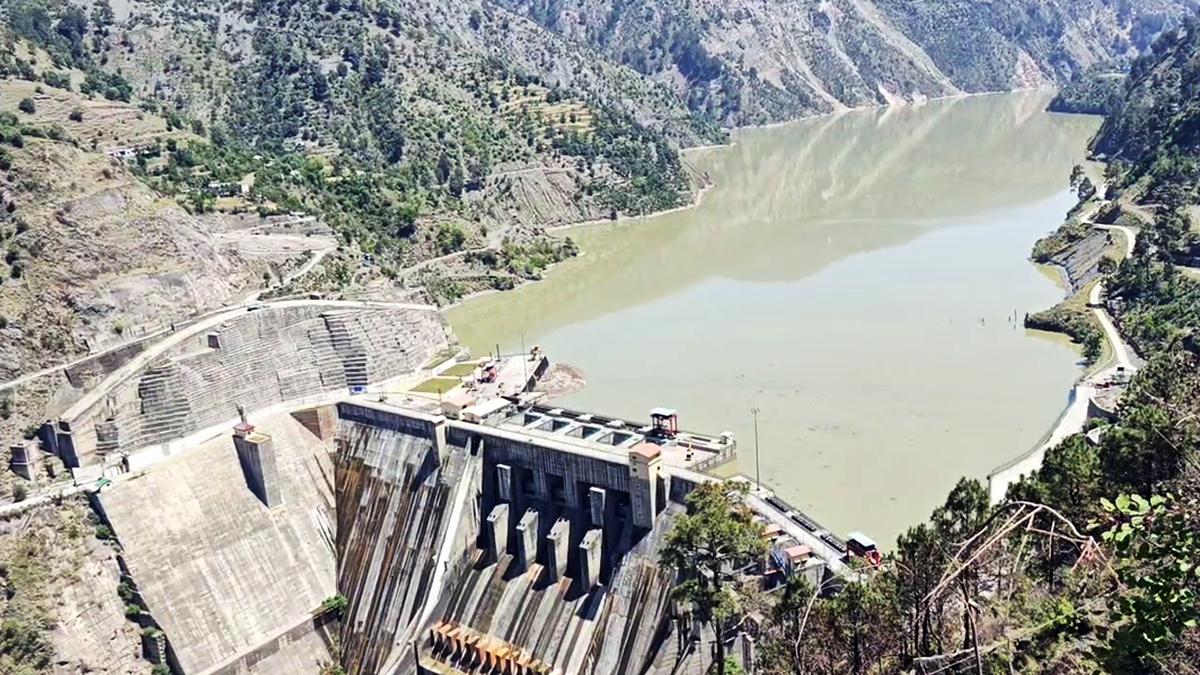
World Bank not informed of India’s decision on Indus Waters Treaty
The Hindu
The World Bank not informed of India's decision to keep Indus Waters Treaty in abeyance amid security concerns.
The World Bank (WB) has said that it hasn’t been informed of India’s decision to keep the Indus Waters Treaty (IWT) in “abeyance,” sources confirmed to The Hindu. Throughout the history of the treaty, the WB has played a key role as a mediator in cases of disputes arising between India and Pakistan on water sharing agreements, as laid out in the IWT.
On Thursday (April 24, 2025), Debashree Mukherjee, Secretary, Ministry of Water Resources, wrote to her Pakistan counterpart, Syed Ali Murtaza, that India was keeping the treaty in abeyance with “immediate effect.”
“The obligation to honour a treaty in good faith is fundamental to a treaty. However what we have seen instead is sustained cross border terrorism by Pakistan targeting the Indian Union territory of Jammu and Kashmir,” her letter says.
The “security uncertainties” have directly impeded India’s “full utilisation rights” and Pakistan’s action of not responding to previous requests by India to renegotiate the treaty was a “breach of trust” on its part.
A Government source told The Hindu that, as Pakistan had been informed about India’s position on the treaty, therefore there was “no need” to inform the WB.
A spokesperson for the WB said that “it did not opine” on “treaty-related sovereign decisions taken by its member countries.”
Following the Pahalgam attack, India announced on Wednesday (April 23, 2025) that it would hold the IWT, in place since 1960, “in abeyance.” On the surface, this implies that India will stop its periodic communication with Pakistan on sharing hydrological data on the Indus rivers or keep them apprised of infrastructural work on hydro-electric projects in the Chenab, Jhelum and the Indus main, also known as the Western rivers.


The government plans to amend the FCRA, introducing new regulations for NGO asset management and accountability for key functionaries.

The draft policy for “Responsible Digital Use Among Students”, released on Monday by the Department of Health and Family Welfare, has recommended that parents set structured routines with clear screen-time rules and prioritise privacy, safety, and open conversation with children on digital well-being.

Police Observer Sushant Kumar Saxena conducts surprise inspection at Shencottai police station, reviewing warrants and security arrangements ahead of elections.

Andhra Pradesh government to launch key projects in April, focusing on industrial growth and infrastructure development, says Nara Lokesh.

Lok Sabha refers the Corporate Laws (Amendment) Bill to a JPC amid opposition concerns over CSR provisions dilution.

SHG members in Kanniyakumari use snakes and ladders to raise election awareness and boost voter turnout.

Government accelerates consultations for early implementation of the Women’s Reservation Act to ensure women’s representation in 2029 elections.

CM A. Revanth Reddy distributes ₹1 crore insurance cheques to families of deceased Electricity department employees, enhancing financial security for workers.

The Bengaluru Traffic Police (BTP) registered 634 cases of drunk driving during a week-long special enforcement drive conducted across the city between March 16 and March 22.

GHMC intensifies action against property tax defaulters, seizing properties and offering a One Time Settlement scheme for payments.

CCB arrests three drug peddlers in Mangaluru, seizing ₹2.5 lakh worth of MDMA and other valuables.

TVK's 28 candidates in Puducherry include former BJP MLAs, a sitting Independent, and a retired police IG.

BRS submits notice on private member bill to Speaker