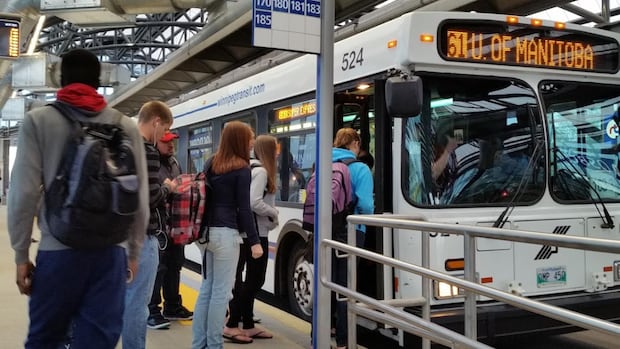
Winnipeg bus riders 'trying to be open-minded' about new transit network
CBC
Winnipeggers now have a new bus network, which will mean learning new routes, stops and bus numbers.
On Sunday, Winnipeg Transit launched its new primary transit network, which it calls the most significant single-day transformation in its history
It replaces the city's decades-old "hub-and-spoke" model, where buses meandered through outlying neighbourhoods before heading downtown. In the new "spine-and-feeder" system, buses follow a more grid-like pattern, with straighter routes along major arteries, and smaller feeder routes connecting to residential areas.
While the changes only took effect on Sunday, the plan has been in the works for years. Winnipeg Transit posted the new schedules online weeks ago, adding a feature to its website that allowed riders to plan their trips using the new routes, and has been changing signage to prepare riders.
Transit users CBC spoke with last week, before the new routes began operating, raised concerns — but some also said they were willing to give the changes a chance.
Katherine Morgan, a retiree living in south St. Vital, says she's had a passion for public transportation ever since working on a school project about it in Grade 12, and uses the bus to get just about everywhere.
She expects the new bus network to come with both benefits and drawbacks for her.
"I am trying to be open-minded," she said.
The redesign has reduced the total number of stops in Transit's network, removing about 1,700 of the 5,200 stops in the city and installing about 460 new ones, for a total of about 4,000 bus stops.
"It's quite a few stops that [they're] taking. It seems to be all the stops that I use," Morgan said.
However, she often rides the bus to Princess Auto Stadium, where she volunteers, and said that ride will be shorter thanks to several removed stops.
But she says her ride home, which is often after 9 p.m., will involve a 15-minute walk from the nearest stop, whereas before, she could get off at a stop right in front of her home.
"That's pretty frustrating. I don't want to be walking home 15 minutes in the dark, trying not to trip."
Jarod Strelnikow says he rode the bus every day for almost 20 years, but bought a truck after learning the bus he rode home to The Maples would stop running before the end of his evening shift as a health-care aide.


Much of Newfoundland is digging out of a blustery and messy day as another storm slams into the island.

Timiskaming—Cochrane MPP John Vanthof recalls the meeting in Thunder Bay earlier this month. He was part of the nine-day road trip along Highways 11 and 17 with other NDP MPPs.

A bill before the Nova Scotia Legislature is proposing raising the age limit for support for young people who have been in the foster care or group home system to 26.

The Fredericton Police Force has reallocated funds so new staff can be hired this year to better manage evidence after a police error upended murder cases against five people.

One of two pilots killed in a plane crash at New York's LaGuardia Airport Sunday earned his wings at an Ontario college, CBC News has learned.

Air Canada passengers who were aboard Flight 8646 when the CRJ-900 aircraft struck a fire truck upon landing at New York's LaGuardia Airport on Sunday evening say the collision was sudden and forceful, and they may owe their lives to the pilots who died in the incident.

Cardiac services are set to expand at a Winnipeg hospital once regarded as one of the best in Canada for heart care.

A 26-second TikTok video has ignited a larger conversation about vulnerable populations, theft and content creation.

Some family doctors and emergency room physicians working in Edmonton hospitals warn that an April 1 end to stipend pay arrangements could put patient care at risk and increase suffering.

An Auditor General of Canada report has found that B.C. saw drastically fewer international students than was forecast ever since wide-ranging federal immigration cuts began in 2024.

Six years after e-learning became a mandatory requirement to get an Ontario high school diploma, students don't appear to be taking online school to diversify their course selection as the province had intended, according to a CBC News analysis of provincial enrolment data.

Sarnia City Council will hold a special meeting Tuesday morning to respond to social media comments made by Coun. Bill Dennis, who criticized city spending on a new mural by Indigenous artist Kennady Osborne as “virtue signalling by woke politicians” — then made a series of comments in response to a reply from Aamjiwnaang Chief Janelle Nahmabin that some have characterized as unprofessional and aggressive.

While many Albertans continue to feel the pinch at the pump, Premier Danielle Smith says the government is not considering any fuel tax breaks, as it does not believe it will make much of a difference.