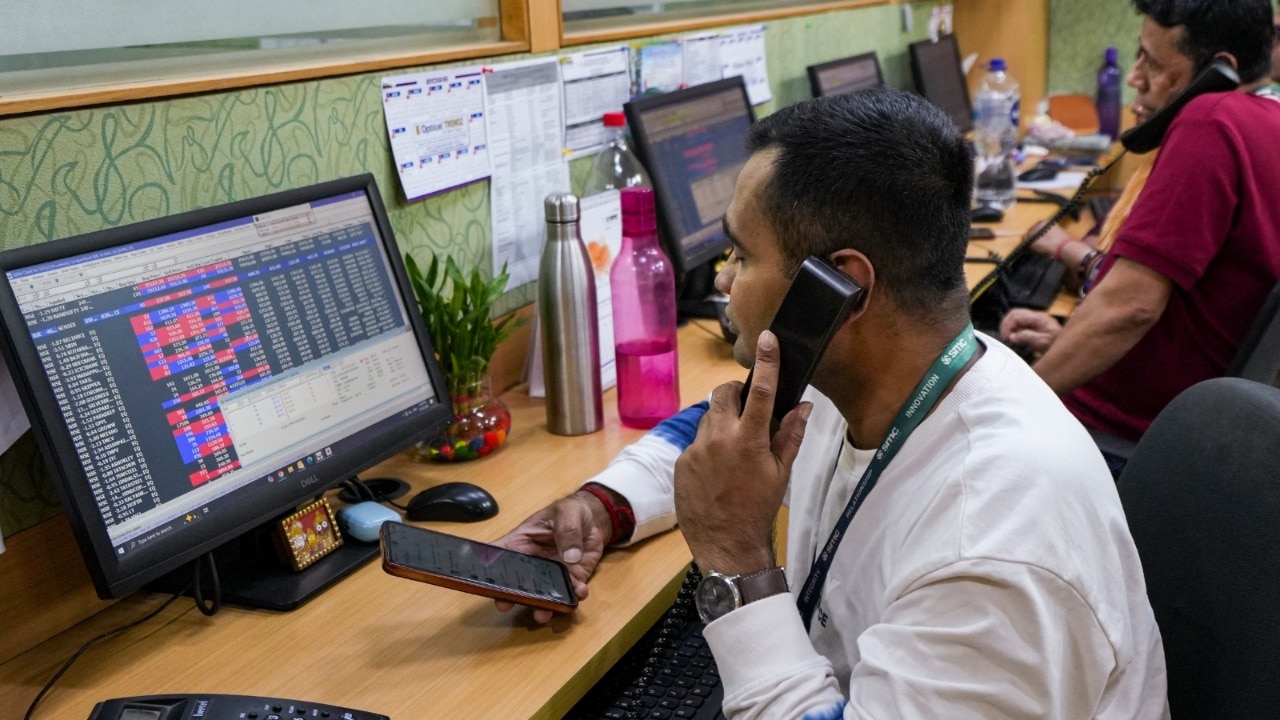
Will higher STT on F&O curb speculative trading or just hurt investors?
India Today
Whether the STT hike proves a safety measure or a misfire will depend on how traders respond. Supporters see discipline; critics fear distortion. In this article, we break down both arguments and what they mean for investors.
When Finance Minister Nirmala Sitharaman raised the Securities Transaction Tax (STT) on futures and options (F&O) in Budget 2026, the move was marketed as a way to rein in excessive speculation.
The government argued that India’s derivatives market had become far too overheated and that a higher tax would act as friction to slow down reckless trading.
But almost immediately, the decision was met with questions from people who track trading behaviour daily, including some of the most influential voices in India’s market ecosystem.
A lot of the confusion around the STT hike comes from the fact that F&O trading still feels unfamiliar to many ordinary investors.
Futures are straightforward contracts where two parties agree to buy or sell something later at a fixed price. They often move in line with the market and are widely used by long-term investors for hedging.
Options work very differently. They let traders take big bets with small upfront payments. If the bet works, the payoff can be large; if it doesn’t, losses pile up quickly. Since options require far less capital to take large positions, they naturally attract far more speculative trading.


Venkataraman joined Flipkart in 2015 and has been part of the company's leadership team through a period of growth and restructuring. During his tenure, he helped strengthen the company's financial operations.

The gold rate today is around Rs 1.5 lakh per 10 grams for 24-carat gold, while 22-carat gold is near Rs 1.4 lakh, with prices edging higher after recent losses. Silver is also seeing a slight uptick after a volatile phase.

Early indicators suggest a positive start. GIFT Nifty futures were trading at 23,250.5 at around 08:24 am, indicating that the Nifty 50 may open above Thursday's close of 23,002.15.

With multiple energy hubs under threat, the risk to global supply chains has increased sharply. For countries like India, which depend heavily on imports, this means higher costs and tighter supply in the near term.

In a statement, the central bank said it has taken note of the recent developments at HDFC Bank and has approved the transition arrangement proposed by the bank for the position of part-time chairman.

Global brokerage JPMorgan has maintained a "neutral" rating on the stock with a price target of Rs 1,090. HDFC Bank stock is already trading near its 52-week low, adding to weak sentiment around the counter.

The IPO is expected to be structured as an "offer for sale" (OFS). This means existing investors will sell a part of their stake to the public, rather than the company issuing new shares.

Sensex ends 633 points higher, Nifty above 23,700; Infosys up 3%

The Sensex was up 825.79 points, or 1.09%, at 76,896.63, while the Nifty 50 gained 239.10 points, or 1.01%, to trade at 23,820.25 as of 11:44 AM. It may be noted that the Sensex has gained over 2,000 points this week after a sharp losing spree.


The reconstituted panel includes several key institutional representatives. These include members from the Life Insurance Council and the General Insurance Council, along with heads of important professional bodies.

Many people are seeing sudden jumps in their health insurance premiums at renewal. The reasons aren't always clear, and insurers don't always explain them. In this article, we break down the possible reasons behind these sudden premium jumps.