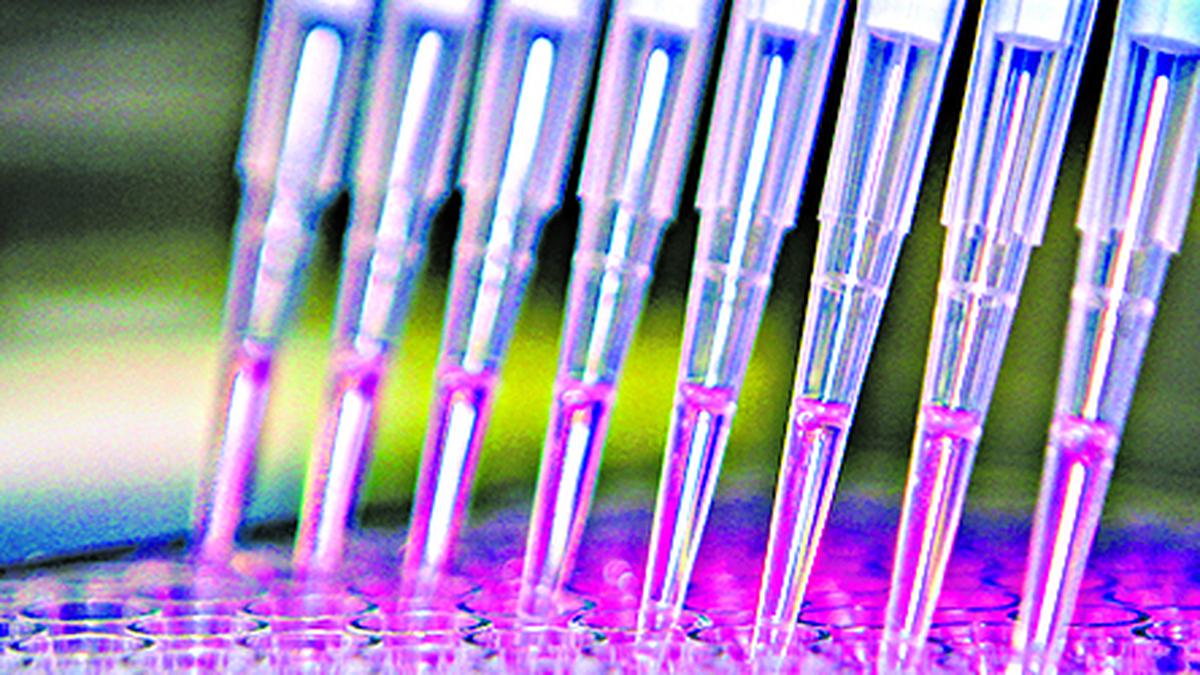
Why precision medicine in India can’t advance without biobank laws | Analysis
The Hindu
Precision medicine advances through genomics, gene therapy, and biobanks, but India's biobank regulations pose a challenge.
Precision medicine is bringing in a new era of personalised healthcare. The field began to take concrete shape when scientists were wrapping up the Human Genome Project. Since then, genomics has played a major role in the diagnosis and treatment of various cancers, chronic diseases, and immunological, cardiovascular, and liver diseases.
Other emerging technologies such as gene-editing and mRNA therapeutics also contribute to precision medicine. In a recent success story, researchers were able to restore vision in people who had lost it due to a genetic mutation using gene therapy. In a more recent and more notable example, researchers in the U.K. reversed an individual’s diabetes by transplanting reengineered stem cells. During the COVID-19 pandemic, researchers were able to use the mRNA platform to develop new vaccines in record time, winning the technology a Nobel Prize last year.
Organ-on-chips is another area that promises precision medical solutions. These small microfluidic devices containing human cells can replicate the microenvironment of a tumour or an organ in a laboratory setting. They are expected to allow researchers to test drugs in settings more similar to the drugs’ eventual user.
The Indian precision medicine market is estimated to be growing at a CAGR of 16% and is expected to be worth more than $5 billion by 2030, according to industry estimates. Currently, it contributes 36% of the national bioeconomy, alongside cancer immunotherapy, gene editing, biologics, etc. The development of precision therapeutics is also part of the new ‘BioE3’ policy.
In October 2023, the Central Drugs Standard Control Organization approved NexCAR19, India’s domestically developed CAR-T cell therapy, and earlier this year the government opened a dedicated centre for it. Recently, the Apollo Cancer Centre and a collaboration between Siemens Healthineers and the Indian Institute of Science, Bengaluru, opened new facilities to deploy artificial intelligence for precision medicine.
A biobank is a repository of biological samples, such as blood, DNA, cells, tissues, and/or organs alongside their genetic data. These samples are collected from consenting individuals and intended for use in research. For precision medicine to succeed, biobanks need to be large and diverse. Otherwise only a small section of society will benefit from the findings of precision medicine.
Recently, researchers identified people with an undiagnosed rare genetic disorder using data from a biobank and comparing it to people who were already diagnosed with it. Their findings were published in Nature Communications on August 29.


Set between the Siwalik hills and the plains, Butwal offers travellers a mix of regional cuisine, pilgrimage trails to Lumbini and the comfort of Hyatt’s new hospitality landmark

Explore 2026's wallpaper trends in India, highlighting botanicals and handmade designs that enhance modern homes with nature-inspired aesthetics.

Mercedes-Benz CLA 250+ with EQ Technology review: design, performance, range and features explained. Discover how the new electric CLA combines advanced AI, long range, fast charging and futuristic styling for the next generation of luxury EVs.

AI tool for sparrow conservation

BTS’s comeback with ‘Arirang’ marks a major global music event. When does the album release, and where can you watch their concert live stream? We have all the details

The 2026 U.S. cholesterol guidelines urge starting screening and treatment at 30 to prevent cardiovascular disease effectively.

Olam Festival 2026 in Thiruvananthapuram returns March 27-29 with 120+ vendors, music, art, and cultural zones.

A few storytellers in Thiruvananthapuram share their journeys, challenges, and evolving methods on World Storytelling Day, inspiring young minds.

76-year-old Kurian Jacob from Kerala triumphs with seven medals, including five golds, at the Open Masters Games in Abu Dhabi.

Explore the nature of the human mind as an emergent property of brain activity and complex neural interactions.

CERN's Large Hadron Collider discovers the Xi-cc-plus particle, enhancing understanding of quantum mechanics and baryon behavior.

Vibha Batra’s latest book, Spotless (Hachette India) is a novel in verse for young adults

In its first edition, the Madras Art Salon spotlights the works of journalist and artist Narayan Lakshman at The Botanical Club, a social space in the British Deputy High Commission, Chennai