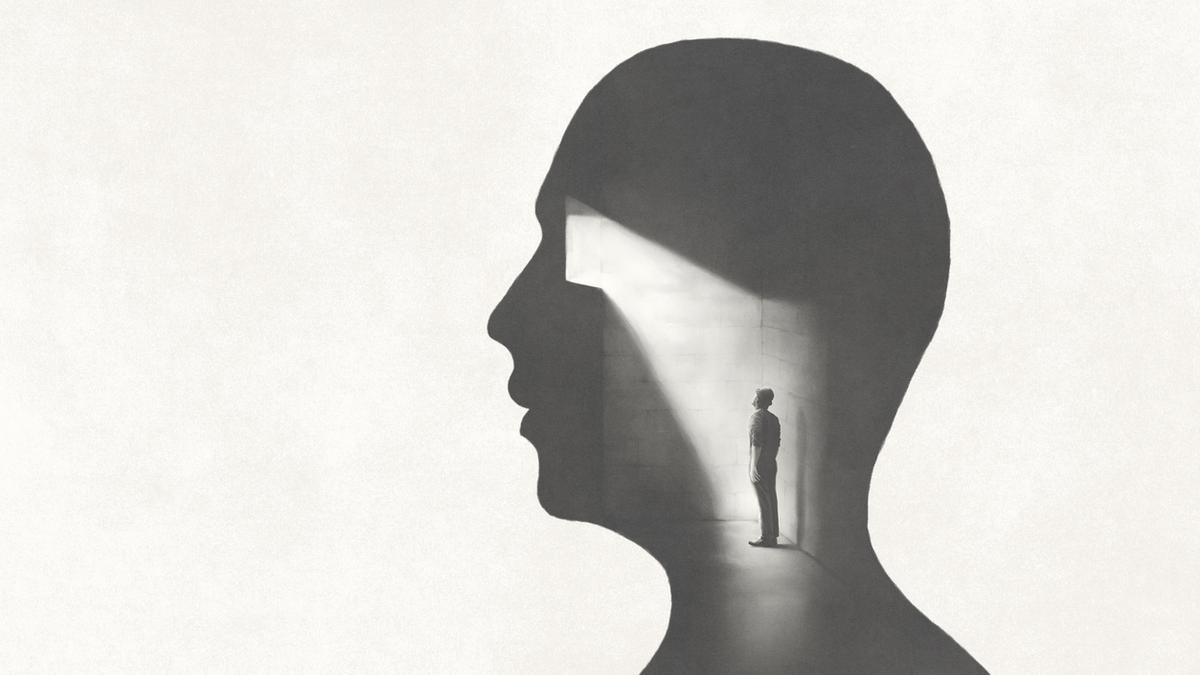
Why neurologist Guy Leschziner links the seven deadly sins to human biology
The Hindu
Neurologist Guy Leschziner explores the biology behind the seven deadly sins, offering insights into human behavior and evolution.
Gluttony, greed, sloth, pride, envy, lust and anger are traditionally seen as the root of all evil. But can these undesirable behaviours actually stem from the biology of our brains? Neurologist Guy Leschziner believes so.
Last November, when he launched his book Seven Deadly Sins: The Biology of Being Human, and delved into the neuroscientific and psychological basis of these human tendencies, the London-based professor encouraged much debate. “The seven deadly sins are woven into the tapestry of what it is to be human,” he later wrote in The Guardian. “Each of these tendencies, at least in moderation or in specific circumstances, can be seen as a tool for survival.” He went on to say that the origins of the definition of these traits lies in evolutionary imperatives to preserve the tribe and they raise more of a biological question for us than a moral one.
“I was trying to understand how the brain, our biology, influences why we behave badly, and how a better understanding of these processes could actually give us opportunities to make the world a better place,” Leschziner tells The Hindu, on the sidelines of the Kerala Literature Festival 2025. “I study people at the extremes of the human experience to understand how their brains cause changes in behaviour and how it applies to all of us.”
In the introduction of the book, Leschziner explains how the past 25 years of his life as a practising doctor have offered him a window into human society, allowing him to explore aspects of humanity that few outside the world of medicine can see.
Leschziner’s grandfather was himself a victim of the deadly sins: he escaped Nazi Germany with his brother, but their families perished in concentration camps. At his clinic, Leschziner encounters patients from countries like Afghanistan, Syria, and the former Yugoslavia — “all in London as an outcome of war and upheaval, fruits of human sins”.
A consultant neurologist at the Department of Neurology and Sleep Disorders Centre at Guy’s and St Thomas’ Hospitals, as well as London Bridge Hospital, the Cromwell Hospital, and One Welbeck, Leschziner is a determinist. “I believe that everything is a function of the connections within our brain and how it works,” he explains. “There are factors entirely beyond our control that influence how we behave. For some, it’s genetic; for others, it’s due to disease or disorder. But, for many, it’s shaped by what we’re exposed to — either in the womb or later in life — which fundamentally affects how our brains are configured.”
Seven Deadly Sins is Leschziner’sthird book, and has won critical acclaim. However, initially, he had no intention of becoming an author as he was busy with his medical practice. A literary agent, impressed by Leschziner’s BBC radio series on the mysteries of sleep, persuaded him to pen his experiences.


Mercedes-Benz CLA 250+ with EQ Technology review: design, performance, range and features explained. Discover how the new electric CLA combines advanced AI, long range, fast charging and futuristic styling for the next generation of luxury EVs.

Pi Day is celebrated every year on March 14, honouring the significance of the mathematical constant π and its applications in mathematics.

Discover how sculptural interior design transforms modern spaces, blending creativity and functionality to evoke emotion and identity.

A study reveals that certain antibiotics can cause long-lasting changes in gut microbiome diversity for up to eight years.

Indian scientists and international experts are divided over a study questioning the viability of a nuclear reactor fuel called HALEU-thorium; while critics cite safety risks, proponents argue the technology is vital to achieve national energy goals.

ISRO and AIIMS partner to enhance space medicine research, focusing on human health during long-duration space missions.

A practical guide to induction setups for students, families, and home food businesses as India’s LPG supply faces its biggest disruption in years

Explore the electrifying Oscars 2026 race, featuring standout films, baffling nominations, and memorable performances amid a cinematic transition.

Zai and Rom Whitaker’s latest book for young readers, The Book of Indian Snakes, tackles common misconceptions surrounding snakes, highlighting their utility to humans

Discover PC Mahalanobis's pivotal role in India's statistical revolution and his lasting influence on modern statistics in this episode.

Explore why nothing can exceed light speed and the paradoxes that arise if it were possible.

Scientists have engineered bacteria to produce designer proteins by smuggling artificial amino acids, enabling precise drug delivery and multifunctional applications.

Scientists successfully grew chickpeas in simulated lunar soil, paving the way for future extraterrestrial agriculture on the moon.