Why going on strike could get much harder for American workers
CBSN
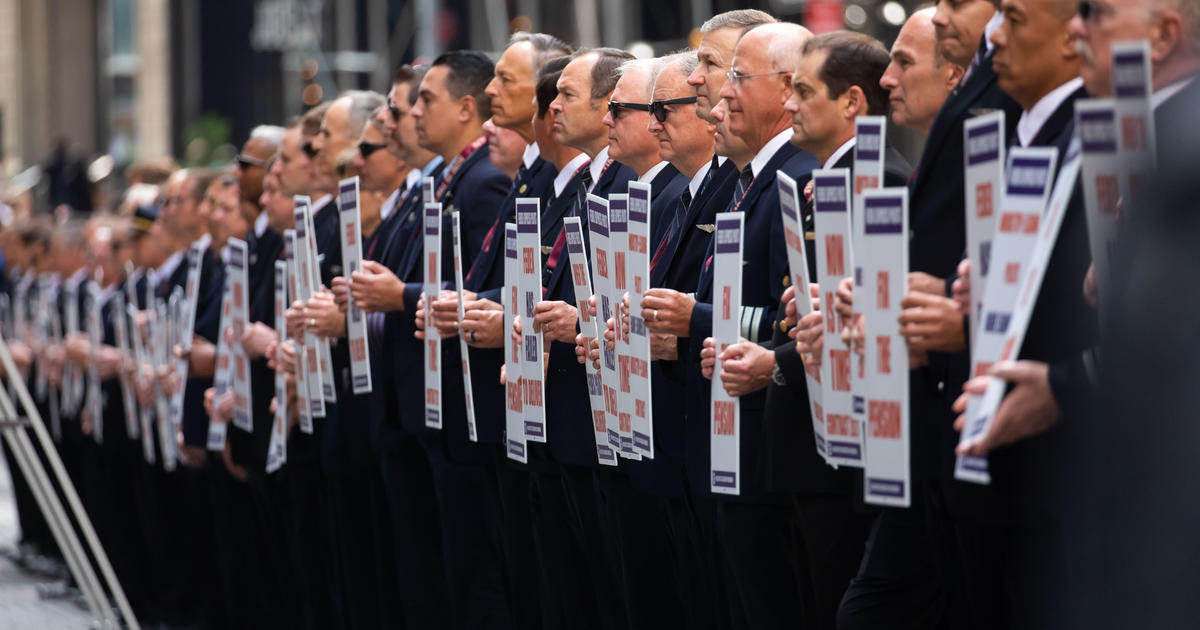
Labor protests around the U.S. have surged during the COVID-19 pandemic as employees across a range of industries have pushed for better pay and working conditions. But a case the Supreme Court agreed to hear last week could make going on strike much more difficult.
In Glacier Northwest v. Int'l Brotherhood of Teamsters, a concrete company sued a union and accused it of intentionally destroying concrete during a strike. The high court will decide whether the company is allowed to sue in the first place, or whether federal labor law disallows it from suing. A decision in favor of the company would open the door to employer lawsuits anytime workers push back against their bosses' demands, affecting their willingness to strike, labor experts say.
"The strike is an essential weapon," said Eric Blanc, a labor researcher and scholar who focuses on strikes. "Companies aren't a democracy … Without a threat to the bottom line, there's no incentive for management to heed workers' demands."


New York's La Guardia Airport was closed late Sunday night after an arriving Air Canada Express plane and ground vehicle collided, according to flight tracking service FlightRadar24.

Savannah Guthrie is renewing pleas to neighbors, friends and residents of Tucson, Arizona, to jog their memories in the hopes of sparking new leads in the disappearance of her mother, Nancy. In:

Officials at Immigration and Customs Enforcement have been scrambling to carry out a weekend directive from President Trump to have immigration agents provide security at airports amid the partial government shutdown, multiple sources familiar with the internal deliberations told CBS News. In:

Fentanyl was found inside Barbie doll packages being sold at a discount store in Missouri, police said on Saturday. In:

New Jersey Senator Cory Booker hasn't been the mayor of Newark since 2013. But when he walks around his neighborhood, you'd never know it. One passer-by yelled out, "The best mayor ever!" In:

Fentanyl was found inside Barbie doll packages being sold at a discount store in Missouri, police said on Saturday. In:

CBS News contributor Arthur C. Brooks is the author of a new book, "The Meaning of Your Life: Finding Purpose in an Age of Emptiness." This morning, he's charting an unlikely path to happiness:

When gauging a war, Americans consider at least two important things: what the goals are overseas and its impact back home. In:

The peace and tranquility of Muir Woods, just north of San Francisco – home to 500+ acres of old-growth redwoods – make it just about the last place you'd expect to find a fight brewing. "The fact that they're taking down whole groups of signs about climate change and our nation's history is disappointing, and embarrassing," said retired U.S. Park Ranger Lucy Scott In:

We share our planet with maybe 10 million species of plants, animals, birds, fish, fungi and bugs. And to help identify them, millions of people are using a free phone app. "Currently we have about six million people using the platform every month," said Scott Loarie, the executive director of iNaturalist, a nonprofit.

Washington — As voters gear up for the midterm elections in November that will decide control of the House and Senate, the Supreme Court is set to weigh Monday whether states can count mail ballots that are postmarked by, but arrive after, Election Day.

It was in June 2020 when Linda Dane learned the disturbing circumstances of how her long-lost brother Gary Herbst's skull had been found by a dog in rural Barron County, Wisconsin. In:

A possible meteorite crashed into a Houston area house on Saturday night, tearing through the roof and two stories of the home, officials said. In: