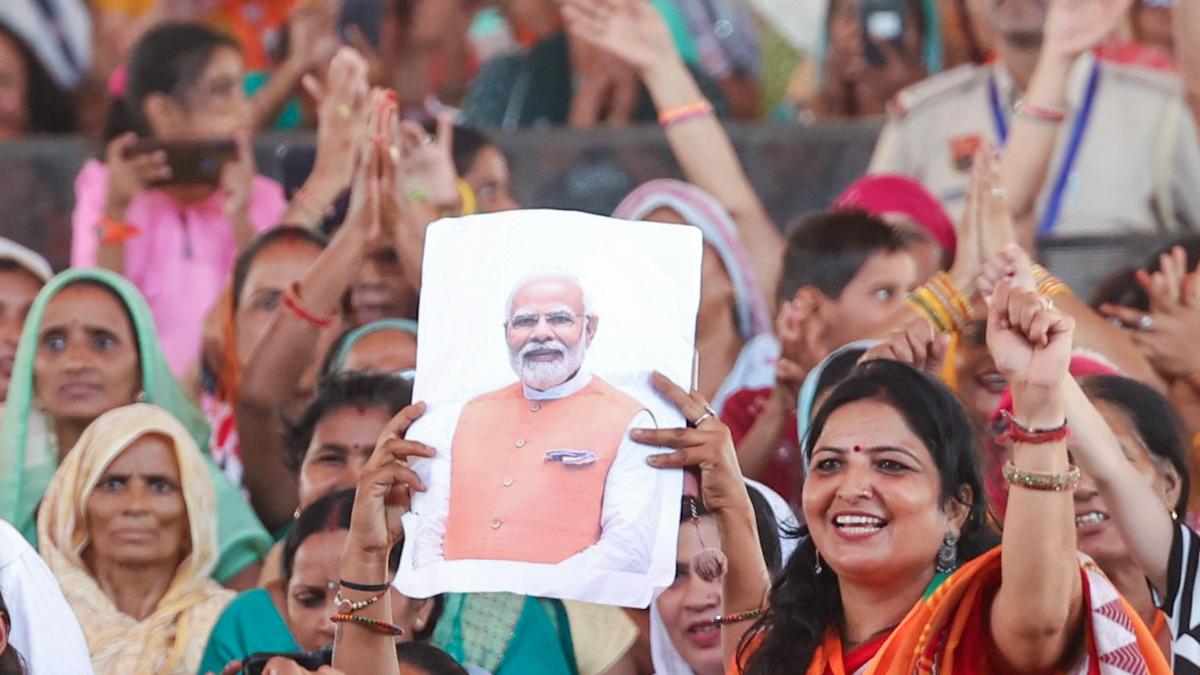
Why every party is mobilising Dalit support
The Hindu
Haryana Assembly elections analysis: Changing political dynamics, Jat-Dalit alliances, and impact of social movements on voter perceptions
The story so far:
The Haryana Assembly elections for a 90-member House are slated for October 5, and as the campaign intensifies, the State’s political dynamic is undergoing significant changes.
A party like the Jannayak Janta Party, a regional party, which traditionally relies on Jat support, has this time made an alliance with Chandrashekhar Azad’s Azad Samaj Party (ASP), which is a new entrant in Haryana politics. In the wake of declining Jat support, the JJP is compelled to look for other communities to draw support from, in order to maintain its political relevance in Haryana.
Because of his charisma, Chandrashekhar Azad, a first time MP from Nagina, is definitely gaining popularity among sections of Dalit voters, particularly among young voters who are attracted to his personality and good oratory skills. However, his appeal among Dalits is not similar across all sections of the community, and the deprived or marginalised sections among the Dalits still seem to be looking towards national parties like the Congress and the BJP. During Dushyant Chautala’s door to door campaign in a village in Uchana Kalan, we found that he enthusiastically laid out his extensive campaign schedule with Chandrashekhar Azad as if to engage his Dalit supporters.
The direct outcome of increasing popularity and a possible increase in electoral support for Chandrashekhar Azad seems to be at the cost of support to Mayawati and her Bahujan Samaj Party (BSP), which is in alliance with the Indian National Lok Dal (INLD). The BSP has always enjoyed some portion of the Dalit votes in Haryana but never reached any electoral significance in the State; and now, with the ascendance of the ASP, even that portion of the Dalit vote is up for grabs.
The Jat-Dalit coalition is projected by regional alliances such as the JJP-ASP and INLD-BSP in a more amplified manner than the kind of coalitions being harboured by the Congress or the BJP. An overt reliance on the Jat community, visible in the Congress campaign led by Bhoopinder Hooda, hinders the Jat-Dalit alliance that the Congress is trying to project. On the other hand, the BJP’s support for the recent verdict on sub-categorisation among the Dalits by the Supreme Court has also disenchanted some of the dominant Dalit communities away from the party, while retaining the deprived sections among the Dalits.
The decline of regional parties such as the INLD and JJP can be attributed to strategic missteps and shifting voter perceptions.


U.S.-Israeli war on Iran LIVE: Iran faces deadline of US President Donald Trump warning to open Strait of Hormuz. Follow The Hindu for more LIVE updates on March 23 2026 on Iran-Israel war.

KPCC chief Sunny Joseph emphasizes UDF's focus on Sabarimala and corruption while expressing confidence in winning Kerala's upcoming Assembly elections.

A military plane crash in Colombia leaves 125 aboard, with at least 48 survivors rescued amid ongoing recovery efforts.

‘Symposium’, a new platform to promote lifelong learning and counter misinformation among youth, was launched in Hyderabad.

By using TB as an entry point, integrated healthcare delivery can optimise and improve public health efficiency

Residents of Chettichavadi express concerns over deteriorating groundwater quality due to long-standing garbage dumping issues in Salem West.

Community Health Officers in Vijayawada protest for reduced workload and continued incentives amid growing dissatisfaction over salary changes.

Telangana faces 13,929 healthcare vacancies, primarily in doctors and nurses, as recruitment efforts aim to address the shortage.

For most patients with TB who are severely underweight, nutritional support is an essential and not optional part of treatment

Family of custodial death victims demands harsh punishment for nine convicted policemen to prevent future abuses of power.

Rajinikanth refutes TVK leader's claims about DMK threats preventing his political entry, expressing gratitude to supportive political figures.

CM announces Cabinet Sub-Committee on Musi rejuvenation; rehabilitation for all displaced

Ramanathapuram identifies 145 polling stations as sensitive, ensuring security with paramilitary forces ahead of assembly elections, says DEO.