Why does the Strait of Hormuz’s closure matter? Premium
The Hindu
Explore the significance of the Strait of Hormuz and its impact on global oil trade, especially for India amidst rising tensions.
The story so far: The Strait of Hormuz, one of the world’s most strategically important chokepoints, has been experiencing a near-total collapse in commercial traffic following rising tensions in West Asia. More than 20% of the world’s total oil and gas shipments, and nearly 40% of India’s, pass through the strait.
The Strait of Hormuz, only 33 kilometres wide at its narrowest, lies between Iran, Oman, and the UAE. It is a vital route for oil and gas from Saudi Arabia, Qatar, Kuwait, Iraq, and Iran leaving the Persian Gulf to various destinations.
Other important shipping chokepoints in the world include the natural Malacca Strait off Singapore through which almost the entire west-bound Chinese maritime trade takes place; the Bab-al-Mandab at the mouth of the Red Sea, which has come under Houthi influence; the artificial Suez Canal connecting Europe and Africa-Asia; the artificial Panama Canal linking the Pacific and Atlantic Oceans; and the straits of Bosphorus and Dardanelles connecting the Mediterranean and Black Sea via the Sea of Marmara, which are crucial not just for nations such as Romania but also for Russia.
While Egypt and Panama hold sovereignty over the Suez and Panama canals, respectively, Turkey has exclusive sovereign rights over the Bosphorus and Dardanelles straits. Nations such as Malaysia and Singapore, and Iran and Oman play a major role in securing the natural straits (Malacca and Hormuz) while not holding sovereignty over them. India has been building naval presence in the Andaman and Nicobar Islands with the strategic aim of gaining leverage over Chinese trade across the Malacca Strait.
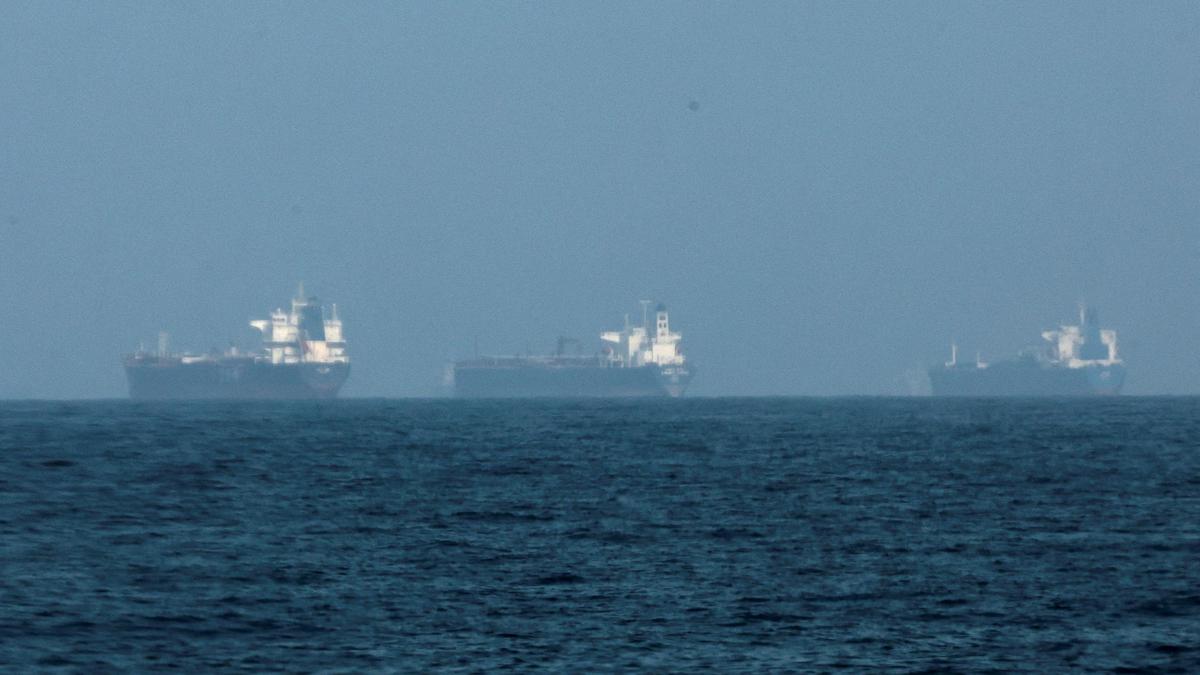
Since February 28, when the U.S. and Israel attacked Iran, and Iran retaliated, ship traffic across the strait has reduced by some 95%. Nine ships have faced attacks in or near the strait. Shipping is a high-risk business and even small damages can prove costly to repair. Lloyds List Intelligence, a maritime information provider, estimates that some 600 ships are now stranded in the region. Some 250 are bulk carriers carrying loose cargo such as coal, ores, and grain. Others include some 200 oil tankers and 50 gas carriers.
International law generally treats the seas as commons. Though territorial waters and exclusive economic zones are recognised, in general, laws and practices tend to be favourable towards free usage of all of the seas by merchant ships, and by naval ships for “innocent” passage.


Asian central banks face tough choices on interest rates amid rising oil prices and the escalating Iran conflict, impacting growth and inflation.

G7 Finance Ministers to discuss coordinated emergency oil reserve release amid surging prices and market instability.

Crude prices surge to $100 as investors sell off, causing Indian stock markets to drop 3% amid geopolitical tensions.

The U.S. urges India to purchase Russian oil at sea to alleviate supply fears amid ongoing West Asia conflict.

China’s commerce ministry on Saturday raised the possibility of another global semiconductor supply chain crisis due to “new conflicts” between Dutch chipmaker Nexperia and its Chinese subsidiary.

Sony will face a £2 billion ($2.7 billion) class action lawsuit starting Tuesday in London, accused of allegedly breaching competition law by overcharging millions of UK PlayStation users.

Oil prices eclipsed $114 per barrel for the first time since 2022 on March 9, 2026 as the Iran war intensified. Stock markets and forex markets

Asian equities drop sharply as oil prices surge 30% amid escalating West Asia conflict, raising inflation and economic concerns.

India’s renewable energy sector is in the midst of an extraordinary build-out. Capacity targets are being met, investments are flowing in, and the country has positioned itself as a global clean-energy leader. But beneath these headline achievements lies a troubling operational reality. Take the example of Rajasthan, where more than 4,000 MW of fully commissioned renewable capacity is unable to evacuate power during peak hours, due to grid congestion.

India seeks alternative crude oil supplies from the U.S., Russia, and West Africa amid ongoing West Asia conflict.

Sindhu Gangadharan emphasizes the need for women’s leadership in AI to ensure ethical, inclusive, and impactful technology development.

Room air conditioner prices will rise 5-15% ahead of summer due to increased raw material costs and new energy norms.

Explore the significance of the Strait of Hormuz and its impact on global oil trade, especially for India amidst rising tensions.