Why do we use QWERTY keyboards?
The Hindu
The history of the QWERTY keyboard layout and why it remains the standard despite more efficient alternatives available.
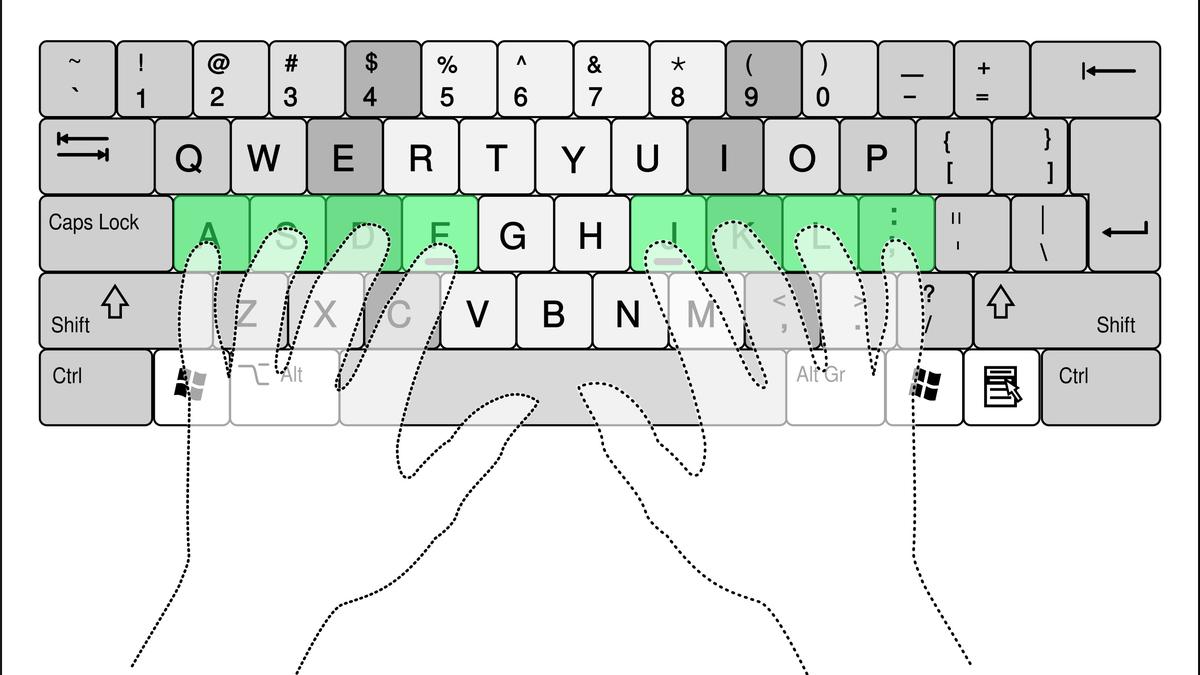
Today, almost every keyboard we use — whether it’s on your personal computer or phone — follows the QWERTY layout. But did you know this arrangement wasn’t the obvious choice when typewriters were first invented?
The story of the QWERTY layout begins with the invention of the mechanical typewriter in the 19th Century. In the early 1870s, an American inventor named Christopher Latham Sholes, along with his colleagues, developed one of the first practical typewriters.
The earliest versions of their machine had a simple and intuitive layout: the keys were arranged alphabetically from A to Z. This made sense for new users, who could easily find the letters without needing special training. However, while the alphabetical order seemed logical, it soon led to unexpected problems once people started typing faster.
As typewriters became more widely used, a major issue quickly surfaced: key jamming. Early typewriters worked by mechanical arms that struck inked ribbons to imprint letters onto paper. The problem arose when certain letter combinations were typed too quickly — the arms would collide with each other, causing a jam that slowed down the entire process. This issue made it clear that the design of the typewriter would need to be adjusted to avoid such mechanical conflicts.
To solve the problem of key jamming, Sholes and his team rearranged the keys in a way that minimised mechanical collisions. They strategically placed commonly paired letters—such as “T” and “H” or “C” and “K”—further apart, so that typists wouldn’t accidentally press them in quick succession.
The goal wasn’t to speed up typing, but rather to slow it down just enough to reduce the risk of the typewriter’s mechanical arms jamming when typed too quickly. The QWERTY layout was designed to optimize the machine’s mechanical needs, not necessarily the comfort or speed of the typist.
The QWERTY layout became popular when Remington, a major typewriter manufacturer, adopted it on their successful machines. As typing schools and businesses trained people on QWERTY keyboards, it quickly became the standard. Over time, this widespread use created a network effect, making it hard to switch to any other layout — and QWERTY stuck as the global norm.


Mercedes-Benz CLA 250+ with EQ Technology review: design, performance, range and features explained. Discover how the new electric CLA combines advanced AI, long range, fast charging and futuristic styling for the next generation of luxury EVs.

Pi Day is celebrated every year on March 14, honouring the significance of the mathematical constant π and its applications in mathematics.

Discover how sculptural interior design transforms modern spaces, blending creativity and functionality to evoke emotion and identity.

A study reveals that certain antibiotics can cause long-lasting changes in gut microbiome diversity for up to eight years.

Indian scientists and international experts are divided over a study questioning the viability of a nuclear reactor fuel called HALEU-thorium; while critics cite safety risks, proponents argue the technology is vital to achieve national energy goals.

ISRO and AIIMS partner to enhance space medicine research, focusing on human health during long-duration space missions.

A practical guide to induction setups for students, families, and home food businesses as India’s LPG supply faces its biggest disruption in years

Explore the electrifying Oscars 2026 race, featuring standout films, baffling nominations, and memorable performances amid a cinematic transition.

Zai and Rom Whitaker’s latest book for young readers, The Book of Indian Snakes, tackles common misconceptions surrounding snakes, highlighting their utility to humans

Discover PC Mahalanobis's pivotal role in India's statistical revolution and his lasting influence on modern statistics in this episode.

Explore why nothing can exceed light speed and the paradoxes that arise if it were possible.

Scientists have engineered bacteria to produce designer proteins by smuggling artificial amino acids, enabling precise drug delivery and multifunctional applications.

Scientists successfully grew chickpeas in simulated lunar soil, paving the way for future extraterrestrial agriculture on the moon.