Why did menopause evolve? New study of whales gives some clues
The Hindu
New research examines menopause in these whales, with findings that may help explain why this phenomenon evolved, given that it is known in just six of the 6,000-plus mammal species living today
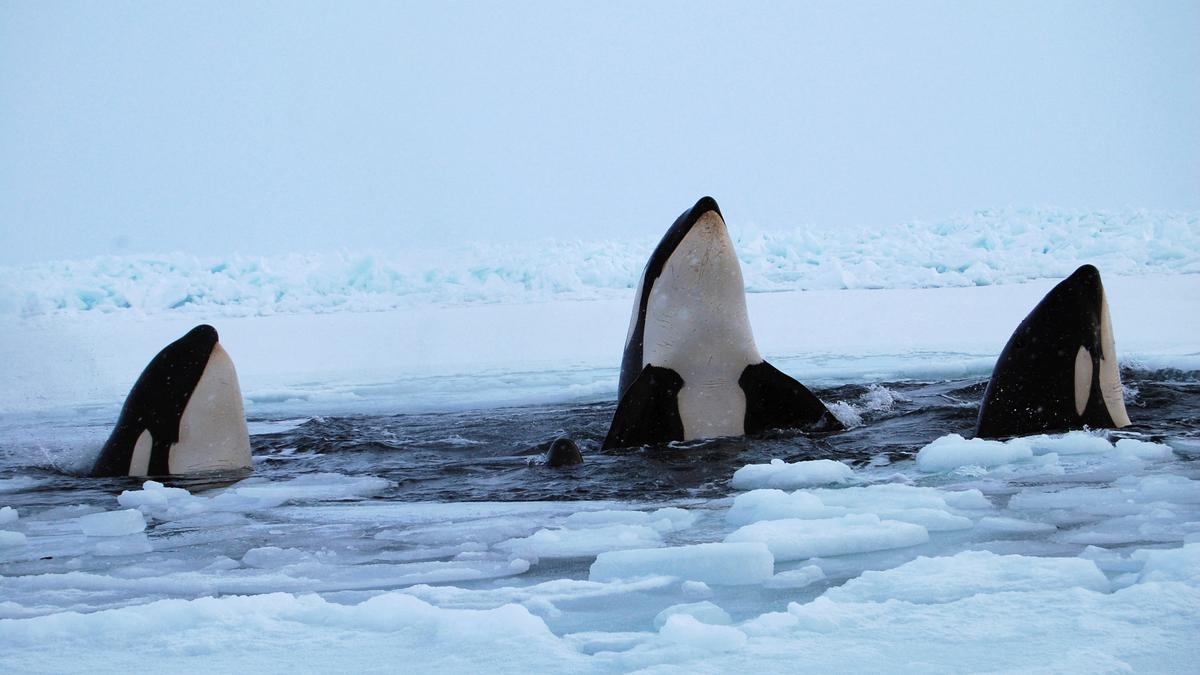
Menopause is a rare trait among Earth's species, known to exist in only a few. Humans are one. Killer whales and four other toothed whales are the others.
New research examines menopause in these whales, with findings that may help explain why this phenomenon evolved, given that it is known in just six of the 6,000-plus mammal species living today. It might be titled: the tale of the helpful grandma whale.
The scientists compared the lifespans of 32 toothed whale species. They found that in the five menopausal species - killer whales, false killer whales, beluga whales, narwhals and short-finned pilot whales - the females live about four decades longer than the females of non-menopausal species of similar size.
Other toothed whales such as sperm whales, as well as the filter-feeding baleen whales, including the blue whale, have not been found to experience menopause.
"This result gives a unique insight into how menopause has evolved. Menopausal species of whales have a similar reproductive period to non-menopausal species. It is the life after reproduction that differs," said Sam Ellis, a lecturer in animal behavior at the University of Exeter in England and lead author of the study published on Wednesday in the journal Nature.
"Evolution has selected for a longer female lifespan so that mothers and grandmothers can continue to provide support to their family well after reproduction," he said of these whale species. "We see just the same patterns in human societies where women have a similar reproductive period to our closest primate relatives but have a much longer total lifespan."
An extended lifespan increases the opportunities for female whales to help their children and grandchildren without increasing the amount of time they are reproducing at the same time as - and in competition with - their daughters.


Mercedes-Benz CLA 250+ with EQ Technology review: design, performance, range and features explained. Discover how the new electric CLA combines advanced AI, long range, fast charging and futuristic styling for the next generation of luxury EVs.

AI tool for sparrow conservation

BTS’s comeback with ‘Arirang’ marks a major global music event. When does the album release, and where can you watch their concert live stream? We have all the details

The 2026 U.S. cholesterol guidelines urge starting screening and treatment at 30 to prevent cardiovascular disease effectively.

Olam Festival 2026 in Thiruvananthapuram returns March 27-29 with 120+ vendors, music, art, and cultural zones.

A few storytellers in Thiruvananthapuram share their journeys, challenges, and evolving methods on World Storytelling Day, inspiring young minds.

76-year-old Kurian Jacob from Kerala triumphs with seven medals, including five golds, at the Open Masters Games in Abu Dhabi.

Explore the nature of the human mind as an emergent property of brain activity and complex neural interactions.

CERN's Large Hadron Collider discovers the Xi-cc-plus particle, enhancing understanding of quantum mechanics and baryon behavior.

Vibha Batra’s latest book, Spotless (Hachette India) is a novel in verse for young adults

In its first edition, the Madras Art Salon spotlights the works of journalist and artist Narayan Lakshman at The Botanical Club, a social space in the British Deputy High Commission, Chennai

Cholesterol enhances melanoma cell invasion by making nuclei squishier, revealing a potential treatment target in cancer progression.

The designers reinterpret the Swedish artist’s symbolic forms and colour energy through contemporary resortwear silhouettes