Wholesale price rise at 4-month low of 1.3% in August
The Hindu
India's wholesale inflation drops to 1.31% in August, driven by lower food prices and mild deflation in fuel costs.
Inflation in India’s wholesale prices slid to a four-month low of 1.31% in August from 2.04% in July, aided by a slight moderation in the pace of price rise in food items and manufactured goods, and fuel and power costs slipping into a mild deflation of 0.7% from a 1.7% uptick in the preceding month, government data released on Tuesday (September 17, 2024) showed.
Food inflation eased from 3.6% in July to 3.3% in August, but this was again spurred by a year-on-year decline in prices for vegetables and eggs, meat and fish, which dropped 10% and 0.7%, respectively.
Base effects played a key role in this moderation as vegetable prices were up 48.4% last August. Inflation in primary food articles stood at 3.1% from a steep 11.4% a year ago, but several items witnessed a sharp spurt in prices despite last year’s high base.
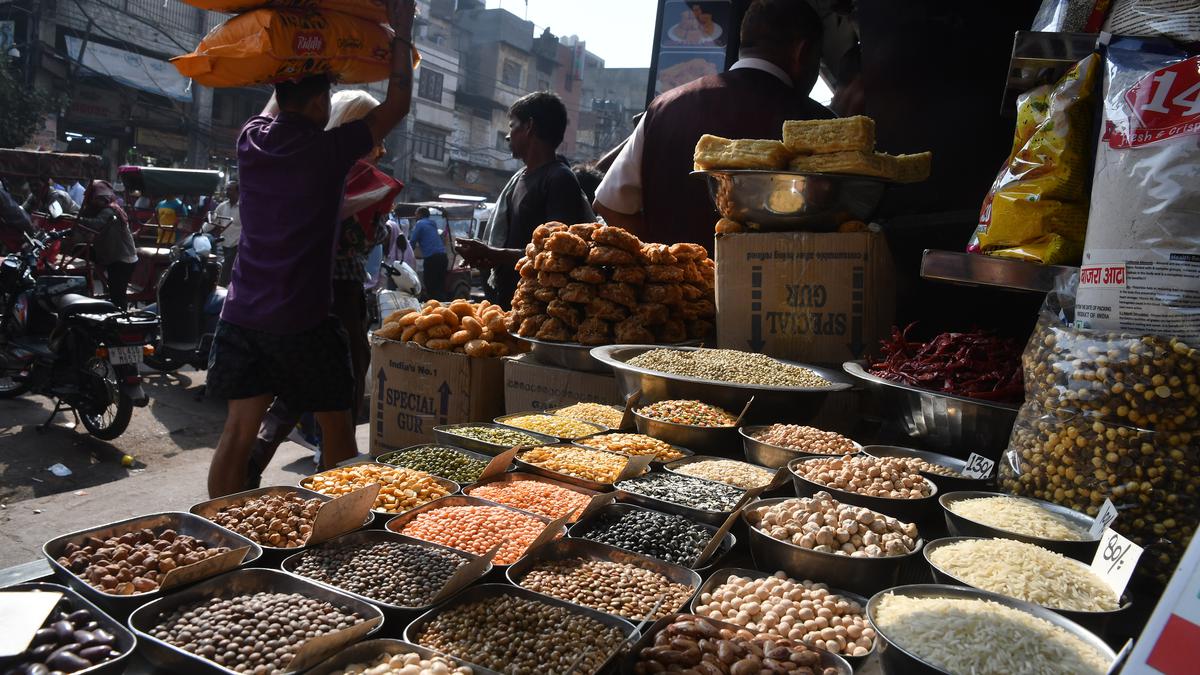
Cereals inflation remained firm at 8.44%, with paddy prices up 9.1% and wheat inflation accelerating to 7.3% from July’s 7% rate. Pulses inflation was a sharp 18.6, while potato inflation picked up further to 78% in August.
The price rise in onions stayed sharp at 65.75%, although below the 88.8% rise recorded in July. Inflation in fruits picked up to 16.7%, from 15.6% in July, while milk inflation offered some respite at 3.5%, compared with 8.5% a year ago.
The Food Index was down 1.13% from July levels, compared with the six-month high of a 2.7% sequential recorded in July.
Manufactured products’ prices reversed a three-month rising streak with an inflation of 1.22% in August, from 1.6% in July. They were 0.07% lower on a month-on-month basis.


India monitors U.S.-Iran tensions as Trump pauses attacks, leading to a significant drop in oil prices.

Union Minister Ashwini Vaishnaw launches three initiatives to enhance India's creative economy through AI training, citizen platforms, and advanced tech access.

Two Indian-flagged LPG tankers approach the Strait of Hormuz, navigating safely amidst regional tensions to reach Indian ports.

Gold and silver prices plummet over 7% due to West Asia tensions, inflation fears, and a stronger dollar.

Asian shares fall as rising oil prices and escalating Iran conflict diminish hopes for U.S. interest rate cuts.

Japan's SoftBank Group said Saturday it plans to build a huge new gas-fired power plant in the US state of Ohio

Silver prices plunge 9% to ₹2.06 lakh per kg in futures trade amid weak global cues and rising macroeconomic pressures.

OpenAI plans to nearly double its workforce to 8,000 from 4,500 by the end of 2026, the Financial Times reported on Saturday, citing two people with knowledge

Global equity markets plummet as West Asia tensions rise and oil prices surge, triggering significant investor anxiety.

The rupee hits a record low of 93.94 against the dollar amid foreign fund outflows and a crashing equity market.

The Thane police have arrested two co-founders of cryptocurrency exchange platform CoinDCX in connection with an alleged fraud of Rs 71.6 lakh, officials said

Meta Chief Executive Mark Zuckerberg is building a CEO agent to help him do his job, the Wall Street Journal reported

Insurance penetration and density are often misunderstood and do not reveal how many families are insured or whether they would be financially secure if the main earning member were to die. The real issue is not reach but adequacy, as households may have life insurance but not enough cover to replace lost income, leaving them financially vulnerable.