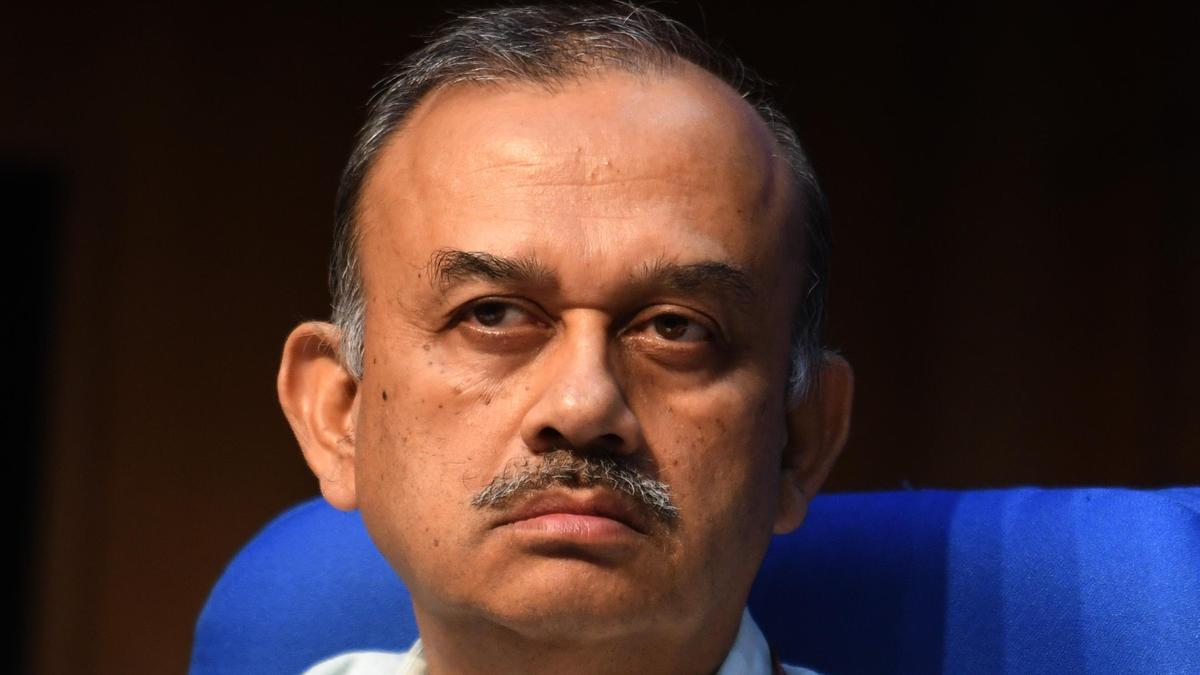
HDFC Bank appoints law firms to probe Atanu Chakraborty’s allegations
The Hindu
HDFC Bank appoints law firms to investigate allegations by former Chairman Atanu Chakraborty following his resignation.
HDFC Bank on Tuesday (March 25, 2026) said that it has appointed law firms, Trilegal and Wadia Ghandy & Co, to investigate and submit a report on the reasons cited by its former part-time Chairman, Atanu Chakraborty, in his resignation letter last week.
“Appointment of external law firms is a proactive measure taken by the Bank to independently look at the aspects mentioned in the letter to ensure an objective and fact-based assessment. This step is keeping in view to constantly benchmark with the highest governance standards that the Bank has practiced over decades,” the bank said.
This is in furtherance of the intimation made by the Bank on March 18, 2026, in relation to the resignation of Mr. Chakraborty as the Part-time Chairman and Independent Director of the Bank.
Mr. Chakraborty tendered his resignation as the Part-time Chairman and Independent Director of HDFC Bank with immediate effect, stating that “Certain happenings and practices within the bank, that I have observed over last two years, are not in congruence with my personal Values and Ethics.”
“We wish to inform you that, Mr. Chakraborty did not mention any happenings and practices which were not in congruence with his personal values and ethics,” the bank added.
“To reinforce the robust governance standards of the Bank, the Board of Directors of the Bank at its meeting held on March 23, 2026, took a proactive step and approved the appointment of external law firms (domestic and international), to conduct a review regarding Mr. Chakraborty’s resignation letter. The said law firms have been advised to provide their report on the same within a reasonable period of time,” the bank further said.


Two Indian-flagged LPG tankers approach the Strait of Hormuz, navigating safely amidst regional tensions to reach Indian ports.

Gold and silver prices plummet over 7% due to West Asia tensions, inflation fears, and a stronger dollar.

Asian shares fall as rising oil prices and escalating Iran conflict diminish hopes for U.S. interest rate cuts.

Japan's SoftBank Group said Saturday it plans to build a huge new gas-fired power plant in the US state of Ohio

Silver prices plunge 9% to ₹2.06 lakh per kg in futures trade amid weak global cues and rising macroeconomic pressures.

OpenAI plans to nearly double its workforce to 8,000 from 4,500 by the end of 2026, the Financial Times reported on Saturday, citing two people with knowledge

Global equity markets plummet as West Asia tensions rise and oil prices surge, triggering significant investor anxiety.

The rupee hits a record low of 93.94 against the dollar amid foreign fund outflows and a crashing equity market.

The Thane police have arrested two co-founders of cryptocurrency exchange platform CoinDCX in connection with an alleged fraud of Rs 71.6 lakh, officials said

Meta Chief Executive Mark Zuckerberg is building a CEO agent to help him do his job, the Wall Street Journal reported

Insurance penetration and density are often misunderstood and do not reveal how many families are insured or whether they would be financially secure if the main earning member were to die. The real issue is not reach but adequacy, as households may have life insurance but not enough cover to replace lost income, leaving them financially vulnerable.

Five top firms lose ₹1 lakh crore in market value, with HDFC Bank experiencing the largest decline of ₹56,124.48 crore.

L&T confirms 95% of its West Asia project sites are safe, while addressing logistics challenges amid ongoing regional conflicts.