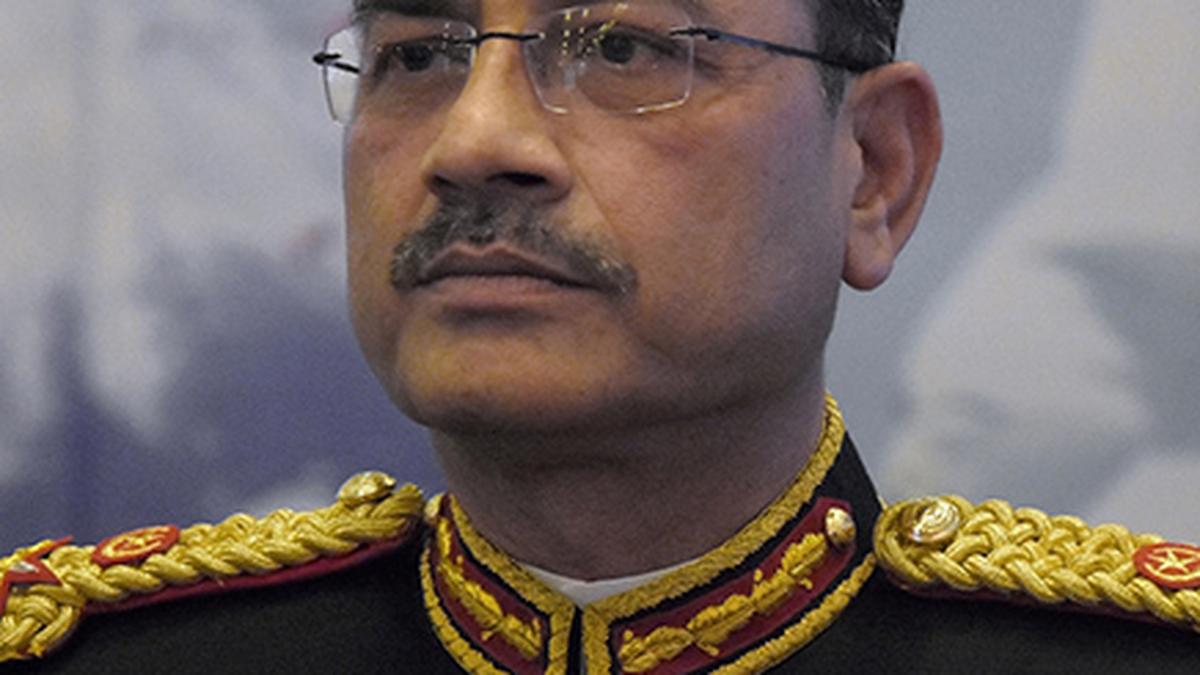
Who is Gen. Asim Munir, Pakistan’s army chief? Premium
The Hindu
Lt. Gen. Asim Munir's rise to power in Pakistan amid political turmoil and military tensions with India.
On April 17, while speaking at a gathering of expatriates in Islamabad, Gen. Asim Munir, Pakistan’s army chief, said “we are different from Hindus in every possible aspect of life”, invoking the two-nation theory. “No matter where you live, remember - your roots lie in a high civilisation, noble ideology, and proud identity.” He added that Kashmir “will be our jugular vein, we will not forget it, we will not leave our Kashmiri brothers in their historical struggle”. Five days later, armed terrorists gunned down 26 Indians, mostly civilian tourists, in Kashmir’s Pahalgam. The Resistance Front, which India believes is a front of Pakistan-based terrorist group Lashkar-e-Taiba, immediately claimed responsibility (it later denied any role in the killing). On May 7, India launched Operation Sindoor, an air strike at terror sites inside Pakistan. Pakistan responded with more fire, escalating the showdown, leading to both sides launching missile attacks. Is this what Gen. Munir wanted?
Follow the Operation Sindoor updates - May 10, 2025
Not long before becoming the most powerful man in Pakistan, Lieutenant-General Asim Munir was the shortest-serving head of the Inter-Service Intelligence (ISI), the spy agency. He was appointed the ISI head in October 2018 by the Army chief, Gen. Qamar Javed Bajwa. But eight months later, he was replaced with Lt. Gen. Faiz Hamid on the insistence of then-Prime Minister Imran Khan. The cricketer-turned-politician, who came to power a few months earlier, was still enjoying warm ties with the military establishment. While there was no official word on why the ISI chief was fired, an alleged audio clip of Aleem Khan, a former leader of Mr. Khan’s Pakistan Tehreek-e-Insaf (PTI) party, surfaced earlier in 2022 in which he accused the former Prime Minister of sacking Lt. Gen. Munir for “exposing corruption” of his wife, Bushra Bibi.
The tables would soon turn. Mr. Khan, who fell out with the military, was ousted from power in April 2022 through a no-confidence vote. As he was trying to make a comeback through political mobilisation across the country, Lt. Gen. Munir was appointed the Chief of the Army Staff (COAS). It was hardly a secret that Mr. Khan’s PTI was steadfastly opposed to Lt. Gen. Munir’s appointment. But Prime Minister Shehbaz Sharif and his brother and former Prime Minister, Nawaz Sharif, had their way in picking the successor of Gen. Bajwa, who retired on November 29, 2022, after six years at the top. “We hope that the new leadership of the armed forces of Pakistan will play its constitutional role... and stay out of the politics of domestic affairs...,” Mr. Khan’s party said in a statement about Lt. Gen. Munir’s appointment, without congratulating the new COAS.
Mr. Khan has been in jail since May 2023. And his PTI party, which was banned from contesting the February 2024 election, is in disarray. A coalition of former rivals, the Pakistan Muslim League-Nawaz and Pakistan People’s Party of the Bhuttos, is in power, under Shehbaz Sharif’s premiership, with the direct blessings of Gen. Munir.
Asim Munir entered the service through the Officers Training School programme in Mangla, where he won the prestigious Sword of Honour, an honorary sword given to best performing cadets. He started his military career as a Second Lieutenant in 1986 when the military dictator Gen. Zia-ul-Haq was ruling Pakistan.
As a Brigadier, he commanded the Pakistani troops in the Northern Areas, which includes Pakistan-occupied Kashmir, under Gen. Bajwa. After Gen. Bajwa became the Army chief in November 2016, Lt. Gen. Munir rose through the ranks quickly. He was appointed the Military Intelligence Director-General in 2017 and became a (three-star) Lieutenant-General in September 2018. In the same year, Gen. Bajwa promoted him as the ISI Director-General, but his fallout with Mr. Khan cost him the job. However, Lt. Gen. Munir survived Mr. Khan’s ire. He was posted as Gujranwala Corps Commander for two years and then moved to the General Headquarters in Rawalpindi as a Quartermaster General, in charge of supplies.


U.S. official Elbridge Colby emphasizes India's vital role in the Indo-Pacific, highlighting mutual benefits despite existing differences.

Philippine President Marcos declares national energy emergency amid Middle East conflict, ensuring fuel and essential goods supply stability.

Mohammad Baqer Zolqadr appointed as Iran's new security chief, succeeding Ali Larijani after his assassination.

Israel plans to occupy southern Lebanon amid escalating violence, targeting Hezbollah and causing widespread destruction and civilian casualties.

Trump reveals Secretary Hegseth was pivotal in discussing military action against Iran amid escalating tensions in the Middle East.

Iran arrests 466 individuals for online activities threatening national security amid ongoing tensions with Israel and the U.S.

China protests to Japan over a break-in at its Tokyo embassy, demanding a thorough investigation and accountability.

After securing a historic mandate in Nepal’s polls, Balendra Shah and the RSP face the task of navigating the West Asia conflict and managing ties with India, China and the U.S.

A magnitude 7.6 earthquake struck near Tonga, prompting evacuations but no tsunami warnings or immediate damage reports.

Iran launches missile attacks on Israel, rejecting Trump's negotiation claims as 'fake news,' escalating regional tensions and market volatility.

A large explosion at Valero refinery in Port Arthur, Texas, prompts shelter-in-place order for nearby residents, no injuries reported.

Kim Jong Un vows to solidify North Korea's nuclear status and labels South Korea as its "most hostile" adversary.

U.S.-Israel war on Iran LIVE: Follow The Hindu for updates on the West Asia conflict on March 24, 2026