Sri Lanka to stick to IMF path despite cyclone setback
The Hindu
Sri Lanka will continue its IMF programme despite cyclone devastation, facing calls for renegotiation from civil society groups.
Sri Lanka will press ahead with the ongoing International Monetary Fund (IMF) programme — criticised by sections for imposing painful austerity on ordinary people — despite the devastation caused by Cyclone Ditwah that struck the island nation in late November 2025.
Following President Anura Kumara Dissanayake’s meeting with a visiting IMF delegation earlier this week, his office said that the Fund pointed to Sri Lanka moving “in the right economic direction despite facing a severe disaster situation” and stated that there would be “no changes to the agreement”, on the Extended Fund Facility (EFF) programme.
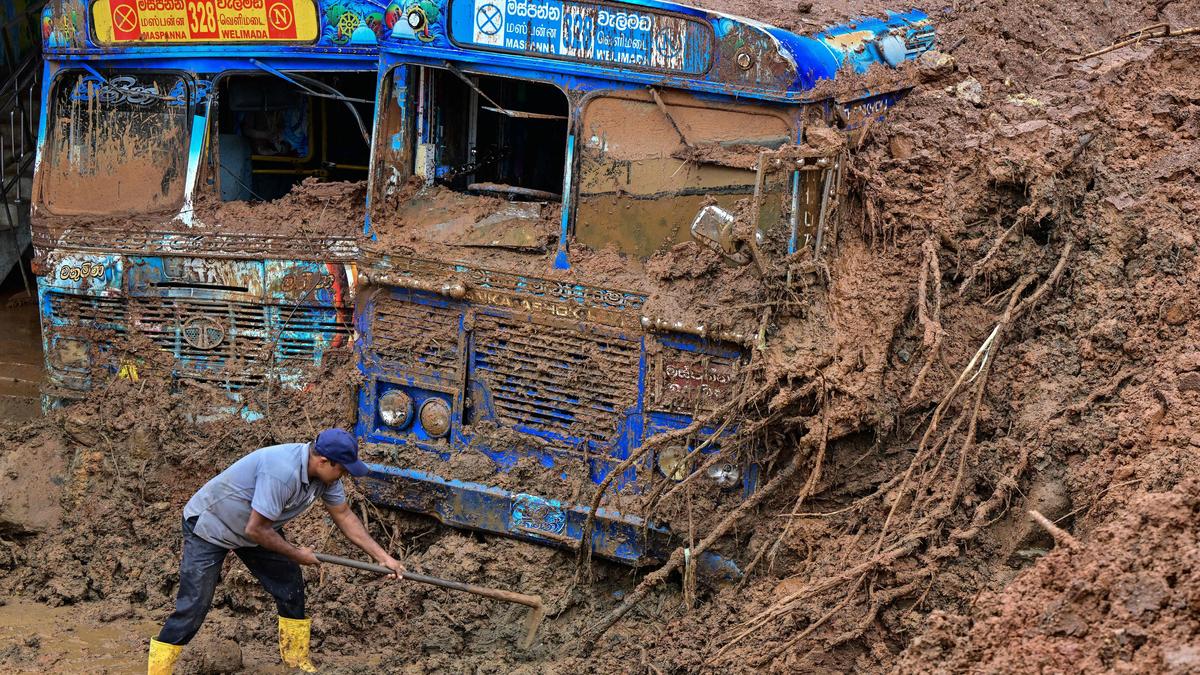
Cyclone Ditwah is the worst climate shock event the island has witnessed since the Indian Ocean tsunami of 2004. The torrential rains, record flooding, and multiple landslides have claimed at least 649 lives until now, while as many as 173 persons remain missing for two months. With huge losses to public infrastructure, homes, and livelihoods, the devastation is widely seen as a huge setback for a country getting out of a grave economic crisis that spiralled in 2022.
Also read | Cyclone Ditwah damage in Sri Lanka | The long path from wreckage to recovery
Early that year, then-President Gotabaya Rajapaksa sought the IMF’s help to cope with a serious balance of payments problem, as his government ran out of dollars to import essential items, including food grains. Forced to contend with long power cuts, food and medicine shortages, citizens took to the streets demanding that Mr. Gotabaya quit office. In April that year, his government announced Sri Lanka’s first sovereign default. In March 2023, the IMF approved $2.9 billion for Sri Lanka, then helmed by President Ranil Wickremesinghe, who replaced Mr. Gotabaya after citizens unseated him.
President Dissanayake, who was elected to office in September 2024, promised not to derail the IMF programme aimed at achieving macroeconomic stability, even as some in Sri Lanka flagged crushing austerity measures linked to the programme, including a drastic drop in value of ordinary people’s pension funds, tax hikes, rise in fuel and electricity prices, and a high cost of living that persists as a consequence.


Russia claims control of Potapivka village in Ukraine's Sumy region amid ongoing military efforts to establish a buffer zone.

Iranian missile strikes on Israeli towns cause widespread damage and injuries, marking a significant escalation in the ongoing conflict.

As Gor makes first trip as U.S. Special envoy to South Asia, Delhi watches strategic signals closely
Sergio Gor's inaugural trip as U.S. Special Envoy to South Asia signals strategic U.S. engagement amid regional tensions.

Slovenians vote in a tight election between liberal and populist candidates, impacting the country's future domestic and foreign policies.

Netanyahu asserts U.S.-Israel alliance fights Iranian threats, emphasizing global security after missile strikes on Israeli and European targets.

Israeli settlers attack Palestinian villages in the West Bank, causing injuries and destruction amid ongoing settlement expansion.

Britain asserts no evidence of Iran planning missile strikes on Europe, despite Israeli claims of missile capabilities.

UNESCO reports over half of countries have banned phones in schools due to concerns about attention, cyberbullying, and social media impact.

Analysis reveals a U.S.-operated Patriot missile likely caused a pre-dawn explosion in Bahrain, injuring numerous civilians.

Sri Lanka raises fuel prices by 25% amid ongoing West Asia conflict, impacting petrol and diesel costs significantly.

Iran strikes near Israeli nuclear research center as Trump threatens attacks on Iranian power plants
Iran's missile strikes near Israel's nuclear site escalate tensions as Trump threatens retaliation against Iranian power plants.

Saudi Arabia intercepts one of three ballistic missiles targeting Riyadh amid ongoing regional tensions and threats from Iran.

Iran's death toll exceeds 1,500 amid escalating war, with heavy airstrikes and shifting U.S. and Israel strategies reported.