What to know about the Strait of Hormuz as Iran plans military drill while tensions are high with U.S.
The Hindu
Iran's military drill in the Strait of Hormuz raises tensions with the U.S. amidst warnings about global shipping safety.
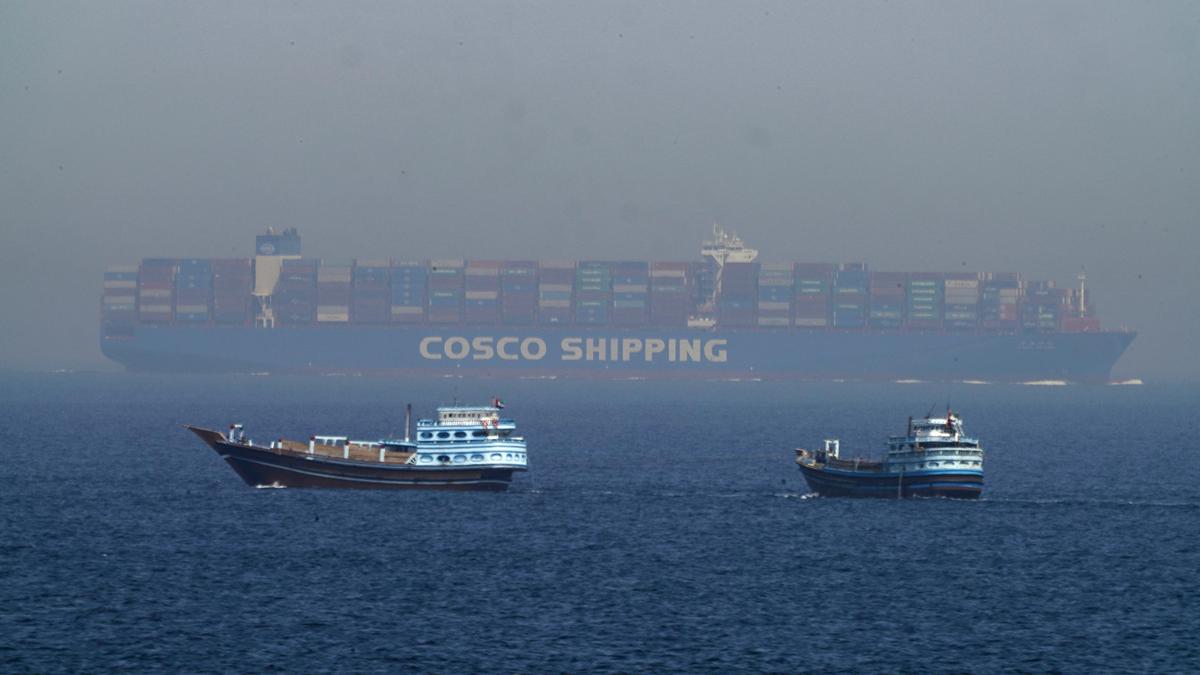
The Strait of Hormuz, the narrow mouth of the Persian Gulf, again has become a focus of tensions as Iran prepares to launch a military drill that could see fire into a lane crucial for global shipping.
Iran has warned ships that it will conduct a live fire drill on Sunday (February 1, 2026) and Monday (February 2, 2026) in the strait, which sees a fifth of all oil traded pass through the tight corridor between the Islamic Republic and Oman.
The U.S. military's Central Command issued its own warning early Saturday (January 31, 2026), telling Tehran that any “unsafe and unprofessional behaviour near U.S. forces, regional partners or commercial vessels increases risks of collision, escalation and destabilisation.”
Here's what to know about the drill, the U.S. warning, what caused the tensions and what might happen next in the Strait of Hormuz.
The Strait of Hormuz resembles a bend looking down from space. Its narrowest point is just 33 kilometres (21 miles) wide. It flows from the Persian Gulf into the Gulf of Oman. From there, ships can then travel to the rest of the world. While Iran and Oman have its territorial waters in the strait, its viewed as an international waterway all ships can ply. The United Arab Emirates, home to the skyscraper-studded city of Dubai, also sits near the waterway.
The Strait of Hormuz through history has been important for trade, with ceramics, ivory, silk and textiles moving from China through the region. In the modern era of supertankers, the narrow strait proved deep and wide enough to allow for oil to pass through it. While there are pipelines in Saudi Arabia and the UAE that can avoid the passage, the U.S. Energy Information Administration says “most volumes that transit the strait have no alternative means of exiting the region.” The vast majority of the oil and gas moving through the strait goes to markets in Asia. Threats to the route have spiked global energy prices in the past, including during the 12-day war Israel launched against Iran in June.


Slovenia's parliamentary election results show a tight race between liberals and populists, signaling potential political instability ahead.

IEA chief warns of a potential energy crisis worse than the 1970s, with 11 million barrels lost daily amid regional conflicts.

Cuba begins restoring power after a nationwide grid collapse, affecting thousands amid an ongoing energy crisis and blackouts.

The Hindu LIVE updates on March 23 2026 on Iran-Israel war. Iran faces deadline of US President Donald Trump warning to open Strait of Hormuz

Brazil's Lula condemns renewed colonialism and U.S. interference in developing nations at a summit in Colombia.

Saudi Arabia expels Iranian military staff amid escalating tensions and ongoing missile attacks during the U.S.-Israeli war on Iran.

Russia claims control of Potapivka village in Ukraine's Sumy region amid ongoing military efforts to establish a buffer zone.

Iranian missile strikes on Israeli towns cause widespread damage and injuries, marking a significant escalation in the ongoing conflict.

As Gor makes first trip as U.S. Special envoy to South Asia, Delhi watches strategic signals closely
Sergio Gor's inaugural trip as U.S. Special Envoy to South Asia signals strategic U.S. engagement amid regional tensions.

Slovenians vote in a tight election between liberal and populist candidates, impacting the country's future domestic and foreign policies.

Netanyahu asserts U.S.-Israel alliance fights Iranian threats, emphasizing global security after missile strikes on Israeli and European targets.

Israeli settlers attack Palestinian villages in the West Bank, causing injuries and destruction amid ongoing settlement expansion.

Britain asserts no evidence of Iran planning missile strikes on Europe, despite Israeli claims of missile capabilities.