What is behind the rise of quick commerce? | Explained Premium
The Hindu
Quick commerce revolutionizes shopping in urban India with rapid delivery, data-driven customization, and potential anti-competitive practices.
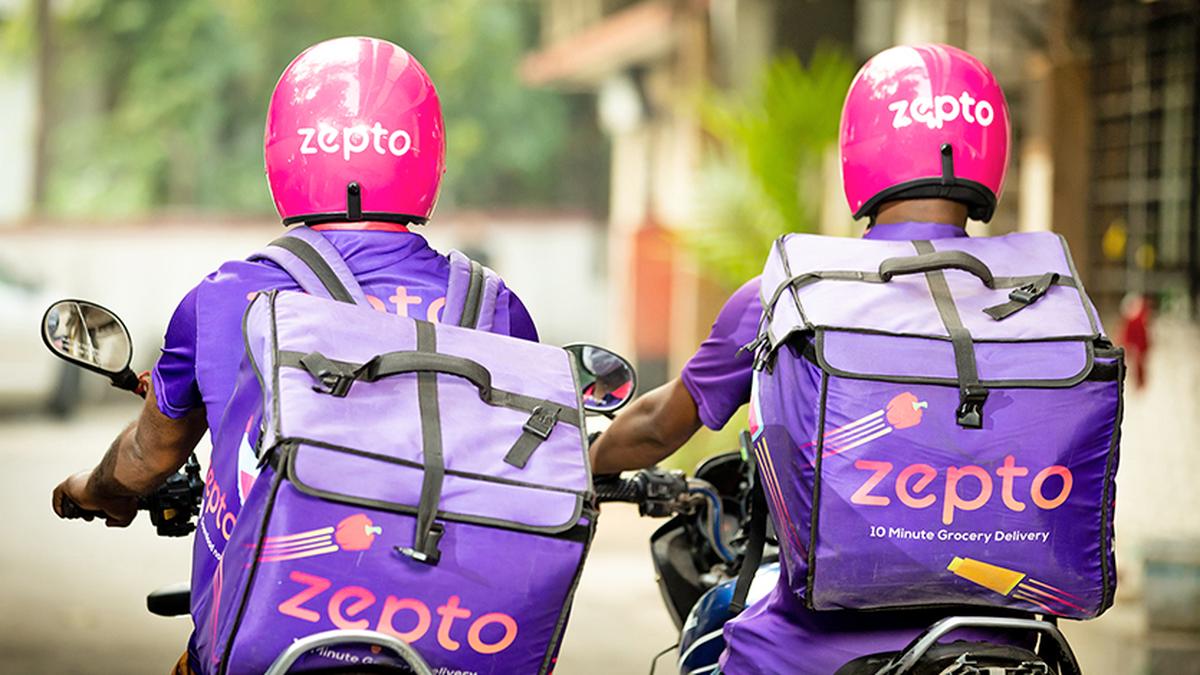
The story so far: Quick commerce’s initial utility was presented to under-lockdown customers during the COVID-19 pandemic. However, the youngest avenue of digital shopping, having outlived its initial utility, stayed on to alter how people shop — particularly in urban India.
As a subclass of e-commerce, quick commerce (Q-commerce) entails rapid delivery, typically in 10 to 20 minutes, of products to the customer’s doorstep. This is facilitated by an elaborate network of dark stores and/or distribution centres. Dark stores refer to warehouses used by the platforms solely to fulfil online orders, with no in-person shopping. The idea is to be in close proximity to the consumer to facilitate faster deliveries.
Additionally, unlike a traditional retail store or modern retail (super or hyper markets), quick commerce based around a mobile app benefits from customer data to create a feedback loop. This helps them provide a customised shopping experience in addition to planning their inventory and responding better to the demand of a product (and categories). An example could be estimating when to stock up a certain product that has a seasonal demand or an abrupt demographic influence, among others.
According to a paper by the Centre for Transportation and Logistics of IIM Ahmedabad, quick commerce is beneficial to retailers owing to the prospect of enhanced brand awareness among consumers citing their proliferation. Angshuman Bhattacharya, Partner and National Leader for Consumer Product and Retail Sector at EY-Parthenon, observed that the availability of low-cost employable manpower, of a certain age and economic profile, has been among the crucial factors for the uptick and efficiency of quick commerce in India. The other aspect is about abundant choice. Scale also enables supply side advantages to quick commerce platforms. “If an individual company has to distribute a frozen or chilled product, they could be required to place a freezer in a Kirana store which is very expensive,” he noted.
According to a survey by consultancy firm NeilsenIQ, 41% of urban consumers prefer modern trade, general trade 25%, e-commerce 22% and quick commerce 12%. Further, according to another consultancy firm Deloitte, large FMCG brands reported a two-fold increase in share of quick commerce within their total e-commerce sales. This represented about 35% of their online sales.
A separate Deloitte consumer survey (2024) also observed consumers’ preference for quick commerce over traditional e-commerce for purchasing food and beverages. It held this was because these were often “impulse purchases or immediate needs”. In contrast, the survey illustrated, e-commerce was preferred for home, beauty and personal care products which are generally more planned purchases. Modern trade however retained a consistent higher preference across all categories of products for consumers’ liking for the availability of large pack sizes for monthly groceries, better prices and discounts.
The other determining aspect relates to the minimum cart value for availing free deliveries. According to Mr. Bhattacharya, so long as the convenience fee is not excessive, customers would not mind. “Retail shops usually close around 8 p.m. Now, should a customer require something at 10 p.m., quick commerce is the only option. Else, there lies an unaddressed demand,” he said. The EY-Parthenon partner explained that that platforms’ path towards profitability would be led by the right mix of merchandise and brands, premiumisation and own labels rather than penalising low-cart sizes. “Driving efficiency in terms of manpower and vehicle productivity would be another crucial factor,” he held.


Coal Minister urges State leaders to maintain stable coal prices amid rising global costs, assuring ample domestic supply.

Mahanagar Gas ensures reliable PNG and CNG supply in Maharashtra and Karnataka, offering customer benefits to encourage adoption.

OpenAI Chief Executive Sam Altman said on Monday he has stepped down from the board of directors of Helion Energy, the fusion startup he has backed since 2015

Nikhil Kamath and Quant MF back Swan Defence's oversubscribed ₹500 crore Offer for Sale, reflecting strong investor interest in defence stocks.

HDFC Bank appoints law firms to investigate allegations by former Chairman Atanu Chakraborty following his resignation.

Airlines are cancelling numerous flights amid escalating West Asia conflicts, leaving tens of thousands of passengers stranded worldwide.

The rupee declines 20 paise to 93.73 against the dollar as global oil prices rise and investor uncertainty persists.

Siemens said on Monday that the Iran war has led to customers holding back on new investments as prices increase for raw materials and energy.

OpenAI said its close ties with Microsoft could be a potential risk to its business, telling investors that the software company is responsible for “a substantial portion of our financing and compute,” CNBC reported

LPG crisis: Alternative solutions are being considered, with ammonia cylinders being increasingly used for industrial applications amid delays in commercial LPG deliveries.

India monitors U.S. military pause on Iran as oil prices dip; External Affairs Minister engages with GCC nations for support.

India monitors U.S.-Iran tensions as Trump pauses attacks, leading to a significant drop in oil prices.

Union Minister Ashwini Vaishnaw launches three initiatives to enhance India's creative economy through AI training, citizen platforms, and advanced tech access.