Western hegemony and the language of violence
The Hindu
Explore how Western hegemony shapes narratives of violence and legitimacy in the ongoing war on Iran.
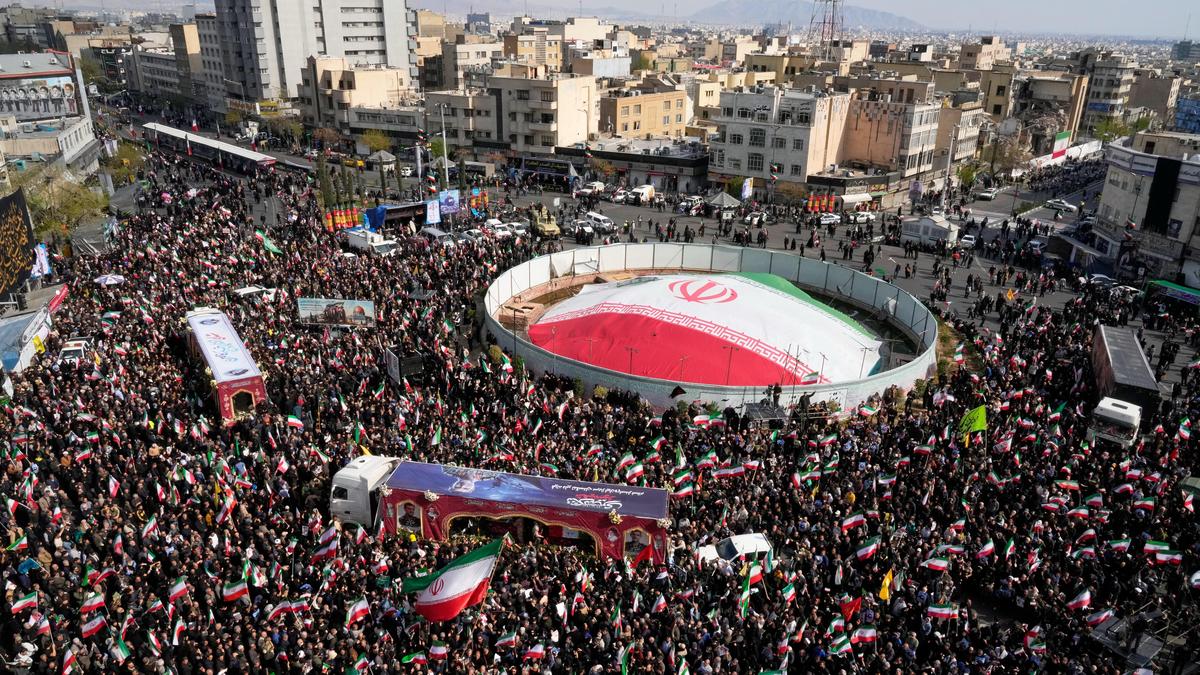
The war on Iran has rapidly become one of the most consequential conflicts since the Second World War. On February 28, the United States and Israel launched coordinated strikes across Iran, targeting critical sites and eliminating the senior Iranian leadership. The war has since expanded with missile and drone attacks, causing widespread destruction. Disruption of ship movement through the Strait of Hormuz has resulted in a pronounced volatility in global oil markets. Governments worldwide are observing the situation with increasing concern. The conflict has now entered a more unpredictable phase with discussion of negotiations occurring alongside preparations for a potential military escalation, even the possible deployment of American ground forces.
While the exercise of military power in this war is evident, the narratives that accompany it raise deeper questions. Why is Iran characterised in Western discourse as a rogue state and a threat to international order, whereas the U.S. frames its own use of force as lawful, defensive and stabilising? Furthermore, how has this narrative achieved such widespread acceptance in international politics?
The explanation lies not only in the distribution of power but also in the processes through which knowledge about international politics has been produced.
Many key terms used in international politics appear neutral. Terms such as “terrorism,” “rogue state”, or “responsible power” seem to offer simple descriptions of behaviour. In practice, however, these terms frequently serve as political labels. Powerful states shape how these terms are used. They classify states and actors into moral categories and usually determine what constitutes acceptable force and what counts as illegitimate violence.
This pattern is visible in the ongoing war on Iran, where language constructs a moral hierarchy regarding the use of violence.
For decades, the linguist and political thinker Noam Chomsky has been among the most prominent critics of this double standard. He contends that the label “rogue state” often reflects political power rather than consistent legal criteria. If uniform standards were applied, major powers themselves may be classified as rogue actors due to repeated violations of international law and their support for violent proxy groups abroad.


Telangana CM Revanth Reddy mocks Kerala's CM Vijayan using a film dialogue during a UDF campaign roadshow ahead of polls.

Explore how Western hegemony shapes narratives of violence and legitimacy in the ongoing war on Iran.

PNG demand surges in Hyderabad as LPG supply disruptions push households and businesses to seek cheaper, more reliable alternatives.

Palaniswami criticizes the DMK government as "anti-farmer," citing rising prices and halted projects affecting Tamil Nadu’s agriculture.

MDMK's fourth candidate for the Sirkazhi constituency will contest on DMK's 'Rising Sun' symbol, confirms Vaiko.

Lok Sabha passes the Jan Vishwas Amendment Bill to decriminalise minor offences and enhance ease of doing business and living.

P. Shanmugam criticizes alliance partners contesting on the principal party's symbol, emphasizing the importance of party identity in elections.

PM Narendra Modi chairs CCS meeting to address the West Asia conflict's impact on energy, agriculture, and citizen welfare.

Election squad inspects Minister Duraimurugan's vehicle in Vellore amid ongoing campaign, following violation of election guidelines.

A.K. Saseendran defends his candidacy in Elathur, addressing youth representation and farmer protests ahead of the 2026 Kerala Assembly polls.

Solar power system launched at King Koti dialysis centre to enhance sustainability and reduce operational costs.

Karnataka Minister M.B. Patil requests the Centre to launch an express train service between Bengaluru and Vijayapura to reduce travel time.

Revanth campaigns in Kerala, says LDF and BJP have secret pact