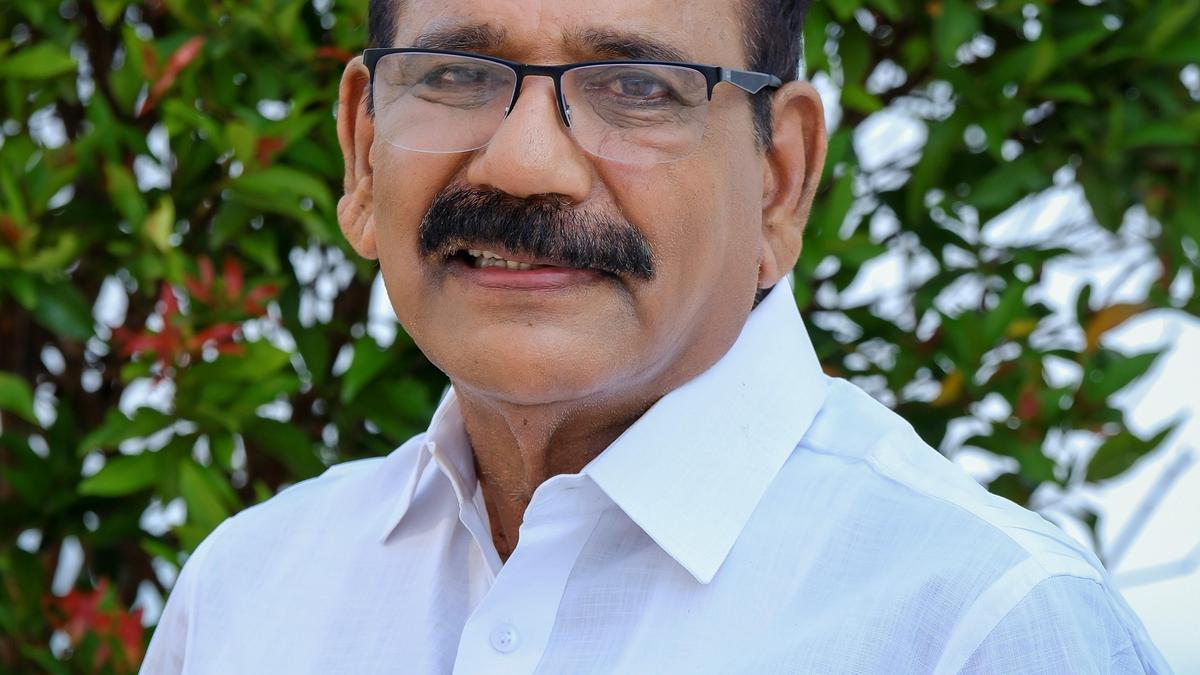
Kerala Assembly polls 2026 | There was no young candidate on NCP’s final list to challenge my candidature in Elathur: A.K. Saseendran
The Hindu
A.K. Saseendran defends his candidacy in Elathur, addressing youth representation and farmer protests ahead of the 2026 Kerala Assembly polls.
Why did you decide to contest again in the Assembly election despite protests from a section of leaders in the Nationalist Congress Party (NCP) who sought a younger candidate in Elathur?
Those who raised their voice in favour of a younger candidate did not present any widely acceptable alternative. In fact, only seniors’ names were suggested. Moreover, no younger candidates were there on the list submitted to the NCP’s national leadership. As you know, our party has limited opportunities, but a large number of capable individuals. I decided to contest after the party finalised my name for one of the winnable seats, considering multiple factors. The decision was approved by all, although there was some initial confusion.
How do you view the protest by upland farmers who have fielded their own candidate against you in the Elathur Assembly constituency?
It is a rather unusual development that a candidate has been fielded in an urban constituency citing farmers’ concerns. A few individuals, under the guise of representing farmers, are attempting to create anti-Left Democratic Front (LDF) sentiments in upland areas. The LDF government has been at the forefront of addressing major concerns, including issues related to buffer zones around wildlife sanctuaries. The government’s achievements in this sector outweigh the criticism regarding unimplemented projects. Politically motivated groups are trying to misinterpret facts.
Do you believe that the State government has taken sufficient measures to prevent human-wildlife conflict?
Issues arising from climate change must be considered while addressing human-wildlife conflict. We had submitted a ₹620-crore proposal to the Centre aimed at protecting the forest ecosystem and addressing these challenges effectively, but it was not approved. The State government had also proposed amendments to the Wildlife Protection Act, 1972, in favour of farmers, but these were rejected.


Blood is on DMK’s hands as it failed to protect children and women, slams EPS

Karnataka's Excise revenue increased by 11.94% despite a significant decline in beer sales due to adverse weather conditions.

Evangelical Fellowship urges fair review of FCRA regulations to protect institutions serving vulnerable communities during Parliament's consideration of the amendment bill.

Karnataka's GST collection rises by 11.6%, totaling ₹1.58 lakh crore in 2025-2026, second highest in India.

CM M.K. Stalin defends DMK's integrity in T.N. rights during NDA membership, criticizing AIADMK's current alliance with BJP.

Explore the Bhavanisagar Assembly constituency's diverse challenges, from healthcare and water scarcity to infrastructure and agricultural needs.

Electoral uncertainty looms in West Bengal with over 60 lakh voter claims pending adjudication ahead of upcoming elections.

Over 55,000 households registered on the Census self-enumeration portal on its first day, marking a digital milestone for Census 2027.

NDA candidate for Madurai Central Assembly constituency Sundar C to begin campaign on April 4

Medical services under Dr. NTR Vaidya Seva are suspended due to unpaid dues, impacting cashless treatments for low-income patients.

H.S. Phoolka, 1984 riots crusader and Padma Shri recipient, joins BJP after a political hiatus and prior affiliations.

Medical experts have urged caution over potential eye-related risks associated with GLP-1 receptor agonists, a class of drugs increasingly used to treat obesity and type-2 diabetes.

President of India Droupadi Murmu has lauded the services of Sree Siddaganga Mutt, which, by imparting education to underprivileged students from marginalised sections of society and rural areas, is making an invaluable contribution towards the creation of an inclusive society.