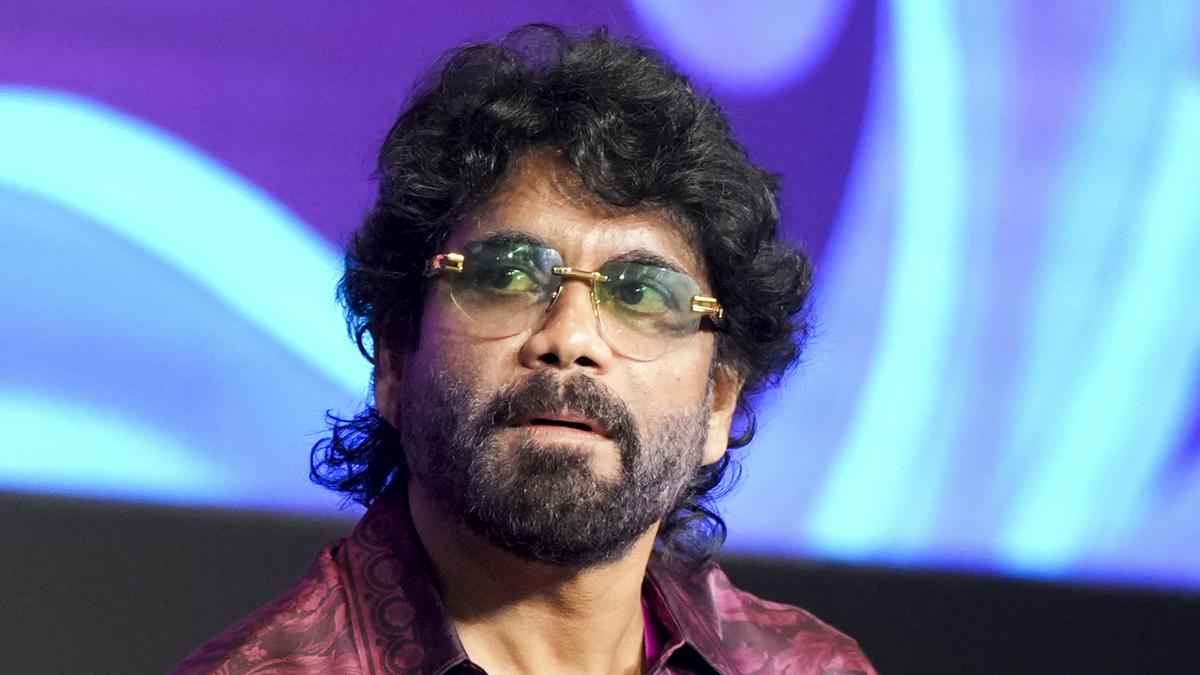
WAVES Summit 2025: Nagarjuna, Karthi, Anupam Kher decode Pan-India filmmaking
The Hindu
Telugu superstar Nagarjuna Akkineni, veteran Anupam Kher, Tamil actor Karthi and actor-politician Kushboo Sundar discussed the rise and rise of Pan-India filmmaking at the World Audio Visual & Entertainment Summit (WAVES) in BKC, Mumbai on Friday
Telugu superstar Nagarjuna Akkineni headlined a session on the rise and rise of Pan-India filmmaking at the World Audio Visual & Entertainment Summit (WAVES) in BKC, Mumbai on Friday (May 2). He was joined in the panel by veteran Anupam Kher, Tamil actor Karthi and actor-politician Kushboo Sundar.
Anatomising the success of recent Pan-India juggernauts like Pushpa, Baahubali and KGF — all big-budget productions originating from the South — Nagarjuna argued that such films worked because audiences in India love larger-than-life heroes.
He pointed out that both the Pushpa films made more money in the North than in Telugu centres. “We have seen similar stories in Telugu before, like Pushpa, which has larger-than-life heroes. Whereas in the North — in Bihar, UP, and Punjab — they wanted to see their heroes like Pushpa Raj, Yash in KGF or Baahubali. For Indian people and culture, just living day to day is difficult, and when they want to overcome the stress by watching films, they want to see magic on screen,” Nagarjuna said.
The trailer for Allu Arjun-starrer Pushpa 2: The Rule was launched in Patna, Bihar, while Rocky bhai — the protagonist played by Yash in the megahit Kannada franchise KGF — became a pop-cultural phenomenon across the North. These films exude a rooted, rustic heroism that stands apart from Hollywood gloss, yet manage to transport viewers to a fantasy world.
“Allu Arjun was a star in the North for ten years before Pushpa happened. It wasn’t an overnight success,” Karthi said.
ALSO READ: Opinion: Pan-Indian cinema — A plague of tiring sequels, buzzkill cliffhangers, ineffective cameos and half-films
Pan-Indian films are offering big-screen escapism without moving away from their native roots, observed Nagarjuna. “That’s what the larger-than-life stories are doing, without losing the fundamentals of Indian storytelling. They are not going away from that, which is why they have been successful. Rajamouli shot Baahubali, frame to frame, thinking it was a Telugu film. He was very proud of his roots and language, and he shot it like a Telugu film, and people loved it across the world! If you are rooted to your storytelling, it will resonate,” Nagarjuna said.


South African naturalist Steve Boyes speaks on ghost elephants, ancestral tracking, and Werner Herzog’s documentary exploring Angola’s elusive highland giants

Actor-director Amol Palekar will receive META's Lifetime Achievement award for 2026 on March 25 in New Delhi.

India's artists unite against rising censorship, advocating for creative freedom and support for marginalized voices in the arts.

Written and directed by Kunal, the film also stars Sparsh Shrivastava and Vanshika Dhir

This year, Bharatnatyam artistes will present the Tyagaraja Aradhane as a dance performance

This year, Bharatnatyam artistes will present the Tyagaraja Aradhane as a dance performance

The actor, along with director Sushant Shah, speak about their upcoming series ‘Chiraiya’, Divya’s process of working on the dialect, Sushant’s approach to telling a story about women, and more

An independent video, ‘Feel the Spark’ by Raleigh Rajan with vocals by Ciera Dumas that celebrates Tamil literary giants, garnered 1.4 million views in less than 36 hours.

In ‘Jack Ryan: Ghost War’, John Krasinski is back as the savvy CIA analyst, diving headfirst into a high-stakes mission that unravels a deadly conspiracy and pits him against a rogue black-ops unit

Shriram Bharatiya Kala Kendra’s Shankarlal festival showcased rare ragas, radiant artistry, and inclusive performances, from Pt Madhup Mudgal’s serene morning ragas to Ramana Balachandran’s Saraswati veena.

Explore "Threads that Bind: The Kantha Project," an exhibition in Delhi reimagining kantha as a medium of repair and renewal.

Sean Penn skips the Oscars to meet Ukraine's Zelenskyy, who praises him as a "true friend" amid the war.

The teaser of Tamil star Suriya’s much-awaited film with director Venky Atluri, titled Vishwanath and Sons, was unveiled by the makers on Monday