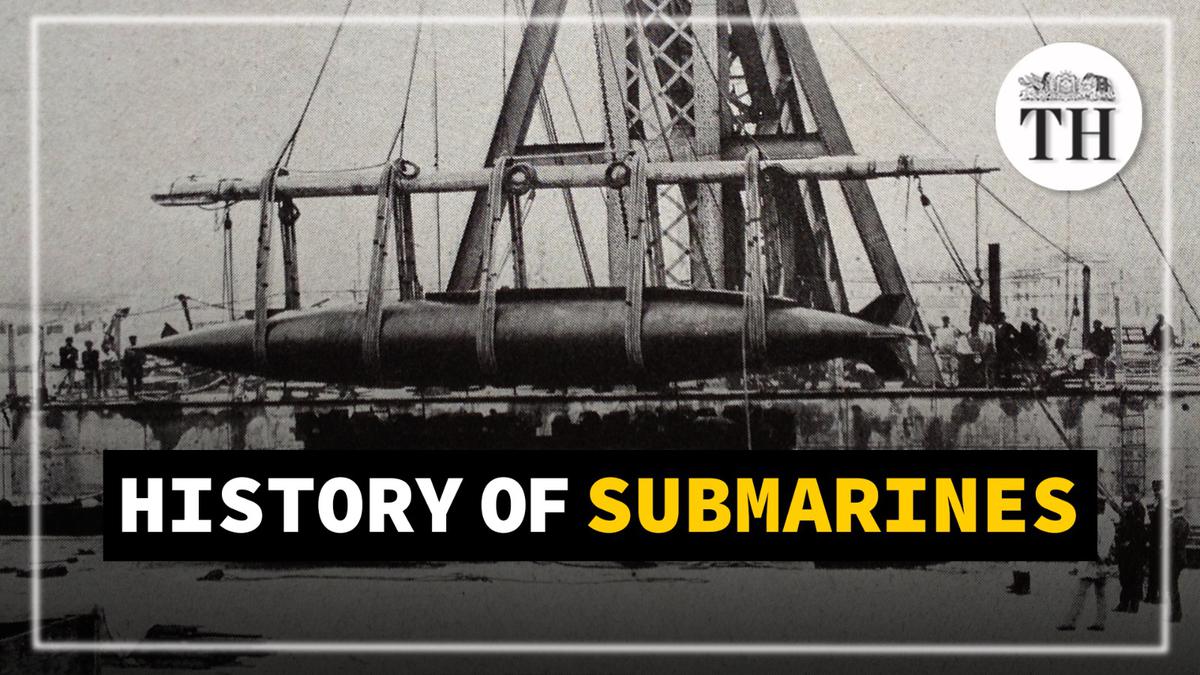
Watch | From simple wooden vessels to nuclear-powered monsters - the evolution of submarines
The Hindu
A video on the history of submarines
The disappearance of the Titan submersible during an expedition to view the Titanic wreckage, is a tragic reminder of the dangers and mysteries of the deep sea.
How did submarines come to be from simple wooden vessels to nuclear-powered monsters?
The first serious discussion of a submarine, a craft designed to be navigated underwater, appeared in 1578 by William Bourne, a British mathematician and writer on naval subjects. Bourne proposed an enclosed boat that could be submerged and rowed underwater. It consisted of a wooden frame covered with waterproof leather. But he did not construct his boat.
Between 1620-1624, Cornelis Drebbel, a Dutch engineer, built several wooden submersibles. Powered by fixed paddles and sealed with greased leather, it could dive underwater.
He showed his inventions to King James I of England and other spectators by diving up to 15 feet deep in the Thames River for several hours. While Drebbel’s submarines had no weapons or military purpose, they inspired other inventors to experiment with underwater navigation.
When were submarines used in combat? How were they used during the World Wars? We trace the history of submarines.
Script and production: Richard Kujur


Vietnam accelerates its shift to ethanol fuel as rising energy prices from the Iran war impact its economy.

Teenagers sue Musk's xAI, alleging its image-generator created explicit images of them as minors, sparking concerns over AI safety.

Shorts News:Watch: Netanyahu: Israel ‘acted alone’ in Iranian gas field attack

Indonesian billionaire Michael Bambang Hartono, co-founder of Djarum Group, has died at 86, leaving a significant legacy.

European nations, Japan, and Canada unite to ensure safe passage through the Strait of Hormuz and stabilize energy markets.

Some of the estimated 20 billion yuan ($2.9 billion) worth of equipment, including screen-printing production lines, will require export approval from Chinese regulators, according to the people. It wasn't immediately clear how much of the equipment would require approval or how long it would take.

Three men, including a Super Micro VP, charged with smuggling U.S. AI technology to China, threatening national security.

Trump compares U.S. strikes on Iran to Pearl Harbor in meeting with Japan's PM, highlighting the element of surprise.

Iran-Israel war: Follow the latest updates from The Hindu on the West Asia conflict on March 20, 2026

The closure of the Strait of Hormuz disrupts a vital artery of the global economy, triggering price increases and turmoil in energy markets; as supply shocks reshape the geopolitics of energy, countries like India, the U.S., and Russia recalibrate strategies amid shifting oil flows and rising dependence

EU lawmakers advance U.S. trade deal legislation, overcoming delays and adding safeguards amid concerns over compliance from the Trump administration.

Pro-Iran Iraqi group pauses U.S. embassy attacks for five days, imposing conditions amid ongoing regional tensions and strikes.

Russia condemns the Israeli airstrike injuring RT journalists in Lebanon, calling it deliberate amid ongoing regional conflict.