Virtual Earth-sized telescope shows how science is changing
The Hindu
It’s the first large physics collaboration bringing together perspectives from natural sciences, social sciences and the humanities
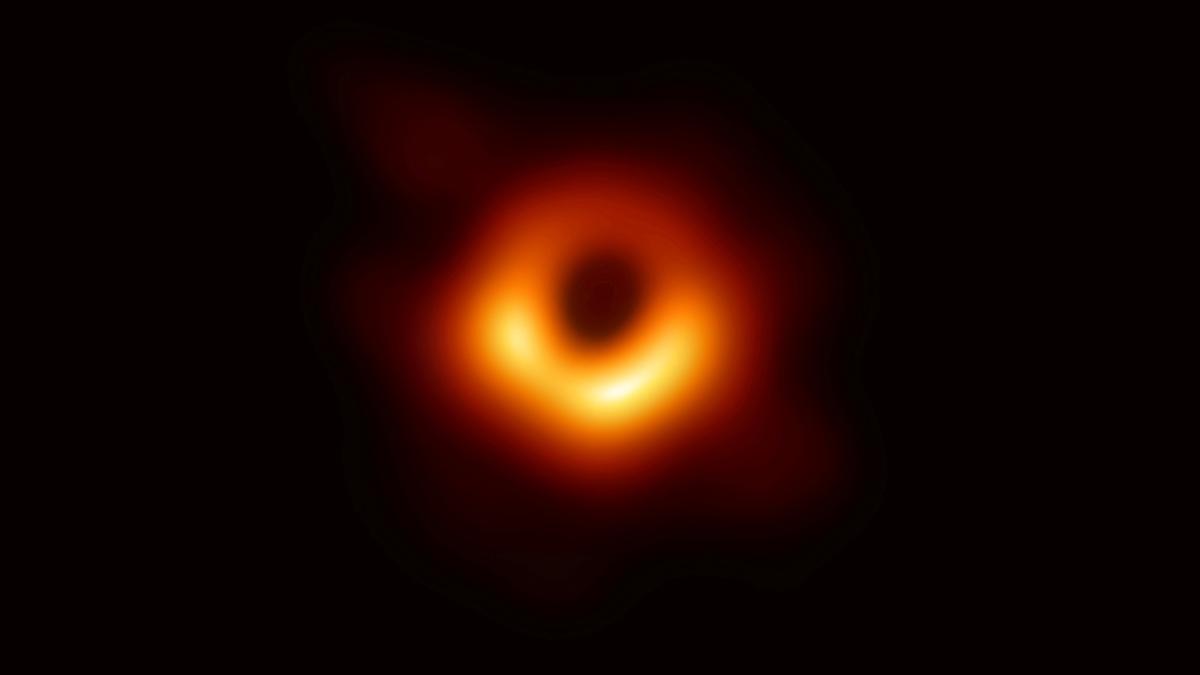
In 2019, the Event Horizon Telescope (EHT) collaboration produced the first-ever image of a black hole, stunning the world.
Now, scientists are taking it further. The next generation Event Horizon Telescope (ngEHT) collaboration aims to create high-quality videos of black holes.
But this next-generation collaboration is groundbreaking in other ways, too. It’s the first large physics collaboration bringing together perspectives from natural sciences, social sciences and the humanities.
The larger a telescope, the better it is at seeing things that look tiny from far away. To produce black hole images, we need a telescope almost the size of Earth itself. That’s why the EHT uses many telescopes and telescope arrays scattered across the globe to form a single, virtual Earth-sized telescope. This is known as very long baseline interferometry.
Harvard astrophysicist Shep Doeleman, the founding director of the EHT, has likened this kind of astronomy to using a broken mirror. Imagine shattering a mirror and scattering the pieces across the world. Then you record the light caught by each of these pieces while keeping track of the timing, and collect those data in a supercomputer to virtually reconstruct an Earth-sized detector.
The 2019 first-ever image of a black hole was made by borrowing existing telescopes at six sites. Now, new telescopes at new sites are being built to better fill in the gaps of the broken mirror. The collaboration is currently in the process of selecting optimal places across the world, to increase the number of sites to approximately 20.
This ambitious endeavour needs over 300 experts organised into three technical working groups and eight science working groups. The history, philosophy and culture working group has just published a landmark report outlining how humanities and social science scholars can work with astrophysicists and engineers from the first stages of a project.


Mercedes-Benz CLA 250+ with EQ Technology review: design, performance, range and features explained. Discover how the new electric CLA combines advanced AI, long range, fast charging and futuristic styling for the next generation of luxury EVs.

Pi Day is celebrated every year on March 14, honouring the significance of the mathematical constant π and its applications in mathematics.

Discover how sculptural interior design transforms modern spaces, blending creativity and functionality to evoke emotion and identity.

A study reveals that certain antibiotics can cause long-lasting changes in gut microbiome diversity for up to eight years.

Indian scientists and international experts are divided over a study questioning the viability of a nuclear reactor fuel called HALEU-thorium; while critics cite safety risks, proponents argue the technology is vital to achieve national energy goals.

ISRO and AIIMS partner to enhance space medicine research, focusing on human health during long-duration space missions.

A practical guide to induction setups for students, families, and home food businesses as India’s LPG supply faces its biggest disruption in years

Explore the electrifying Oscars 2026 race, featuring standout films, baffling nominations, and memorable performances amid a cinematic transition.

Zai and Rom Whitaker’s latest book for young readers, The Book of Indian Snakes, tackles common misconceptions surrounding snakes, highlighting their utility to humans

Discover PC Mahalanobis's pivotal role in India's statistical revolution and his lasting influence on modern statistics in this episode.

Explore why nothing can exceed light speed and the paradoxes that arise if it were possible.

Scientists have engineered bacteria to produce designer proteins by smuggling artificial amino acids, enabling precise drug delivery and multifunctional applications.

Scientists successfully grew chickpeas in simulated lunar soil, paving the way for future extraterrestrial agriculture on the moon.