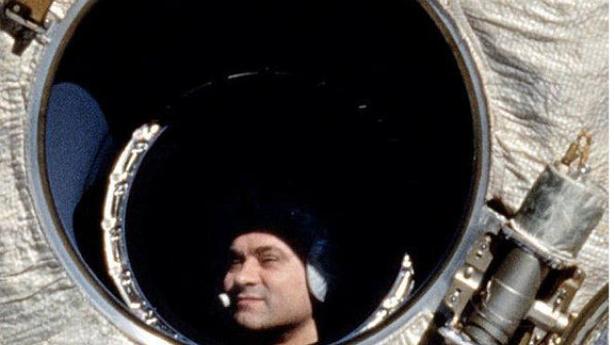
Valery Polyakov, took longest single trip to space, dies at 80
The Hindu
Polyakov's record of 437 days in space began on January 8, 1994, orbiting the Earth more than 7,000 times, before returning March 22, 1995
Valery Polyakov, the Soviet cosmonaut who set the record for the longest single stay in space, has died at age 80, Russia's space agency announced Monday.
Polyakov's record of 437 days in space began on January 8, 1994, when he and two others blasted off on a two-day flight to the Soviet space station Mir.
While aboard Mir, he orbited the Earth more than 7,000 times, before returning March 22, 1995.
Upon landing, Polyakov declined to be carried out of the Soyuz capsule, as is common practice to allow readjustment to the pull of gravity.
He was helped to climb out himself and he walked to a nearby transport vehicle. Polyakov had trained as a physician and wanted to demonstrate that the human body could endure extended periods in space.
Polyakov previously had spent 288 days in space on a mission in 1988-89.
The announcement by space agency Roscosmos did not state a cause of death.


AI tool for sparrow conservation

BTS’s comeback with ‘Arirang’ marks a major global music event. When does the album release, and where can you watch their concert live stream? We have all the details

The 2026 U.S. cholesterol guidelines urge starting screening and treatment at 30 to prevent cardiovascular disease effectively.

Olam Festival 2026 in Thiruvananthapuram returns March 27-29 with 120+ vendors, music, art, and cultural zones.

A few storytellers in Thiruvananthapuram share their journeys, challenges, and evolving methods on World Storytelling Day, inspiring young minds.

76-year-old Kurian Jacob from Kerala triumphs with seven medals, including five golds, at the Open Masters Games in Abu Dhabi.

Explore the nature of the human mind as an emergent property of brain activity and complex neural interactions.

CERN's Large Hadron Collider discovers the Xi-cc-plus particle, enhancing understanding of quantum mechanics and baryon behavior.

Vibha Batra’s latest book, Spotless (Hachette India) is a novel in verse for young adults

In its first edition, the Madras Art Salon spotlights the works of journalist and artist Narayan Lakshman at The Botanical Club, a social space in the British Deputy High Commission, Chennai

Cholesterol enhances melanoma cell invasion by making nuclei squishier, revealing a potential treatment target in cancer progression.

The designers reinterpret the Swedish artist’s symbolic forms and colour energy through contemporary resortwear silhouettes

Discover the inspiring legacy of Bibha Chowdhuri, a pioneering woman in physics and a trailblazer in STEM history.