Toronto Indigenous centres fear cutbacks and closures after federal budget tabled
CBC
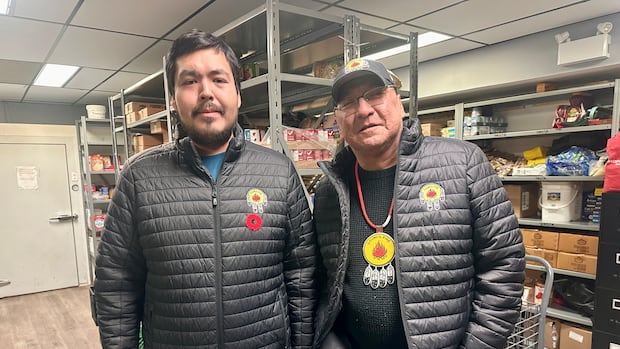
The shelves at Toronto Council Fire Native Cultural Centre's food bank haven't been as stocked up as they used to be, but the need is greater than it's ever been, it says.
And now the centre at Dundas Street and Parliament Street is one of the spots that fears losing funding after this year’s federal budget left key reconciliation programs without guaranteed money beyond spring 2026.
Redbow Toulouse, who helps run the food bank, says it's already struggling to serve the growing needs of the community, and budget cuts will impact hundreds of vulnerable people.
"We've had to set capacity limits and turn people away," Toulouse said, adding sometimes they even run out of food.
"And then we run out and we have to tell people sorry we don't have anything to give you," he said.
The centre, under the umbrella of Indigenous Friendship Centres across the country, is funded by the federal government's Urban Programming for Indigenous Peoples. The centres help Indigenous people in areas like employment, housing, food security, youth programming and mental health.
The federal government says Indigenous people in urban areas who face unique challenges will continue to have access to the services and cultural supports they need. But until Indigenous community leaders see the details of what that looks like, some remain concerned.
"The majority of the work we do is with seniors as well as residential school survivors," said Andrea Chrisjohn, board designate for the Toronto Council Fire Native Cultural Centre.
"It's important to keep investing in them, remind them who they are and make changes from what they've previously experienced."
Sean Longboat, executive director of the Ontario Federation of Indigenous Friendship Centres is calling the move a step backwards in Canada’s relationship with urban Indigenous peoples.
"We're extremely disappointed," he said.
"The Liberal government promised to enhance support for friendship centres and what it did was the exact opposite."
Longboat pointed out that since the pandemic, the need has only grown, and since the centres can't afford to make any cutbacks, some would have no choice but to shut down.
"We know this government is interested in saving costs and we are too. We know when government invests in prevention, it reduces costs in the long run."


A group of landowners fighting the construction of a massive motorsport racing resort northeast of Calgary have had a victory in court.

Ontario Premier Doug Ford congratulated a homeowner who shot and injured an alleged home invader in Vaughan, Ont., this week, saying intruders "need to be shot."

B.C. Sports Hall of Fame relocates hundreds of thousands of artifacts to make way for FIFA World Cup
From century-old provincial senior men's baseball jerseys to a keeper Lombardi Trophy won by a Kamloops-born Super Bowl-winning punter, the vast majority of B.C.'s premier sports artifacts won't be on display when the FIFA World Cup comes to town.

Two Sudbury domes used for various sports during the winter months collapsed after a winter storm dropped upwards of 40 centimetres of snow.

Police in Nova Scotia say a teen in Bridgewater and a youth from Manitoba have been arrested for allegedly planning simultaneous attacks at their local schools.

In the provincial budget released on Tuesday, tourism funding increased overall, but a few individual sites ended up on a list of cuts.

The owner of an Old Montreal building where seven people died in a 2023 fire is being charged with seven counts of manslaughter.

With no current plans to open new in-person rapid access to addiction medicine clinics, a woman who lost her brother to an overdose worries Manitoba's government is not doing enough to prevent substance-related deaths.

Gurpreet Singh, a 40-year-old Indian national, is suing the Canadian government and employees of the Canada Border Services Agency (CBSA), alleging they prosecuted him maliciously and violated his charter rights.

Edmonton orthopedic surgeons are warning of widespread surgery cancellations in coming weeks due to a funding dispute over how Alberta compensates another group of hospital doctors.

Advocates fear the looming closure of the Niagara Region's sole safe drug consumption site will result in a spike in overdose deaths and cases of blood-borne infections such as hepatitis C and HIV.

A potential sightseeing gondola overlooking Canmore is returning for a new stage of engagement under Alberta's All-Season Resorts Act.

CBC News has learned Vancouver police are investigating whether someone with access to the force's property office colluded with organized criminals to tamper with key evidence in a high-profile murder case.