They sailed for spices. Now the Dutch crave Indonesian sambal
The Hindu
We investigate Indonesian food in the Netherlands, colonial legacy or entrepreneurial Asians?
If you have travelled to Europe even once, you are bound to encounter a stale joke. It is about how European powers waged wars against indigenous populations in the global South to own and exploit spice plantations, but the spices – except for pepper – never found their way into European cuisine. It is a tongue-in-cheek truism about the blandness of European food and having lived for about a decade in Germany, I can confirm there is truth to it.
But things were looking up for us one autumn day in Rotterdam.
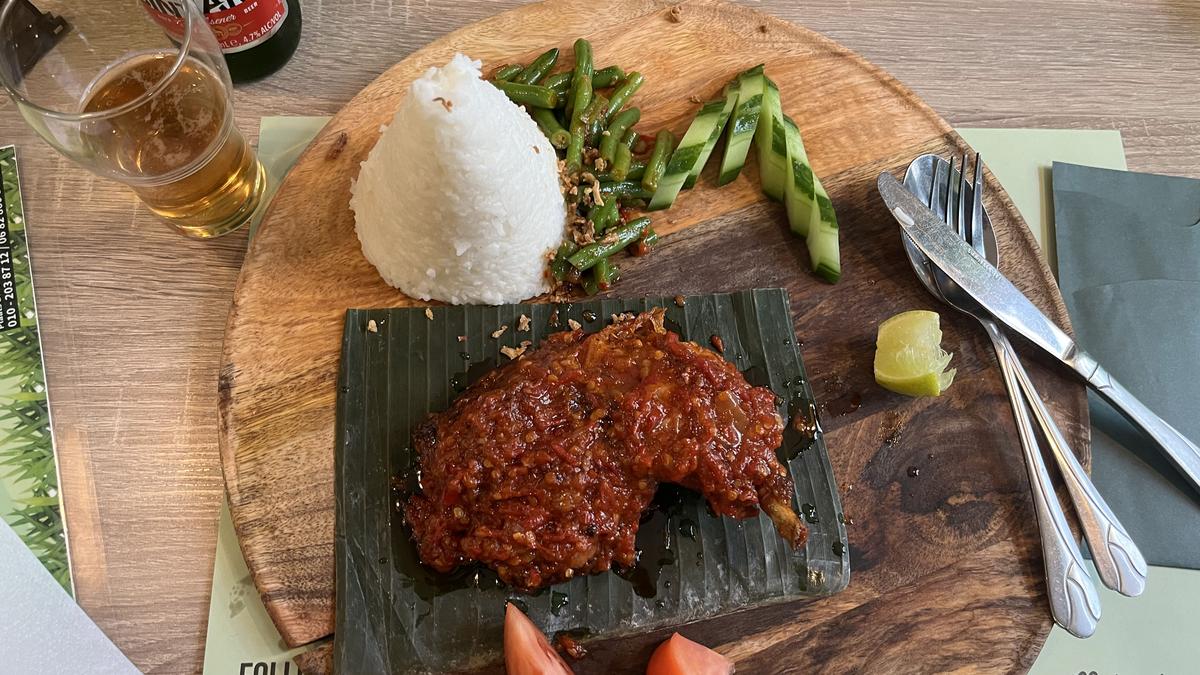
“Karaa ide,” said my Bangalorean friend digging into her smashed fried chicken – Ayam Penyet – smothered with coarsely saucy, deep-red sambal. Her forehead was sweating, her eyes were red and watering with tears of sweet torture from the chillies ground and mashed into the sambal. I watched her as she struggled with her meal and dug into my own Ayam Penyet – we had ordered the same thing.
Sambal oelek, an Indonesian chilli paste | Photo Credit: Wikimedia commons
My friend’s Ayam Penyet at Waroeng EmJay in Rotterdam was the spiciest she ate in all her travels to Europe. With the blandness of European food dulling her senses during our travels, we went in search of Indonesian restaurants in Rotterdam and landed at the one we were sitting in.
Waroeng EmJay didn’t look much from the outside – its lime green signboard needed fixing years ago; it squatted in a less frequented street next to another flashy Asian restaurant that served Vietnamese food. But its tables were brimming with patrons – both European and Asian, its sambal scented airwaves gently clanged with a smattering of Bahasa Indonesia and Dutch. Always a good sign, I might have told my friend.


Retired BMTC employee Munikrishnappa killed by son over property dispute; investigation ongoing with multiple arrests.

Top news of the day February 17, 2026 Tarique Rahman sworn in as new PM of Bangladesh; Supreme Court says political leaders must ultimately foster fraternity in country, and more

Meghalaya deports 194 illegal Bangladeshi migrants since 2021, implementing strict border control measures to prevent infiltration.

Telangana government prioritizes GHMC amenities ahead of elections, with CM Revanth Reddy announcing he would inspect the Corporation's zones and warning officials of strict actions if roads are not cleaned

Machattu Mamangam 2026 was celebrated on February 17 at Thiruvanikkavu Bhagavathy Temple in Thrissur, Kerala, drawing thousands to witness the iconic Kuthirakolam procession. Villagers carried towering poikuthiras across post-harvest paddy fields as Panchavadyam marked the grand procession, followed by the energetic Kuthirakkali ritual. The five-day temple festival, led by the Thekkumkara division, stood out for its strong community participation and elephant-free celebrations.

Watermelon arrives early in Erode, offering hydration relief as summer heat intensifies, though sales are still picking up.

Swiggy Dineout Onboards Bhuvan Bam as GIRF 2026 Ambassador; Brings BB Ki Vines Characters to Life with ‘Bill Half. Party Full.’

We investigate Indonesian food in the Netherlands, colonial legacy or entrepreneurial Asians?

Explore Kalyani Pramod's textile art exhibition at Lalit Kala Akademi, honoring her father's legacy through woven memories and everyday moments.

Assam activist urges government to upgrade forests to wildlife sanctuaries to combat illegal rat-hole coal mining and protect biodiversity

TMC leader G.K. Vasan criticizes DMK for failing to fulfill promises and increasing financial burdens on Tamil Nadu residents.

N. Ram highlights Kerala as India's model for human development, blending its success with Tamil Nadu's industrial strategies for future growth.

Long before viral reels and YouTube tutorials, Mrs BF Varughese was shaping Malayali tables from her pantry in Kottayam. Now, 52 years after it was first published, Recipes for All Occasions returns in a redesigned edition