Their world was the oyster: Oldest pearl town found in UAE
The Hindu
Archaeologists have discovered loose pearls and diving weights, which the free divers used to quickly drop down to the seabed
Archaeologists said Monday they have found the oldest pearling town in the Persian Gulf on an island off one of the northern sheikhdoms of the United Arab Emirates.
Artifacts found in this town on Siniyah Island in Umm al-Quwain, likely once home to thousands of people and hundreds of homes, date as far back as the region's pre-Islamic history in the late 6th century. While older pearling towns have been mentioned in historical texts, this represents the first time archaeologists say they have physically found one from this ancient era across the nations of the Persian Gulf.
“This is the oldest example of that kind of very specifically Khaleeji pearling town,” said Timothy Power, an associate professor of archaeology at the United Arab Emirates University, using a word that means "Gulf" in Arabic. “It's the spiritual ancestor of towns like Dubai.”
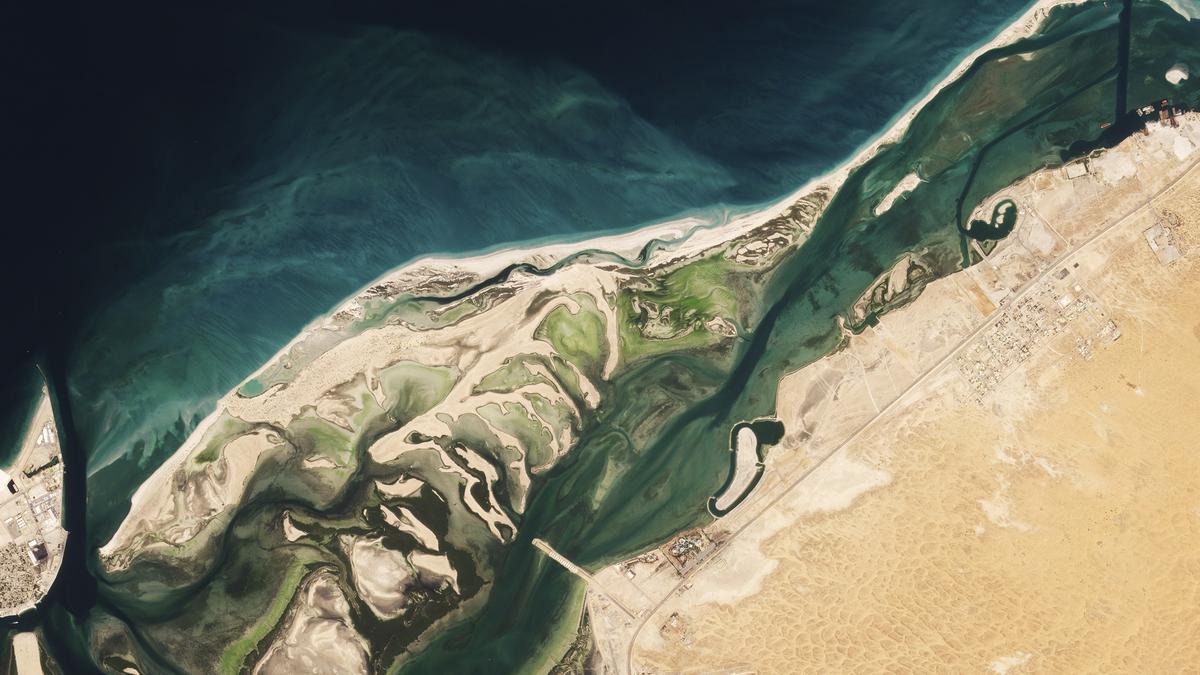
The pearling town sits on Siniyah Island, which shields the Khor al-Beida marshlands in Umm al-Quwain, an emirate some 50 kilometers (30 miles) northeast of Dubai along the coast of the Persian Gulf. The island, whose name means “flashing lights” likely due to the effect of the white-hot sun overhead, already has seen archaeologists discover an ancient Christian monastery dating back as many as 1,400 years.
The town sits directly south of that monastery on one of the curling fingers of the island and stretches across some 12 hectares (143,500 square yards). There, archaeologists found a variety of homes made of beach rock and lime mortar, ranging from cramped quarters to more sprawling homes with courtyards, suggesting a social stratification, Power said. The site also bears signs of year-round habitation, unlike other pearling operations run in seasonal spots in the region.
“The houses are crammed in there, cheek by jowl,” he added. "The key thing there is permanence. People are living there all year around."
In the homes, archaeologists have discovered loose pearls and diving weights, which the free divers used to quickly drop down to the seabed while relying only on their held breath.


Mercedes-Benz CLA 250+ with EQ Technology review: design, performance, range and features explained. Discover how the new electric CLA combines advanced AI, long range, fast charging and futuristic styling for the next generation of luxury EVs.

Pi Day is celebrated every year on March 14, honouring the significance of the mathematical constant π and its applications in mathematics.

Discover how sculptural interior design transforms modern spaces, blending creativity and functionality to evoke emotion and identity.

A study reveals that certain antibiotics can cause long-lasting changes in gut microbiome diversity for up to eight years.

Indian scientists and international experts are divided over a study questioning the viability of a nuclear reactor fuel called HALEU-thorium; while critics cite safety risks, proponents argue the technology is vital to achieve national energy goals.

ISRO and AIIMS partner to enhance space medicine research, focusing on human health during long-duration space missions.

A practical guide to induction setups for students, families, and home food businesses as India’s LPG supply faces its biggest disruption in years

Explore the electrifying Oscars 2026 race, featuring standout films, baffling nominations, and memorable performances amid a cinematic transition.

Zai and Rom Whitaker’s latest book for young readers, The Book of Indian Snakes, tackles common misconceptions surrounding snakes, highlighting their utility to humans

Discover PC Mahalanobis's pivotal role in India's statistical revolution and his lasting influence on modern statistics in this episode.

Explore why nothing can exceed light speed and the paradoxes that arise if it were possible.

Scientists have engineered bacteria to produce designer proteins by smuggling artificial amino acids, enabling precise drug delivery and multifunctional applications.

Scientists successfully grew chickpeas in simulated lunar soil, paving the way for future extraterrestrial agriculture on the moon.