The story of dapsone: from dye to drug Premium
The Hindu
Discover the transformative journey of dapsone, from textile dye to essential drug, and its impact on Hansen’s Disease treatment.
India observes Anti-Leprosy Day on January 30, the death anniversary of Mahatma Gandhi. For most of history, leprosy was treated not as a medical condition but as a moral one. Across major religions and ancient traditions, people with leprosy were described as impure, cursed, or unclean. They were made to live outside towns, barred from temples, and denied family life. Many laws even explicitly discriminated against people affected by leprosy in the past. These beliefs were not based on science, but on fear of the visible deformities and the long duration of the illness. Even today, the word “leper” carries negative connotations. Modern medicine discourages the term and uses “Hansen’s Disease” instead.
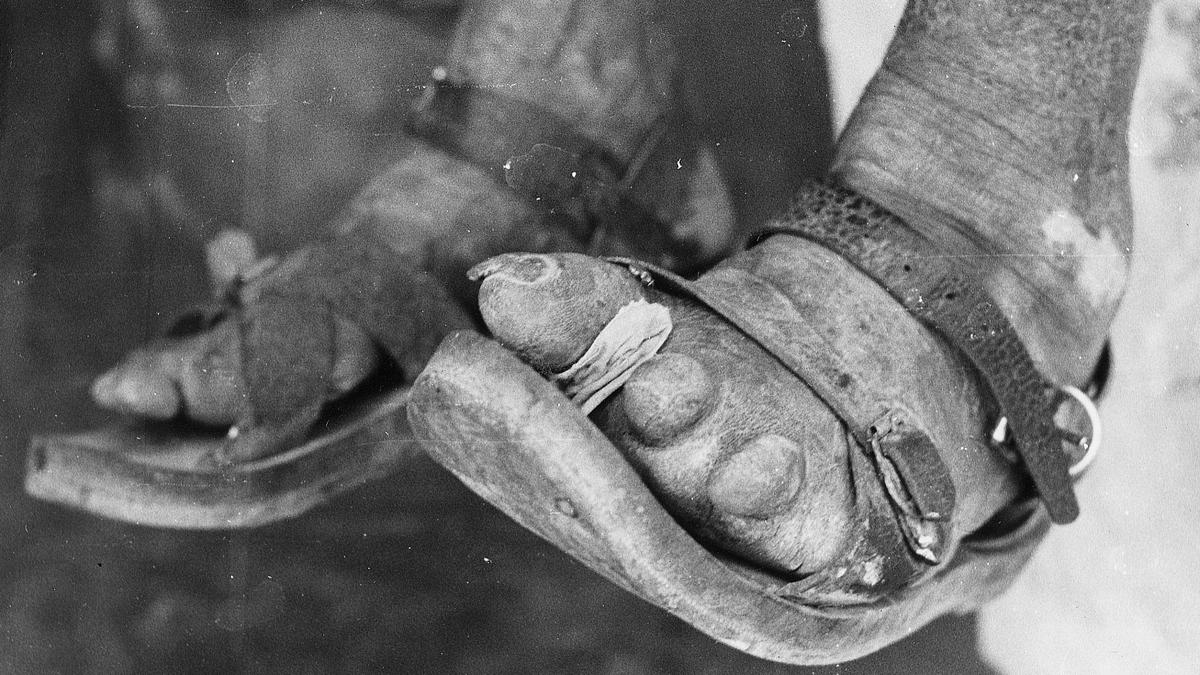
Hansen’s Disease is caused by a bacteria (Mycobacterium leprae)that affects the skin and peripheral nerves. When untreated, it causes loss of sensation in the hands and feet, leading to burns and injuries that go unnoticed. Over time, fingers and toes may be lost. These visible changes created fear. The disease progresses slowly, and many patients lived with symptoms for years before diagnosis. During this time, nerve damage becomes permanent even after the bacteria are killed. This is why early detection matters. The social effects are often worse than the medical ones. People with Hansen’s Disease have been denied employment, education, marriage, and housing, with families even hiding affected members from the outside world.
Norwegian physician Gerhard Henrik Armauer Hansen identified the bacterium Mycobacterium leprae, in 1873. This shifted Hansen’s Disease from the realm of theology and superstition into the domain of science. However, this discovery did not immediately change patient outcomes. For decades after Hansen’s finding, there was still no effective treatment. Doctors did not understand how the bacterium was transmitted and could not find a cure. Patients continued to be isolated, stigmatised, and institutionalised.
For much of human history, there was no reliable method to treat leprosy. Chaulmoogra oil, extracted from the seeds of the tree and used for centuries in India and other regions, was the main traditional therapy. It was painful to administer and had a limited effect. It slowed the disease in some patients but cured very few. Doctors also tried arsenic, mercury, and radiation, but failed. Leprosy remained incurable well into the twentieth century.
The story of dapsone begins far from any leprosy ward. In 1908, chemists in Germany working on synthetic dyes for the textile industry synthesised a compound called diamino-diphenyl-sulfone. It had no medical purpose; it was simply a chemical intermediate. In the 1930s, sulfa compounds became the first widely used antibacterial agents. Scientists noticed that some sulphur-containing chemicals could slow bacterial growth. This led them to test older compounds, including the dye compound that later became known as dapsone.
Early animal experiments showed that the compound could kill bacteria, but it also caused severe blood toxicity and anaemia. Because of these side effects, it was initially considered too dangerous for human use. Researchers then modified the compound into a safer injectable form called Promin. Promin was first tested for tuberculosis and later for Hansen’s, as they both are caused by mycobacteria.


Explore 2026's wallpaper trends in India, highlighting botanicals and handmade designs that enhance modern homes with nature-inspired aesthetics.

Mercedes-Benz CLA 250+ with EQ Technology review: design, performance, range and features explained. Discover how the new electric CLA combines advanced AI, long range, fast charging and futuristic styling for the next generation of luxury EVs.

AI tool for sparrow conservation

BTS’s comeback with ‘Arirang’ marks a major global music event. When does the album release, and where can you watch their concert live stream? We have all the details

The 2026 U.S. cholesterol guidelines urge starting screening and treatment at 30 to prevent cardiovascular disease effectively.

Olam Festival 2026 in Thiruvananthapuram returns March 27-29 with 120+ vendors, music, art, and cultural zones.

A few storytellers in Thiruvananthapuram share their journeys, challenges, and evolving methods on World Storytelling Day, inspiring young minds.

76-year-old Kurian Jacob from Kerala triumphs with seven medals, including five golds, at the Open Masters Games in Abu Dhabi.

Explore the nature of the human mind as an emergent property of brain activity and complex neural interactions.

CERN's Large Hadron Collider discovers the Xi-cc-plus particle, enhancing understanding of quantum mechanics and baryon behavior.

Vibha Batra’s latest book, Spotless (Hachette India) is a novel in verse for young adults

In its first edition, the Madras Art Salon spotlights the works of journalist and artist Narayan Lakshman at The Botanical Club, a social space in the British Deputy High Commission, Chennai

Cholesterol enhances melanoma cell invasion by making nuclei squishier, revealing a potential treatment target in cancer progression.