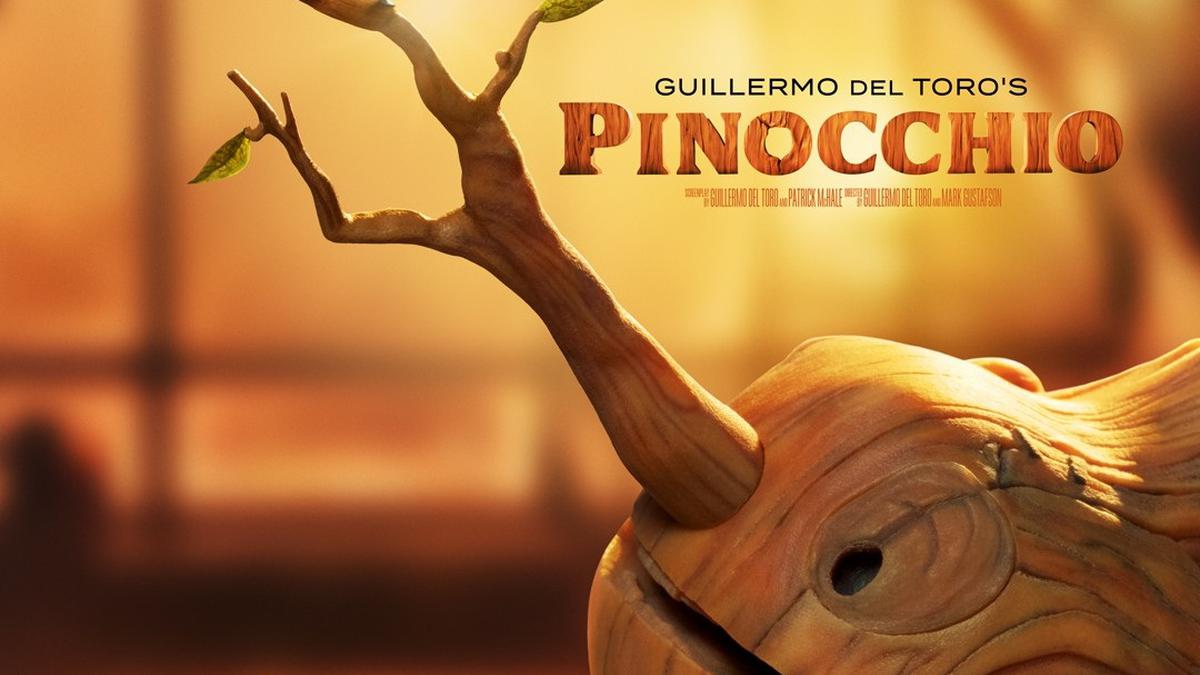
The Museum of Modern Art’s exhibit on Guillermo del Toro’s Pinocchio is a masterclass in stop-motion animation
The Hindu
With his latest movie, Guillermo del Toro’s Pinocchio, which won the Oscar for Best Animated Feature this year, filmmaker Guillermo del Toro, along with co-director and stop-motion animation legend Mark Gustafson, makes the case for animation as an excellent tool to tell dark, sometimes grim, stories. So, it comes as no surprise that over 245,000 visitors have been to see the Museum of Modern Art’s (MoMA) special exhibit on the award-winning production since it opened on December 4 last year. Guillermo del Toro: Crafting Pinocchio takes its wide-eyed patrons behind the scenes of the exhaustive sets of the movie and its stop-motion animation work with ceiling-mounted art, oversized puppets, alternative posters and more. Read this interview with Ronald S. Magliozzi, curator, Department of Film, MoMA.
The worlds he has created over the years are testament to his penchant for marrying the gothic and fantastical to the mundane everyday or emotions as universal as love — be it the 1960s lab housing an amphibious creature in Shape of Water or the eerie fantasy world set in 1944 Spain in Pan’s Labyrinth.
With his latest, Guillermo del Toro’s Pinocchio, which won the Oscar for Best Animated Feature this year, filmmaker Guillermo del Toro, along with co-director and stop-motion animation legend Mark Gustafson, makes the case for animation as an excellent tool to tell dark, sometimes grim, stories.
So, it comes as no surprise that over 245,000 visitors have been to see the Museum of Modern Art’s (MoMA) special exhibit on the award-winning production since it opened on December 4 last year. Guillermo del Toro: Crafting Pinocchio takes its wide-eyed patrons behind the scenes of the exhaustive sets of the movie and its stop-motion animation work with ceiling-mounted art, oversized puppets, alternative posters and more. Edited excerpts from a conversation with Ronald S. Magliozzi, curator, Department of Film, MoMA:
The exhibition invites visitors to explore the collaborative craft of stop-motion animation filmmaking — from ‘look development’ to the ‘on-set’ process, through a presentation of five full working sets and four large set pieces, alongside puppets and marionettes, maquettes, sculptural moulds, drawings, development materials, time-lapse and motion-test videos, digital colour tests, archival photography, and props from the film.
In addition, stop-motion is visible throughout the entire exhibition in time-lapse videos and motion study recordings of animators. It is dedicated to the proposition that Guillermo has so often stated: “Animation is a medium, not a genre.”
The exhibition has had an inspirational effect, as we’d hoped it might, and is evidently encouraging new generations of animators and puppet-makers. On more than one occasion, we’ve been stopped by animation students eager to express their appreciation for the behind-the-scenes look at the particular skill it takes to produce stop-motion, and the collaborative nature of the work.
It started with an offer from Netflix in late 2021 to consider the possibility of creating an exhibition on the film. Having previously curated three popular exhibitions on animation at the Museum of Modern Art from archival holdings — Pixar: 20 Years of Animation (2005), Tim Burton (2009), and the Quay Brothers: On Deciphering the Pharmacist’s Prescription for Lip-Reading Puppets (2012) — the opportunity to organise a show during the active production of a film was something new.


The Spirit of the Land, a solo show by artist Shivakumar Sunagar, is a vista of Nature-inspired emotions

Tal Fry is all set for an exciting new performance season

Netflix is making a bold move by snagging InterPositive, the AI filmmaking company founded by Ben Affleck, in a deal that could hit $600 million

Watch the eerie trailer for 'Hokum,' where Adam Scott faces a witch haunting in a mysterious Irish inn.

Oscars 2026 security heightened amid FBI warnings of a potential Iranian drone threat ahead of the Hollywood ceremony.

Directed by Rahul Pandey, the series also stars Naila Grewal, Nidhi Bisht, Anant Joshi, Anjum Batra and Kusha Kapila

A tribute to the versatile actor and comedian V.K. Ramasamy in his birth centenary year.

‘One Piece’ Season 2 review: As the Straw Hats enter the Grand Line, Netflix’s live-action adaptation finds its sea legs with bigger islands, stranger villains and the same stretch-happy sense of boundless adventure

Geeta Gandbhir, the Indian-origin American filmmaker is waves at this year’s Oscars with not one, but two nominations. Her documentaries, ‘The Perfect Neighbor’ and ‘The Devil is Busy’ are in the race for the Academy Award

Directed by filmmaker and environmentalist Pradip Krishen, the film follows a group of "dope-smoking, bellbottom-wearing and vaguely idealistic" final-year students racing to complete their theses.

Alan Ritchson powers through 'War Machine', a lean sci-fi action thriller on Netflix. A competent, Reacher-style chase adventure with nonstop tension and solid set pieces

Explore the Unshelving Memories exhibition in Thiruvananthapuram, showcasing diverse book art by 61 talented artists until March 15.

Oscars 2026 date and timings: Watch the 98th Academy Awards live on March 15, 2026, at 4:30 a.m. IST in India on various platforms.