The movie marketing mania Premium
The Hindu
Film-makers have always gone all out to promote their films in person, but in the age of social media, these efforts can get tiresome
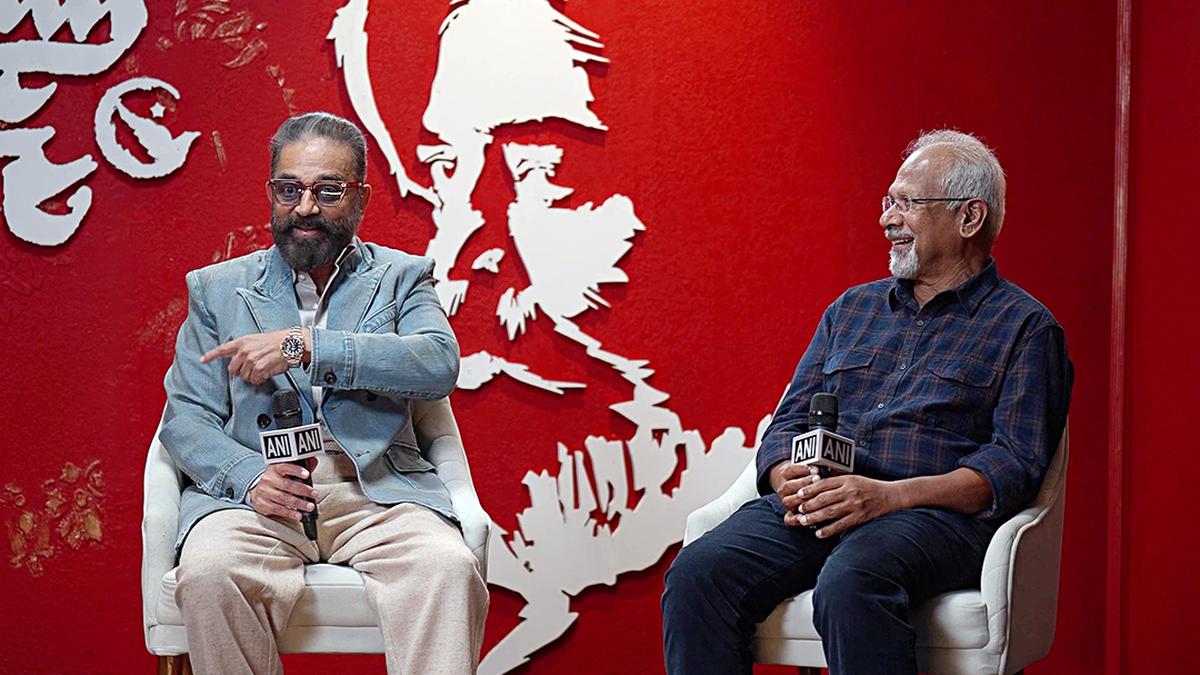
I met Kamal Haasan for an interview last Friday in Chennai for his much-awaited movie, Thug Life. The next day, he was at Sri Sai Ram College along with the entire team for the film’s audio launch. On Sunday, he was present at the finals of a popular musical reality contest, Vijay’s Super Singer Junior 10. In between these two big music events, I decided to watch an IPL match. Sure enough, Mr. Haasan was there on TV too, at a special programme hosted by Star Sports Tamil featuring the Thug Life team.
“I enjoy talking. It’s a learning experience for me, because only when I talk, people get an opportunity to correct me,” he told me, when I pointed out his hectic travel schedule for the film’s promotions.
It is hard to escape the film and its team, as Thug Life’s PR game has been on an overdrive in the last few weeks. I’m sure even die-hard fans of Mani Ratnam and Mr. Haasan are tired of it. At the same time, it is also heartening to watch a 70-year-old Haasan croon old melodies with a little girl, or shake a leg to a fast-paced number on stage.
The world has changed a lot over the last 20 years when I began as a rookie reporter. I remember attending the launch of Mr. Haasan’s Mumbai Xpress. The invite to the event was quirky: it was printed on a fake ₹500 currency note. The title read ‘Raajkamal Bank of India’ — a reference to both the Reserve Bank of India and his production house, Raajkamal Productions. The line below said: ‘I promise entertainment for the entire family’.
Before the age of mobile phones and social media, information about a film or album was scarce, so film-makers went all out to market their films in person. Some adopted traditional ways of promoting their films, such as through newspaper advertisements, while some were others were more innovative.
Promotional material used to be a collector’s delight. Cassettes in the 1990s gave us a quick peek into what to expect: the audio cassette of Shankar’s Jeans, with music by A.R. Rahman, was packed in denim in 1998. I remember walking into a neighbourhood shop to buy a special edition audio cassette of Laysa Laysa in 2003. Priced at ₹10 at a time when cassettes cost around ₹50, it had just two versions of the title song in its Side A and Side B, serving as a curtain-raiser for the album composed by Harris Jayaraj. In contrast, today’s audio invites arrive as WhatsApp notifications.
Over time, promotions became more and more geared towards grabbing eyeballs. I remember the buzz surrounding the launch of Madraspattinam in 2010 — the invite featured old maps of Madras and old currency, and the venue of the event, Chennai Trade Centre, was transformed into the Madras of the 1940s, replete with soldiers and people marching along shouting slogans.


South African naturalist Steve Boyes speaks on ghost elephants, ancestral tracking, and Werner Herzog’s documentary exploring Angola’s elusive highland giants

Actor-director Amol Palekar will receive META's Lifetime Achievement award for 2026 on March 25 in New Delhi.

India's artists unite against rising censorship, advocating for creative freedom and support for marginalized voices in the arts.

Written and directed by Kunal, the film also stars Sparsh Shrivastava and Vanshika Dhir

This year, Bharatnatyam artistes will present the Tyagaraja Aradhane as a dance performance

This year, Bharatnatyam artistes will present the Tyagaraja Aradhane as a dance performance

The actor, along with director Sushant Shah, speak about their upcoming series ‘Chiraiya’, Divya’s process of working on the dialect, Sushant’s approach to telling a story about women, and more

An independent video, ‘Feel the Spark’ by Raleigh Rajan with vocals by Ciera Dumas that celebrates Tamil literary giants, garnered 1.4 million views in less than 36 hours.

In ‘Jack Ryan: Ghost War’, John Krasinski is back as the savvy CIA analyst, diving headfirst into a high-stakes mission that unravels a deadly conspiracy and pits him against a rogue black-ops unit

Shriram Bharatiya Kala Kendra’s Shankarlal festival showcased rare ragas, radiant artistry, and inclusive performances, from Pt Madhup Mudgal’s serene morning ragas to Ramana Balachandran’s Saraswati veena.

Explore "Threads that Bind: The Kantha Project," an exhibition in Delhi reimagining kantha as a medium of repair and renewal.

Sean Penn skips the Oscars to meet Ukraine's Zelenskyy, who praises him as a "true friend" amid the war.

The teaser of Tamil star Suriya’s much-awaited film with director Venky Atluri, titled Vishwanath and Sons, was unveiled by the makers on Monday