The ‘missing years’ in Punjab’s scholarship scheme
The Hindu
While funding for SC students has resumed, pending dues caused a dip in numbers between 2017 and 2020
The issue of non-payment of scholarship money meant for post-matriculation Scheduled Caste students is back in the spotlight after Punjab Governor Banwarilal Purohit earlier this week flagged a statement of the National Commission for Scheduled Castes (NCSC) chairperson linking it to an increase in dropouts. Mr. Purohit has sought a report from the Aam Aadmi Party (AAP) government.
The Post Matric Scholarship Scheme for SC students underwent a funding change from 2020-21 with the Centre-State contribution ratio pegged at 60:40 and has been running smoothly since. Until 2016-17, it operated as a fully-funded Central scheme. The problem pertains to the missing years, 2017 to 2020, when the Centre turned off the funds tap but the then Congress-led State government kept the scheme going. According to government data, the pending amount for the years 2017-18, 2018-19 and 2019-2020 adds up to ₹1,563.77 crore.
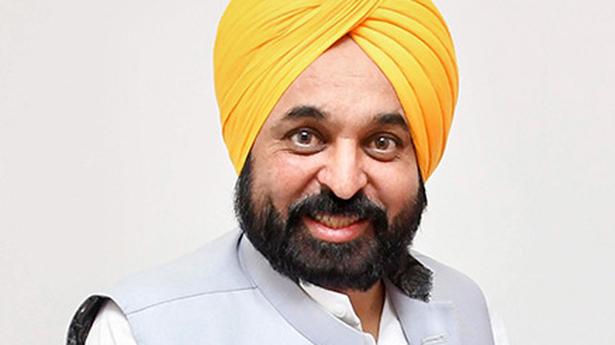
The Bhagwant Singh Mann government now insists that pending amounts would be cleared only after an audit of the scheme is completed. “The government is very clear that a comprehensive audit would be conducted pertaining to these years and any decision would be taken thereafter,” Ramesh Kumar Ganta, Principal Secretary, Social Justice, Empowerment and Minorities, told The Hindu on Friday.
Decoding the dropouts
On Wednesday, NCSC chairperson Vijay Sampla had said that close to two lakh SC students dropped out of colleges in Punjab as the State government didn’t pay the scholarship amount, and sought a reply by July 27. He pointed out that in 2017 there were close to three lakh SC students who benefited from the scheme, but in 2020 the number came down to 1-1.25 lakh. With funding for the scheme back on track, the State government in its 2022-23 budget allocated ₹649 crore for it to cover around 2.50 lakh SC students. Students now get the money directly instead of it being given to institutions as was the case earlier.
Paramjit Singh Kainth, chief of the National Scheduled Castes Alliance, an organisation working on Dalit rights, said that the key reason behind the drop in number of students under scholarship between 2017 and 2020 was the State government not releasing the funds. “Because the government didn’t pay the colleges, students started to drop out as several private colleges withheld their degrees until they cleared their dues,” he said.
Scheme irregularities


Pinarayi Vijayan criticizes Rahul Gandhi and Congress for allegedly aiding BJP's rise in various states during Kerala polls.

Sonia Gandhi is responding well to treatment for a systemic infection and remains under observation at a Delhi hospital.

J&K Police's Counter Intelligence Wing conducts raids in three districts linked to a transnational terror module operated by Lashkar-e-Taiba.

Vaccination policies must prioritize saving human lives over individual choice amid rising vaccine skepticism, asserts scientist Dr. Virander Singh Chauhan.

Seven Indian fishermen from Rameswaram arrested by Sri Lankan Navy, sparking protests and calls for government intervention.

Kerala cyber police file a case against X for an AI video allegedly defaming PM Modi and the Election Commission.

iKure and Izawa Co. partner to combat avoidable blindness by integrating innovative eye care technology into rural healthcare networks.

Thousand Lights MLA from the DMK N. Ezhilan, in an interview to The Hindu, observes that any popular personality entering politics will attract the limelight. But only a structured party machinery combined with popularity can ensure success. In this interview, he speaks about his tenure as first-time MLA from Thousand Lights Assembly constituency in Chennai, Vijay’s political entry shaping the 2026 elections, redressal of key grievances and more.

Abhishek Banerjee challenges BJP's Suvendu Adhikari in Nandigram, pledging community health initiatives if Trinamool Congress wins.

Rising LPG shortages in Karnataka boost firewood demand, reviving an informal market as households and hotels seek alternatives.

Against the backdrop of intense poll activity, a 400-metre stretch of an arterial road in the outskirts of Chennai (technically in Madurapakkam panchayat under Tambaram assembly constituency) presents a salute to the idea of res publica, which underpins India’s system of governance, where citizens have a say, at least before a government is securely ensconced in the seat of power. A Republic Day initiative shines bright every night

Fadnavis claims zero FIR in Ajit Pawar crash is a defamation attempt by Karnataka against Maharashtra's investigation efforts.

Set to unfold as a one-day pop-up on April 5, the Easter Sadya brings together both vegetarian and non-vegetarian menus, offering a peek into the food traditions of the Syrian Christian (Nasrani) community. While the traditional Sadya is often associated with dishes such as sambar, avial, and rice, this version expands to include community-specific festive dishes.