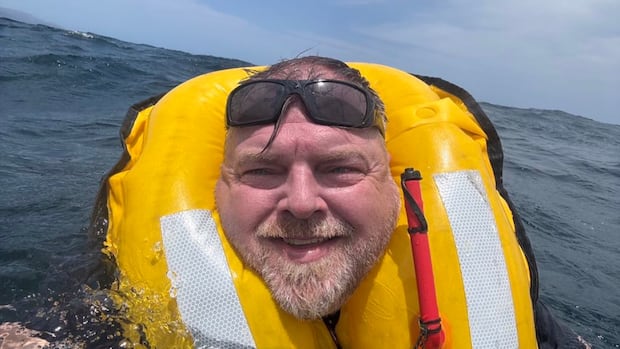
'The engine just went silent': Then, this B.C. pilot had 3 minutes to react
CBC
For more than a month, Canadian pilot Michael MacDonald had taken a marine biologist on daily flights over Mexico's Gulf of California, surveying the sea for wildlife.
Thirty-three of those flights went smoothly. About three hours into the 34th, things went south.
MacDonald, who is now safe at home in Burnaby, B.C., is recounting the seconds, minutes and hours after he realized the engine in his small aircraft had quit, and how far he and his passenger were from land.
The pair were soaring at about 457 metres above the ocean, just low enough so they could see all kinds of whales, orcas, dolphins and turtles, on April 18.
Three hours into the four-hour flight, "the engine just went silent," MacDonald recalled.
"I just immediately turned left 90 degrees, because that was the closest to the land," he told Gloria Macarenko, the host of CBC's On The Coast.
They were about 11 kilometres away from the shore, and falling about 150 metres per minute, MacDonald said.
"Three minutes is all we had left to play with."
He spent about 90 seconds trying to figure out what had gone wrong in the four-seater Cessna 182. When nothing worked, he knew they were going to hit the water.
MacDonald, 47, has been flying since 2012, and the procedure around what to do in the event of a crash landing has been drilled into him.
"We talk about it a lot, about the possibility of ditching," he said. "Every day we go over a briefing and remember how to do this procedure, that procedure and make sure that we know what we're doing."
MacDonald, 47, passed a pillow to his passenger so she could cover her face to protect herself from debris.
They tightened their harnesses and prepared for impact.
MacDonald remembers trying to navigate the big swells in the ocean.


An RCMP-led corruption investigation is underway into at least one current Calgary city councillor as well as a business, CBC News has learned.

Much of Newfoundland is digging out of a blustery and messy day as another storm slams into the island.

Timiskaming—Cochrane MPP John Vanthof recalls the meeting in Thunder Bay earlier this month. He was part of the nine-day road trip along Highways 11 and 17 with other NDP MPPs.

A bill before the Nova Scotia Legislature is proposing raising the age limit for support for young people who have been in the foster care or group home system to 26.

The Fredericton Police Force has reallocated funds so new staff can be hired this year to better manage evidence after a police error upended murder cases against five people.

One of two pilots killed in a plane crash at New York's LaGuardia Airport Sunday earned his wings at an Ontario college, CBC News has learned.

Air Canada passengers who were aboard Flight 8646 when the CRJ-900 aircraft struck a fire truck upon landing at New York's LaGuardia Airport on Sunday evening say the collision was sudden and forceful, and they may owe their lives to the pilots who died in the incident.

Cardiac services are set to expand at a Winnipeg hospital once regarded as one of the best in Canada for heart care.

A 26-second TikTok video has ignited a larger conversation about vulnerable populations, theft and content creation.

Some family doctors and emergency room physicians working in Edmonton hospitals warn that an April 1 end to stipend pay arrangements could put patient care at risk and increase suffering.

An Auditor General of Canada report has found that B.C. saw drastically fewer international students than was forecast ever since wide-ranging federal immigration cuts began in 2024.

Six years after e-learning became a mandatory requirement to get an Ontario high school diploma, students don't appear to be taking online school to diversify their course selection as the province had intended, according to a CBC News analysis of provincial enrolment data.

Sarnia City Council will hold a special meeting Tuesday morning to respond to social media comments made by Coun. Bill Dennis, who criticized city spending on a new mural by Indigenous artist Kennady Osborne as “virtue signalling by woke politicians” — then made a series of comments in response to a reply from Aamjiwnaang Chief Janelle Nahmabin that some have characterized as unprofessional and aggressive.