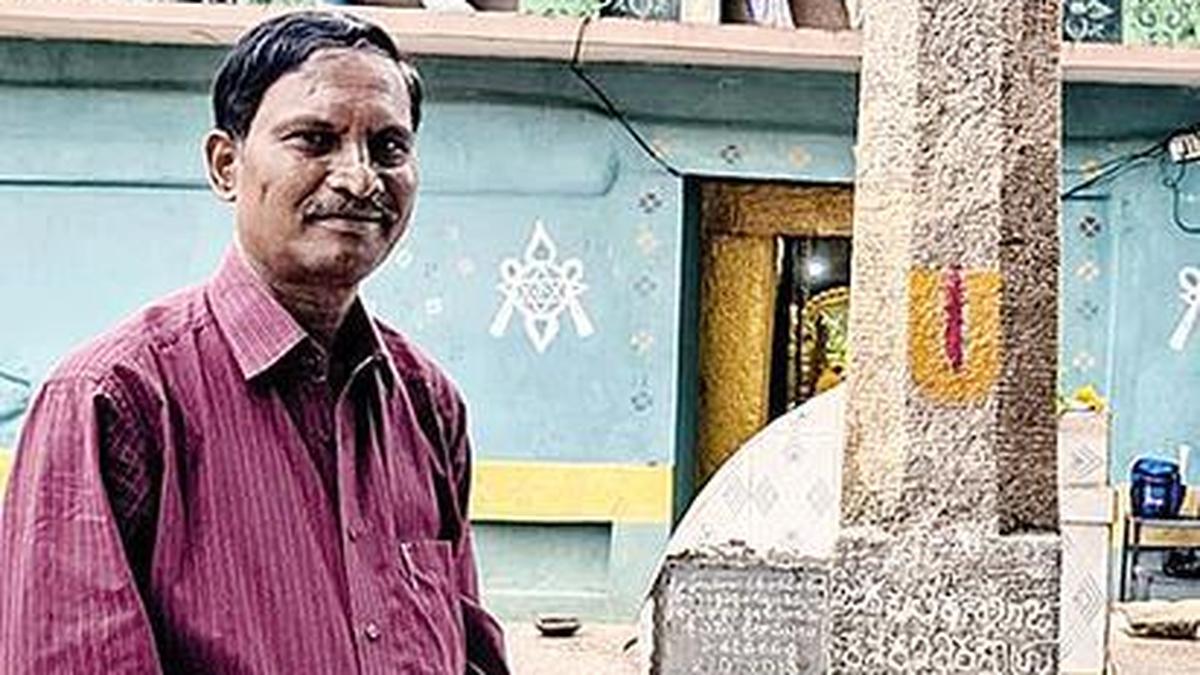
Telugu inscription of Achyuta Deva Raya time found in Sri Chintala Venkataramana Swamy temple at Tadipatri: Historian MyNaa Swamy
The Hindu
Historian MyNaa Swamy highlights a Telugu inscription from Achyuta Deva Raya's era at Tadipatri's Sri Chintala Venkataramana Swamy temple.
Historian MyNaa Swamy said Telugu inscription from the time of Achyuta Deva Raya has been found at the Brindavanam (Tulsi garden) in Sri Chintala Venkataramana Swamy temple at Tadipatri in Anantapur district. He visited the temple along with Tadipatri former Municipal Chairman J.C. Prabhakar Reddy.
The historian explained that the inscription said that the ‘Brindavanam’ (Tulsi Fort), decorated with special sculptures, was built in Vikari year Shravana Bahula 15 (English date 1539 August), as a symbol of the 12 Alwars, who were Vaishnava devotees. In Brindavanam, the idols of the four incarnations of Shri Maha Vishnu symbolising the four Yugas have been beautifully sculpted. On the eastern side, there is idol of Lord Vishnu; on the western side-Narasimha; on the northern side-idols of Rama; and on the southern side- idol of Sri Bala Krishna can be seen.
“Apart from the wheel (chakra), conch, and mace (gada), which are weapons of Sri Maha Vishnu, a Sivalinga, which symbolises Saiva philosophy, is also a rare sight on the Brindavanam,” MyNaa Swamy added. He said that this is a testimony to the devotion of the then emperor Achyuta Deva Raya and the harmony of all religions.
The historian visited Tadipatri on the invitation of Mr. Prabhakara Reddy and MLA J.C. Asmith Reddy, who are working to put Tadipatri on the country’s map as a tourist destination. As part of his research, he visited the Sri Chintala Venkataramana Swamy Temple and revealed interesting facts about Brindavanam and the historical inscription on it.
Though the temples in Tadipatri had a wealth of sculptures on par with other famous temples such as Lepakshi, Gorantla, Kadiri, and Somapalem, historians paid little attention to them.
MyNaa Swamy appealed to historians and research scholars in universities to focus on the architectural wealth and history of these temples and make them more visible to the outside world.


CPI(M) urges Election Commission to ensure voting rights for employees on election duty amid complexities of new voting system.

Ennore church establishes a pastoral desk to support transgender individuals in Chennai, addressing their spiritual and employment needs.

Telangana sees temperatures exceed 41°C, while Hyderabad remains cooler below 40°C; thunderstorms forecasted in several districts.

Congress members in Erode protest against candidate selection, demanding a local nominee for the Erode (East) Assembly constituency.

Malayalam filmmaker Ranjith is in police custody for three days amid serious sexual abuse allegations; bail hearing set for April 7.

Uproar in J&K Assembly over Ganderbal encounter; Speaker confirms time-bound probe ordered by Lieutenant Governor amid calls for judicial inquiry.

Telangana authorities seized 3,699 domestic LPG cylinders amid rising shortages

Seasoned wall artists in Thiruvananthapuram bring vibrant election campaigns to life with their unique craft and dedication.

PM Modi's roadshow in Puducherry energises NDA's campaign ahead of the April 9 Assembly election, emphasising their power retention strategy.

Delhi experienced light overnight rain, prompting a yellow alert for thunderstorms and improving air quality, as temperatures rise.

Nashik man arrested for sexual exploitation after probe uncovers 121 obscene videos; police urge victims to come forward confidentially.

Delhi police arrest three for repackaging and selling expired food, including soft drinks and biscuits, in Dwarka.

KSDMA issues heat warning for election workers, advising precautions against sun exposure and dehydration amid rising temperatures in Kerala.