Technique to make CAR T-cells in vivo could transform cancer care Premium
The Hindu
Instead of extracting T-cells and engineering them in a lab, researchers have delivered mRNA directly into circulating immune cells, improving treatment outcomes and cutting the cost of CAR T-cell therapy.
In recent years, chimeric antigen receptor (CAR) T-cell therapy has changed outcomes for patients with aggressive blood cancers that no longer respond to standard treatments. In some acute leukaemias, CAR T-cell therapy has led to remissions lasting months or even years. Early-stage trials have explored its use in severe autoimmune diseases like lupus as well, where it may help reset a misfiring immune system.
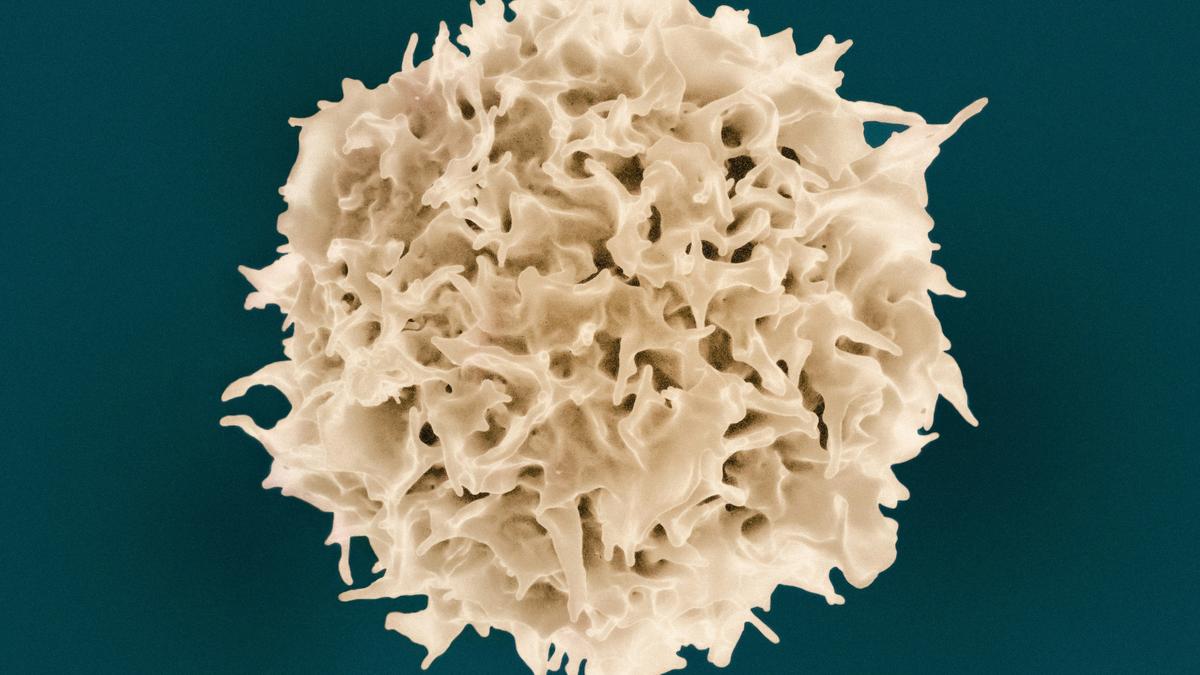
Originally developed in the early 1990s, the central idea behind CAR T-cell therapy is to retrain the body’s own immune cells to recognise and destroy rogue targets. T cells — the patrolling white blood cells — often fail to identify cancer cells. So scientists extract a patient’s T cells and insert genetic instructions that make them express the synthetic molecule, CAR. It gives T cells the ability to detect a specific ‘tag’ — most often CD19, which is found on nearly all B cells — that are the primary culprits in these cancers.
Once these reprogrammed T cells are infused back into the body, they expand, circulate, detect, and eliminate. The process is targeted and potent — but also slow, expensive, and complex. It requires personalised cell harvesting, lab-based genetic engineering using viral vectors, and chemotherapy to prepare the body to receive the modified cells.
Vishwanath S., a senior consultant in medical oncology, Apollo Hospitals, Bengaluru, estimated from personal practice that CAR T-cell therapy in India typically costs around ₹60-70 lakh. “Roughly ₹30-35 lakh goes toward manufacturing the personalised CAR T-cells through complex ex vivo processing,” he said. “The rest covers hospitalisation, supportive care, and monitoring for two to three weeks — including side effects, infections, and post-infusion care.”
A study in Science on June 19 by researchers from the US National Institute of Arthritis and Musculoskeletal and Skin Diseases, Capstan Therapeutics, and the University of Pennsylvania takes the core idea of CAR T-cell therapy and moves it entirely inside the body.
Instead of extracting T cells and engineering them in a lab, the researchers delivered messenger RNA directly into circulating immune cells using tiny, fat-based molecules known as lipid nanoparticles (LNPs). Commonly used in mRNA vaccines, they help genetic instructions enter target cells. To make sure the message reached the right cells, the researchers added a kind of biological address label: antibodies that bind specifically to CD8+ T cells, the immune system’s frontline killers. This targeted formulation, called a CD8-targeted lipid nanoparticle (CD8-tLNP) allowed the instructions to be delivered with precision.
When injected into mice, tLNPs carrying instructions for a CD19-targeting CAR successfully reprogrammed circulating CD8+ T cells, while in cynomolgus monkeys, a CD20-targeting version was used. Within days, B cells were depleted across multiple tissues, and tumours regressed in mice — all without personalised cell processing, viral vectors or chemotherapy. In monkeys, the treatment turned most CD8+ T cells (up to 85%) and nearly all related immune cells (95%) into cancer fighters after the second or third dose, showing strong results.


Chefs and cookery experts share smart kitchen hacks, hybrid cooking methods and appliance tips to help households reduce LPG use without compromising on food

Discover groundbreaking research on Titan's lakes, bat vaccinations, and the unique aroma of ripening bananas in just one minute.

IRSO's NavIC system faces challenges as the last atomic clock fails, reducing operational satellites for navigation services.

Discover efficient pressure cooking techniques to save up to 50% on fuel. OPOS B Ramakrishnan tells you how

Mercedes-Benz CLA 250+ with EQ Technology review: design, performance, range and features explained. Discover how the new electric CLA combines advanced AI, long range, fast charging and futuristic styling for the next generation of luxury EVs.

Pi Day is celebrated every year on March 14, honouring the significance of the mathematical constant π and its applications in mathematics.

Discover how sculptural interior design transforms modern spaces, blending creativity and functionality to evoke emotion and identity.

A study reveals that certain antibiotics can cause long-lasting changes in gut microbiome diversity for up to eight years.

Indian scientists and international experts are divided over a study questioning the viability of a nuclear reactor fuel called HALEU-thorium; while critics cite safety risks, proponents argue the technology is vital to achieve national energy goals.

ISRO and AIIMS partner to enhance space medicine research, focusing on human health during long-duration space missions.

A practical guide to induction setups for students, families, and home food businesses as India’s LPG supply faces its biggest disruption in years

Explore the electrifying Oscars 2026 race, featuring standout films, baffling nominations, and memorable performances amid a cinematic transition.

Zai and Rom Whitaker’s latest book for young readers, The Book of Indian Snakes, tackles common misconceptions surrounding snakes, highlighting their utility to humans