T.N. likely to become $150 billion electronics hub by 2030, says State Industries Minister T.R.B. Rajaa
The Hindu
Tamil Nadu is poised to become a $150 billion electronics hub by 2030, contributing significantly to India's exports and manufacturing.
The electronics manufacturing industry aims to hit $500 billion by 2030, and Tamil Nadu will likely be a $150 billion market then, State Industries Minister T.R.B. Rajaa said in Chennai on Tuesday.
“Tamil Nadu has around 41% share in India’s total electronics exports during the financial year (FY) 2025 at $15 billion. This is likely to have grown to 45% in FY2026,” he said, expressing concern that the Centre has not released State-wise data on electronics exports for the current financial year.
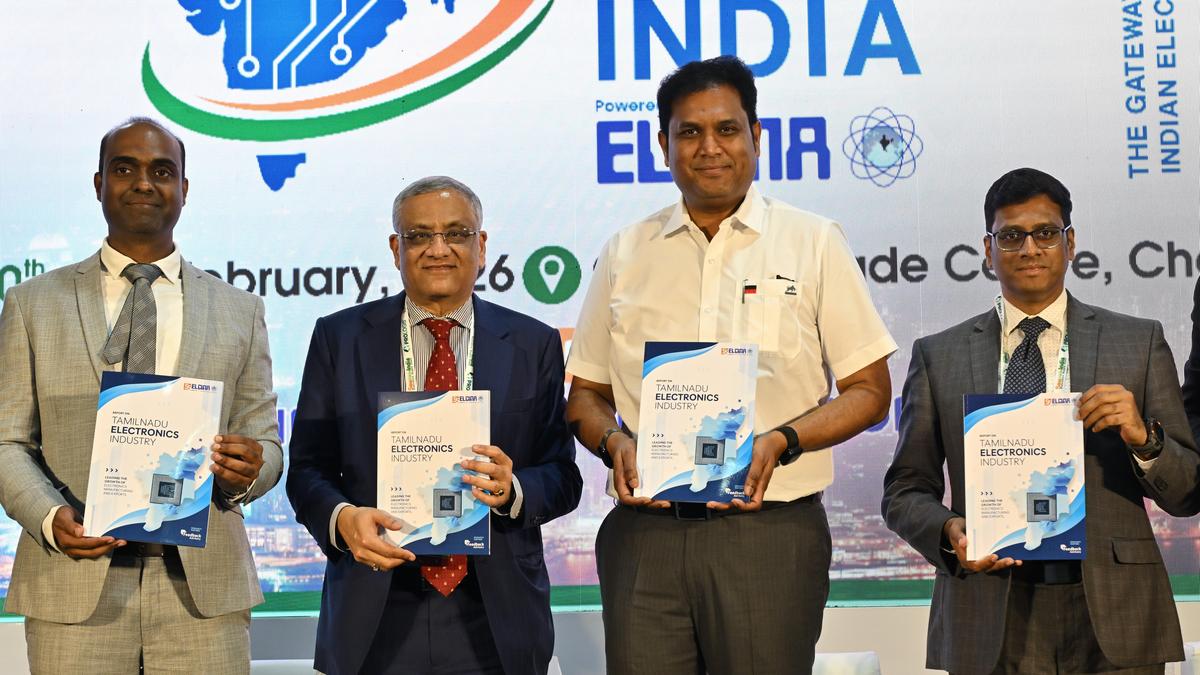
At the 15th edition of Source India-Electronics Supply Chain, organised by the Electronic Industries Association of India (ELCINA), Mr. Rajaa said: “We have done everything possible in India. Now, we want to go compete with the world, which we have been doing in several sectors for a long time. We have expertise in manufacturing and services, and the next big thing to do is R&D (Research and Development)”. He requested the stakeholders present at the event to invest more in R&D.
Sasikumar Gendham, president of ELCINA, said: “Electronics is no longer just an industry — it is the infrastructure for modern civilisation. From mobility and healthcare to defence, energy, AI and space, it sits at the core of every national priority. As global supply chains are being re-imagined, with reliability and resilience becoming as important as cost, India stands at a historic inflection point. The question is not whether India can play a global role, but how fast and how decisively we scale.”
He then pointed out we must move decisively beyond low-value assembly into design-led manufacturing, advanced components and materials, tooling and IP ownership. Mr. Gendham said electronics leadership demanded strong component ecosystems, MSME integration, academia-industry collaboration, and deep supplier development. “With established clusters in Chennai, Sriperumbudur, Hosur, Coimbatore, and Tiruchirappalli, Tamil Nadu has built a full-stack electronics ecosystem — from design and components to final assembly and exports,” he added.
Atul Lall, vice-chairman and managing director, Dixon Technologies India Ltd. and past ELCINA president, said: “India’s electronics manufacturing sector is entering a phase of accelerated growth, driven by scale, policy support and increasing global confidence. The next phase of competitiveness will depend on deeper localisation, strong component ecosystems and continued investment in technology and skills.”


Ajit Pawar’s family suspects sabotage in his flight crash death, demanding an independent investigation amid claims of inconsistencies.

ECI extends West Bengal SIR hearing deadline to February 14, with final voter rolls published on February 28, 2026.

Chandan's body will arrive in Bengaluru on Saturday, following his tragic death in Canada, assures Home Minister Parameshwara.

MHA avoids addressing Rahul Gandhi's concerns on Agniveers' career progression, citing Allocation of Business rules for coordination.

Differently abled activists in Tamil Nadu demand increased monthly assistance to match neighboring states' support amidst rising living costs.

KDA urges the government to continue the Nali-Kali programme, highlighting its potential to enhance children's learning creativity.

Kanimozhi accuses the Centre of delaying Madurai AIIMS construction, citing insufficient funding and halted projects as key issues.

Bank of Baroda cuts car loan interest rates to 7.60% p.a., offering flexible terms and zero prepayment charges.

A new chord line near Secunderabad aims to reduce train travel time by 30 minutes, easing congestion significantly.

Opposition in Rajya Sabha criticizes the Centre over rising prices and inequality, warning of potential social unrest.

Survey reveals a significant decline in former Devadasis in Karnataka, highlighting the need for targeted rehabilitation and support initiatives.

Naidu seeks statutory support for Amaravati and financial aid for Andhra Pradesh in meetings with Amit Shah and Nirmala Sitharaman.

Tamannaah Bhatia launches new Mysore Sandal Soap products in Bengaluru, promoting the brand’s expansion into personal care.