Survival to spotlight: How MLS built a more than 30-year run to 2026 World Cup with risks, a plan and hope
CBSN
Adding Lionel Messi in 2023 didn't hurt things either for the ever-growing MLS
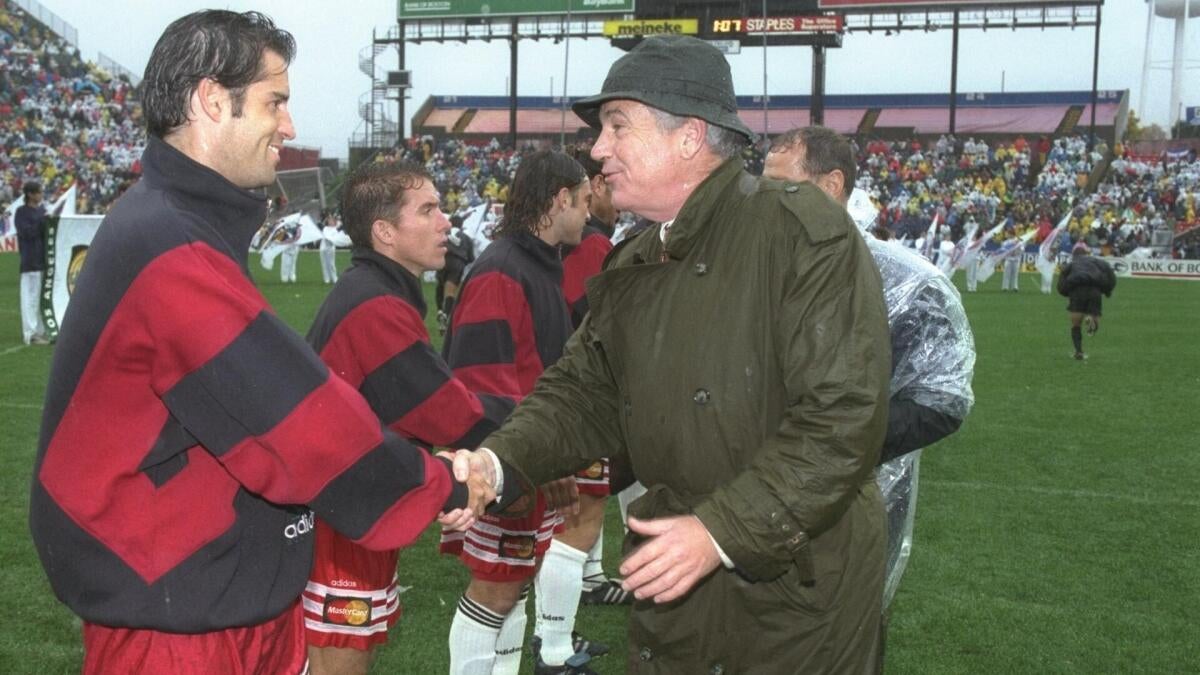
From teetering on the edge of going out of business during the early 2000s to preparing to kick off a league's 31st season with some of the best players in the world, Major League Soccer has come a long way since the first ball was kicked between the San Jose Clash and D.C. United in 1996. What started as a mandate to bring first division soccer to the United States as a stipulation in landing the 1994 World Cup has become one of the top soccer leagues in the world, with no signs of slowing down. Beginning with only 10 teams in 1996, there will be 30 teams in action this weekend, as the league has grown in unimaginable ways. From multimillion-dollar facilities to the presence on national teams and World Cup rosters, and of course, Lionel Messi, the fingerprints of MLS will be all over the 2026 World Cup, taking place in the United States, Canada, and Mexico this summer.
MLS commissioner Don Garber summed this up well during his state of the league address in December, saying, "We'd love to say that [the World Cup is] the rocket fuel, but this jet has been running for 30 years, and it's going to run for another 30."
In what will be the biggest World Cup in history, the 2026 tournament will expand to 48 teams for the first time, featuring at least four first-time qualifiers. It's expected to surpass records set by the 1994 World Cup, which is still the most attended in history. The 16 host cities are only the tip of the iceberg as well, with training facilities being picked out all around North America to ensure that national teams can have a true home away from home. But for any of this to happen, it goes back to the soccer builders in this country -- Lamar Hunt (of the Hunt family that owns the Kansas City Chiefs), Alan Rothenberg, Philip Anschutz, and so many more.
Only a few may have expected things would advance so far when MLS started. However, for the first commissioner in league history, Doug Logan, this doesn't surprise him in the slightest.
"Yes, I did," Logan said when asked if he expected to see the best players in the world playing in MLS. "People ask me that all the time. And the answer is yes. Part of the responsibility and the charge to the top leader in entities like this is to be able to have a vision of what could be and then tirelessly and ceaselessly keep the institution and the organization on that track. I realized where it was going to go. Not where it could go, but where it was going to go.


Morikawa's 62 set the pace on Moving Day, and he's now in contention behind Akshay Bhatia

Bhatia and Fowler put together two of the best rounds of Friday to move to the top of the leaderboard at Pebble Beach

The world No. 1 finds himself 10 strokes off the pace after 18 holes for the second straight week

A look at the trade packages Las Vegas could receive for its star pass rusher

Arsenal looks primed for another run, while Real Madrid hang on to first-leg victory

The Cowboys and Colts face pivotal franchise tag decisions ahead of free agency

Opetaia heads into his first fight with Zuffa Boxing looking to make a statement and claim the first Zuffa Boxing title

The world No. 2 is among many stars in the field for the first signature event of the PGA Tour season

Reed ranks No. 1 in the DP World Tour's Race to Dubai thanks to two early season wins that may only be the beginning

It's now on offenses to respond by embracing a more aggressive approach

The Champions League playoffs will be back next week around Europe

Gotterup battled into a playoff with Hideki Matsuyama and prevailed at TPC Sawgrass

Seattle blew past New England to hoist its second Lombardi Trophy