‘Supershoes’ have changed running but do they confer unfair advantages? Premium
The Hindu
A few years ago, the Nike Vaporfly shoe kicked off a storm of controversy in athletics. It became a focus for claims about whether it provided some athletes with an unfair advantage
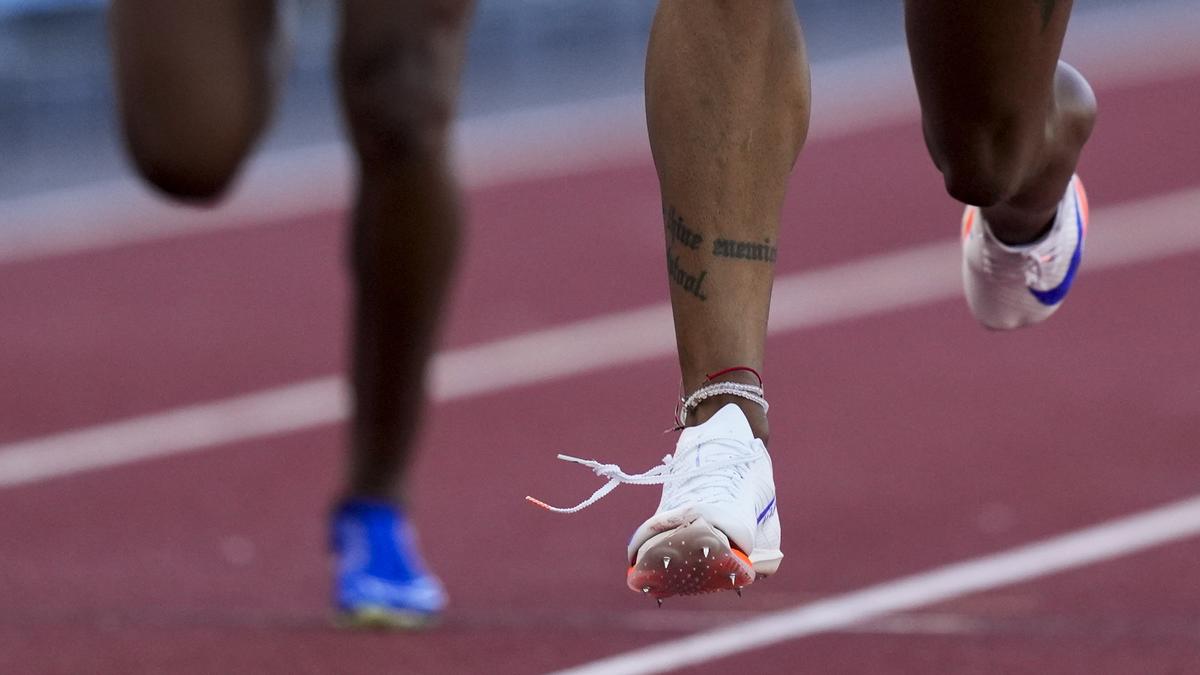
On the face of it, competitive distance running appears not to have changed much since the Olympic Games were revived in 1896. However, even the relative simplicity of racing from gun to tape has radically altered in recent years due to the rise of advanced running footwear known colloquially as “supershoes”.
A few years ago, the Nike Vaporfly shoe kicked off a storm of controversy in athletics. It became a focus for claims about whether it provided some athletes with an unfair advantage over those not equipped with the shoes.
In 2019, Kenyan distance runner Eliud Kipchoge wore prototype Vaporfly shoes when he became the first athlete to run the marathon distance in under two hours as part of the Ineos 1:59 challenge in Vienna. Ultimately, the shoes avoided a ban just in time for the 2020 Tokyo Olympics.
Several years on, what more do we understand about these shoes and how they work? My recent paper attempts to review and answer ten key questions about supershoes as the Paris Olympics now loom on the horizon.
First, we need to understand what supershoes are and how they differ from traditional running footwear. Initially, supershoes used a sole that saw a combination of material called a polyamide block elastomer (known by its tradename Pebax) coupled with the use of a carbon fibre plate.
At the height of the controversy, much was made of this plate, leading to claims that they were essentially springs propelling runners along. However, scientists now understand that, generally speaking, it’s the combination of all of the soles’ components working together harmoniously that’s behind the shoes’ success.
This broad effect has helped topple a raft of world records in the marathon and half-marathon distances. The shoes have improved times by roughly 1.4-2.8% or 0.6-2.2% in the men’s and women’s marathon events respectively over the last seven to eight years.


Explore 2026's wallpaper trends in India, highlighting botanicals and handmade designs that enhance modern homes with nature-inspired aesthetics.

Mercedes-Benz CLA 250+ with EQ Technology review: design, performance, range and features explained. Discover how the new electric CLA combines advanced AI, long range, fast charging and futuristic styling for the next generation of luxury EVs.

AI tool for sparrow conservation

BTS’s comeback with ‘Arirang’ marks a major global music event. When does the album release, and where can you watch their concert live stream? We have all the details

The 2026 U.S. cholesterol guidelines urge starting screening and treatment at 30 to prevent cardiovascular disease effectively.

Olam Festival 2026 in Thiruvananthapuram returns March 27-29 with 120+ vendors, music, art, and cultural zones.

A few storytellers in Thiruvananthapuram share their journeys, challenges, and evolving methods on World Storytelling Day, inspiring young minds.

76-year-old Kurian Jacob from Kerala triumphs with seven medals, including five golds, at the Open Masters Games in Abu Dhabi.

Explore the nature of the human mind as an emergent property of brain activity and complex neural interactions.

CERN's Large Hadron Collider discovers the Xi-cc-plus particle, enhancing understanding of quantum mechanics and baryon behavior.

Vibha Batra’s latest book, Spotless (Hachette India) is a novel in verse for young adults

In its first edition, the Madras Art Salon spotlights the works of journalist and artist Narayan Lakshman at The Botanical Club, a social space in the British Deputy High Commission, Chennai

Cholesterol enhances melanoma cell invasion by making nuclei squishier, revealing a potential treatment target in cancer progression.