Study reveals surprising rise of lion‑tailed macaques in human-dominated landscapes
The Hindu
Study finds lion-tailed macaques thriving in human areas, raising concerns over long-term risks and conservation strategies.
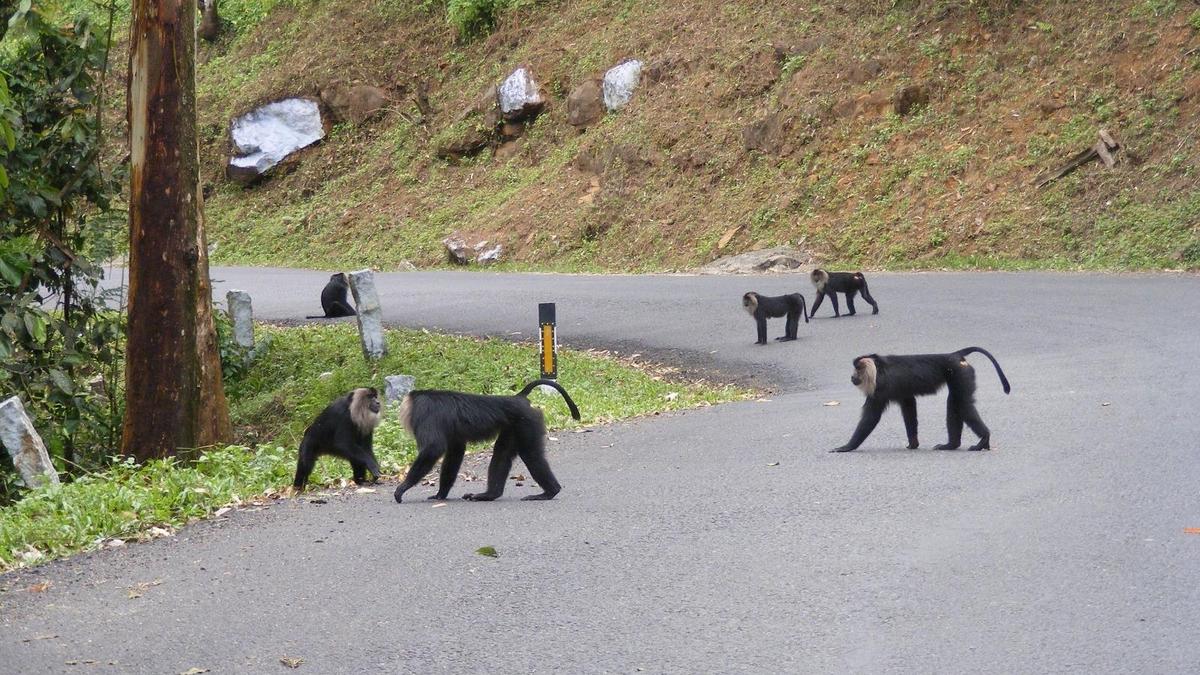
In the fragmented ancient rainforests of Anamalai Hills, an unlikely conservation paradox is unfolding. The lion-tailed macaque — one of India’s most endangered primates — appears to be thriving not in the deep, undisturbed forests, but amid bustling human activity: plantations, tourist trails, hydel projects and expanding road networks.
This growth beyond the forest’s protective boundaries might seem like a rare conservation success for a species already grappling with habitat loss. But scientists warn that rising populations in non‑protected areas could turn into a long-term threat rather than a victory.
Researchers from three institutions, including the CSIR–Centre for Cellular and Molecular Biology (CCMB), caution that the increase is driven largely by easy access to food associated with human presence. Yet this dependence, they say, also exposes the macaques to higher risks — from road accidents and electrocution to intensifying tourism and logging.
Drawing on data from a 40-year study across the fragmented forests of the Anamalai Hills in the Western Ghats, scientists found that macaque populations within protected forests remain demographically stable. Although growth is slower, these groups show healthier age–sex ratios, including a stronger presence of adult females.
The study followed 37 macaque groups from dawn to dusk across 10 rainforest fragments. Of these, 29 groups lived within protected areas, such as tiger reserves, while eight groups occupied non-protected spaces like tea, coffee, and teak plantations, human settlements, and livestock-grazing regions.
These unprotected zones offer an abundance of fruit-bearing trees and see heavy tourist and vehicular movement. Garbage piles and food waste create additional, readily accessible food sources for the macaques. While birth rates did not differ significantly between protected and non-protected regions, population stability was notably higher inside protected forests. Group sizes in these areas showed a negative correlation with canopy height — a reminder that an intact canopy remains essential for this arboreal species.


Sub-adult humpback dolphin found dead on Perupalem beach after being trapped in a fishing net, prompting an investigation.

Resilience in industry will be among the key themes of the summit

MP Lahar Singh Siroya advocates for a 'Crafts Village' near Channapatna to preserve its iconic wooden toy heritage.

Study finds lion-tailed macaques thriving in human areas, raising concerns over long-term risks and conservation strategies.

Defence Ministry plans new guidelines for armed forces personnel publishing books amid Naravane memoir controversy and national security concerns.

French artist Veronik Menanteau's 'Tsunami Poems' honors child survivors of the 2004 tsunami through poetry and art.

Centre directs States to play Vande Mataram before Jana Gana Mana, emphasising respect and decorum during national song performances.

Renowned biologist Bonnie Bassler explores bacterial communication's potential to revolutionize medicine and enhance our understanding of microbial behavior.

Coimbatore's western bypass project shifts to the Tamil Nadu State Highways Authority, raising concerns over delays and toll proposals.

Home Minister Parameshwara pledges to make Karnataka drug-free, emphasizing public cooperation and campus initiatives against narcotics.

Hardeep Puri criticises Rahul Gandhi's allegations, clarifying his Epstein meetings were unrelated to any criminal activities.

VAIGA 2026 fest launched in Thiruvananthapuram, emphasizing agricultural value addition and entrepreneurship to enhance farmers' incomes.

Jamaat-e-Islami's manifesto proposes anti-hate laws, campus polls, liquor ban, and economic reforms for social harmony and accountability.