Strait of Hormuz ship traffic slows to a crawl. Here's what to know about the key oil waterway.
CBSN
The U.S. and Israel attacks on Iran are focusing attention on the Strait of Hormuz, a narrow but strategically vital waterway in the region that serves as a key artery for global oil shipments. Edited by Alain Sherter In:
The U.S. and Israel attacks on Iran are focusing attention on the Strait of Hormuz, a narrow but strategically vital waterway in the region that serves as a key artery for global oil shipments.
Marine traffic through the strait has slowed to a trickle since the outbreak of hostilities last week, heightening concerns that the conflict could constrain oil supplies and sharply drive up energy costs, Wall Street analysts said on Monday. The U.K. Maritime Trade Operations Center reported attacks on several vessels in the area on either side of the strait and warned of elevated electronic interference to ship navigation systems.
"Infrastructure is at risk throughout the region, and it's not just at risk because of deliberate attacks, but also inadvertent attacks," said Kevin Book, managing director at Clearview Energy Partners. "Shrapnel and debris from missile interceptions can fall onto facilities and disable them too, and so there are a number of challenges that come from this kind of conflict in an area with so much energy production."
Here's what to know about the Strait of Hormuz.
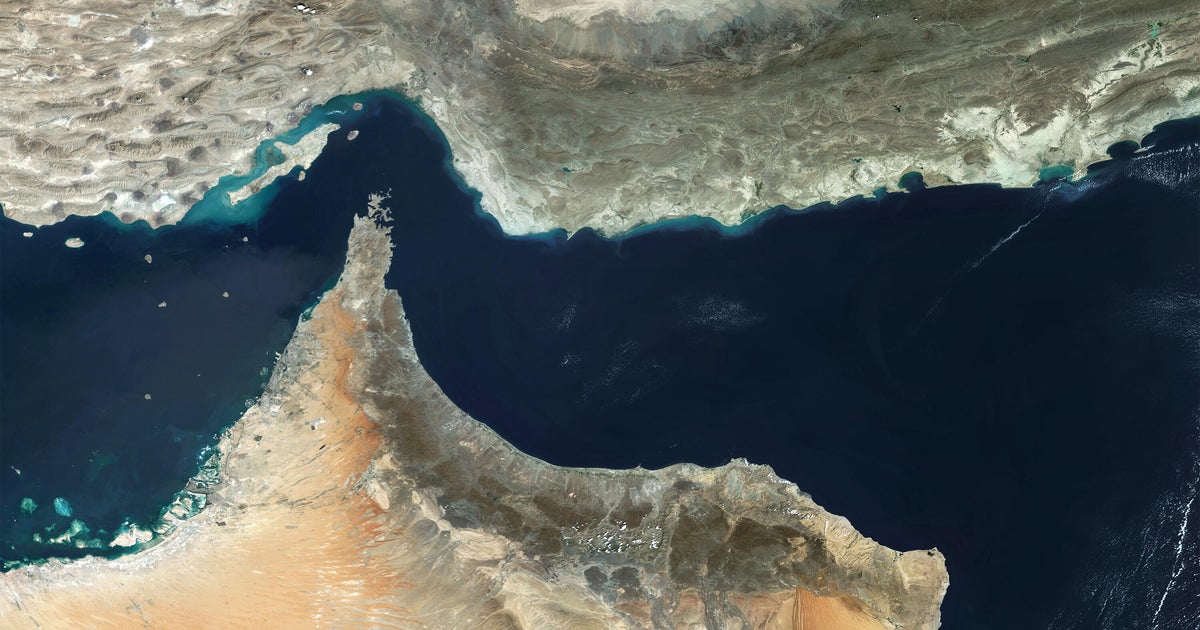
The strategic sea passage, located on Iran's southern border, connects the Persian Gulf to the Gulf of Oman and the Arabian Sea. Long an important commercial trade route, the Strait of Hormuz ordinarily enables the flow of about 20% of global oil and liquefied natural gas shipments. Experts describe it as a strategic "choke-point" for crude.


A 39-year-old woman and a dog were killed, and three other people were stabbed in a road rage incident on the outer belt of the Washington D.C. beltway on Sunday, police said. The suspect was killed by police. In:

U.S. stock futures tumbled in premarket trading Monday as global oil prices soared amid signs that U.S.-Israel military strikes in Iran were expanding across the region, raising concerns about potential disruptions to global petroleum supplies. Edited by Alain Sherter In:

Defense Secretary Pete Hegseth and Chairman of the Joint Chiefs of Staff Gen. Dan Caine are holding a rare press conference Monday morning as the U.S. and Israeli military operation against Iran continued into a third day.

Three American F-15 fighter jets were shot down over Kuwait in a "friendly fire incident," the U.S. military said Monday, but there were no casualties. Brian Dakss contributed to this report. In:

Washington — President Trump said Sunday that he is willing to speak with the new leadership in Iran following the death of Supreme Leader Ayatollah Ali Khamenei, the country's longtime leader, who was killed in Israeli airstrikes on Saturday. Kristin Brown contributed to this report.

Danise Baird, the wife of Indiana Rep. Jim Baird, has died following complications from injuries stemming from a car crash with her husband in January, the Republican lawmaker's office announced on Sunday.

This time it was Hilary Knight's turn to provide a big laugh — with an assist from the "Saturday Night Live" writers — in the wake of a weeklong dust-up involving the United States women's and men's Olympic gold medal-winning hockey teams. In:

"It's about the principle of standing up for what's right," said Dario Amodei, CEO of the artificial intelligence firm Anthropic, who has found himself at the center of a new kind of firestorm. What's wrong, in his view, is why the AI company he co-founded has been banned from the federal government. In:

The U.S. Central Command said Sunday that three American service members were killed and five others were seriously wounded as part of the joint U.S.-Israeli military operation in Iran.

The first Persian Gulf War lasted six weeks. Kuwait was liberated from the murderous grasp of Saddam Hussein, and the Iraqi army admitted defeat, at a surrender ceremony presided over by the charismatic General Norman Schwarzkopf, who said of Iraq's leadership, "I'm not here to give them anything. I'm here to tell them exactly what we expect them to do." In:

Washington — The Supreme Court is set to hear arguments Monday in a Second Amendment dispute over a federal law that bars unlawful drug users from possessing firearms.

Gunfire rang out as a bar in Austin, Texas was closing early Sunday and at least three people were killed, authorities said. In:

President Trump told CBS News on Saturday evening that he believes U.S. and Israeli attacks that killed Supreme Leader Ayatollah Ali Khamenei have been effective and could create a pathway to diplomacy. In: