Star Wars Day 2025: Ranking the 10 best ‘Star Wars’ stories ever told
The Hindu
This May 4th, here is a ranking that cuts through the noise (and the fan service) to spotlight ten essential ‘Star Wars’ entries that remind us why we ever cared about a farm boy, a fallen knight, and the fight for something better
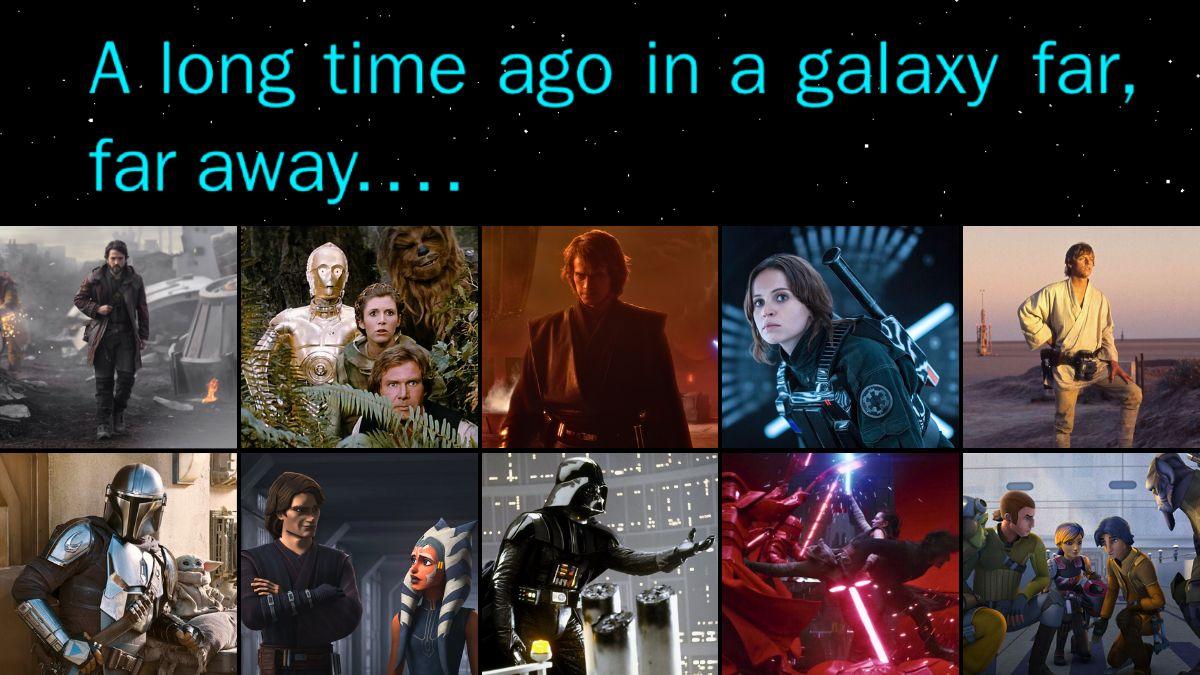
For a franchise born in a desert under a binary sunset and raised among myth, merchandise, and cultural liturgy, Star Wars has aged into something oddly baroque. Across nearly five decades, it has produced a sprawling mosaic of stories — some sublime, some embarrassing, and some both at once. Sorting through the rubble and relics of that galaxy far, far away is no small task, but if there’s a throughline to be found, it lies in the franchise’s unshakable belief in the redemptive power of story: that good and evil can be felt in orchestral swells, that the past is worth fighting, and that somewhere in the light of twin suns or the sparks of rebellion, someone is always choosing to be better. Here, then, are the ten finest expressions of that belief — films and series that expanded the myth, sharpened it, and in the best cases, even challenged it.
For a film tasked with closing the most operatic of space operas, Return of the Jedi wears its destiny with a lightness of heart. It’s a strange brew of Ewok showboating and existential redemption, and while its tonal shifts occasionally buckle under the weight of trilogy-ending expectations, the final confrontation between father and son is pure mythological gold. Few films allow a villain in a black mask to die so tenderly.
Rian Johnson’s provocation-in-sheep-clothing is perhaps the most literary of the Star Wars entries. It is philosophical, bristling with contradiction, and unwilling to kneel before the altar of nostalgia. Here, Luke Skywalker is no longer the familiar Joseph Campbell-ian boy-hero, but a weary monk who milks sea cows and shames legends. The film fractured the fandom, as true revolutions must, but in doing so, it dared to question what happens when myths age, and whether burning them down might be the truest way to preserve them.
What began as a spaghetti western in a galaxy far, far away has evolved into a gentle meditation on fatherhood, loyalty, and the unlikely warmth of a faceless man and a 50-year-old green toddler. The Mandalorian succeeded by polishing the wheels of reinvention with a reverence for genre and an eye for simplicity. Each episode is a love letter to the serialised adventures of yore, shot through with space dogfights, sand-swept vistas, and the occasional Werner Herzog cameo. That it also reintroduced Boba Fett and gave us Grogu is just sweetened blue milk.
Initially dismissed as a babysitter for younglings and the chronically online, The Clone Wars grew — seven seasons deep — into one of the most emotionally intricate and narratively generous pieces of Star Wars storytelling. It gave flesh to the clone troopers, enhanced Anakin’s tragedy, and turned Ahsoka Tano into a paradigm. The show embroidered the gaps with consequence, character, and lightsaber choreography that often outshone its cinematic siblings.
If Clone Wars was the war epic, Rebels is the poem of resistance that’s smaller in scale but richer in heart. Set between the fall of the Republic and the rise of rebellion, the show chronicles the coming-of-age of Ezra Bridger, a scrappy Force-sensitive orphan, and a makeshift family of freedom fighters aboard the Ghost. It takes Star Wars’ most sacred texts of the Force, legacy, and sacrifice, and wrestles with them in meaningful ways. By the time it also introduces time travel, it somehow well and truly earns it.
There is a childlike sincerity in A New Hope that has, with time, become the stuff of legend. It is both artefact and origin story, a cosmic pastiche of Kurosawa and Flash Gordon, spliced together with model glue and instinct. Its world-building is tactile and its stakes, though galactic, are deeply personal. Watching it now is like revisiting the hopeful, clumsy and luminous relics of a distant childhood you never had but somehow remember.


Bollywood actor Akshay Kumar paid tribute to the martial arts grandmaster and Hollywood’s action star, Chuck Norris, who passed away on Thursday, March 19, 2026.

Renowned Odissi dancer Madhumita Raut, aged 59, dies of cardiac arrest, leaving behind a legacy of artistic achievements.

Chuck Norris, iconic martial arts master and actor, dies at 86, leaving behind a legendary legacy and internet memes.

South African naturalist Steve Boyes speaks on ghost elephants, ancestral tracking, and Werner Herzog’s documentary exploring Angola’s elusive highland giants

Actor-director Amol Palekar will receive META's Lifetime Achievement award for 2026 on March 25 in New Delhi.

India's artists unite against rising censorship, advocating for creative freedom and support for marginalized voices in the arts.

Written and directed by Kunal, the film also stars Sparsh Shrivastava and Vanshika Dhir

This year, Bharatnatyam artistes will present the Tyagaraja Aradhane as a dance performance

This year, Bharatnatyam artistes will present the Tyagaraja Aradhane as a dance performance

The actor, along with director Sushant Shah, speak about their upcoming series ‘Chiraiya’, Divya’s process of working on the dialect, Sushant’s approach to telling a story about women, and more

An independent video, ‘Feel the Spark’ by Raleigh Rajan with vocals by Ciera Dumas that celebrates Tamil literary giants, garnered 1.4 million views in less than 36 hours.

In ‘Jack Ryan: Ghost War’, John Krasinski is back as the savvy CIA analyst, diving headfirst into a high-stakes mission that unravels a deadly conspiracy and pits him against a rogue black-ops unit

Shriram Bharatiya Kala Kendra’s Shankarlal festival showcased rare ragas, radiant artistry, and inclusive performances, from Pt Madhup Mudgal’s serene morning ragas to Ramana Balachandran’s Saraswati veena.