Scientists explain Mount Everest’s anomalous growth in new study
The Hindu
Mount Everest is Earth’s tallest mountain, still growing due to isostatic rebound from a river system merger.
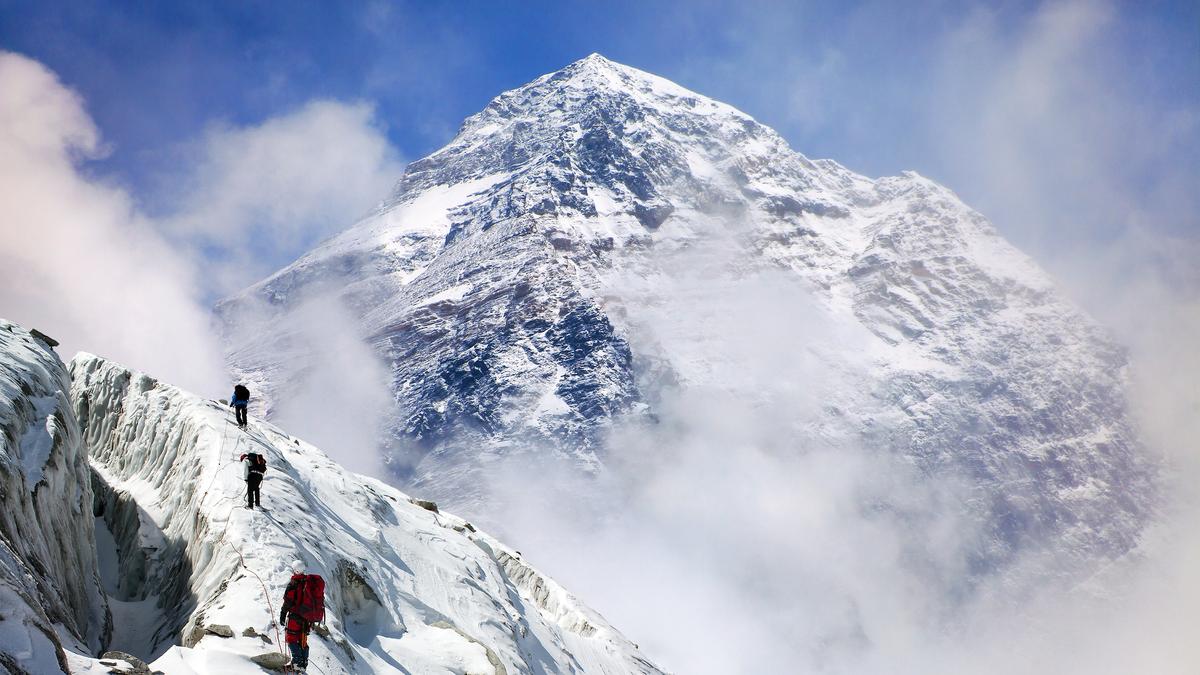
Mount Everest is the earth’s tallest mountain - towering 8.85 km above sea level - and is actually still growing.
While it and the rest of the Himalayas are continuing an inexorable uplift that dates back to their birth roughly 50 million years ago when the Indian subcontinent collided with Eurasia, Everest is growing more than expected from this alone. Scientists now think they know the reason why, and it has to do with the monumental merger of two nearby river systems.
Everest has gained roughly 15-50 m in height due to this change in the regional river system, with the Kosi river merging with the Arun river approximately 89,000 years ago, the researchers estimated. That translates to an uplift rate of roughly 0.01-0.02 inches (0.2-0.5 millimeters) per year.
The geological process at work, they said, is called isostatic rebound. It involves the rise of land masses on the earth’s crust when the weight of the surface diminishes. The crust, the earth’s outermost layer, essentially floats atop a mantle layer made of hot, semi-liquid rock.
In this case, the merger of the rivers – more like a hostile takeover, with the Kosi subjugating the Arun as the rivers changed course over time – resulted in accelerated erosion that has carried off huge amounts of rock and soil, reducing the weight of the region near Everest.
“Isostatic rebound can be likened to a floating object adjusting its position when weight is removed,” said geoscientist Jin-Gen Dai of China University of Geosciences in Beijing, one of the leaders of the study published on Monday in the journal Nature Geoscience.
“When a heavy load, such as ice or eroded rock, is removed from the earth’s crust, the land beneath slowly rises in response, much like a boat rising in water when cargo is unloaded,” Dai added.


Chefs and cookery experts share smart kitchen hacks, hybrid cooking methods and appliance tips to help households reduce LPG use without compromising on food

Discover groundbreaking research on Titan's lakes, bat vaccinations, and the unique aroma of ripening bananas in just one minute.

IRSO's NavIC system faces challenges as the last atomic clock fails, reducing operational satellites for navigation services.

Discover efficient pressure cooking techniques to save up to 50% on fuel. OPOS B Ramakrishnan tells you how

Mercedes-Benz CLA 250+ with EQ Technology review: design, performance, range and features explained. Discover how the new electric CLA combines advanced AI, long range, fast charging and futuristic styling for the next generation of luxury EVs.

Pi Day is celebrated every year on March 14, honouring the significance of the mathematical constant π and its applications in mathematics.

Discover how sculptural interior design transforms modern spaces, blending creativity and functionality to evoke emotion and identity.

A study reveals that certain antibiotics can cause long-lasting changes in gut microbiome diversity for up to eight years.

Indian scientists and international experts are divided over a study questioning the viability of a nuclear reactor fuel called HALEU-thorium; while critics cite safety risks, proponents argue the technology is vital to achieve national energy goals.

ISRO and AIIMS partner to enhance space medicine research, focusing on human health during long-duration space missions.

A practical guide to induction setups for students, families, and home food businesses as India’s LPG supply faces its biggest disruption in years

Explore the electrifying Oscars 2026 race, featuring standout films, baffling nominations, and memorable performances amid a cinematic transition.

Zai and Rom Whitaker’s latest book for young readers, The Book of Indian Snakes, tackles common misconceptions surrounding snakes, highlighting their utility to humans