Sarvam AI launches made-in-India foundational AI models, takes first step towards competing with ChatGPT
India Today
India's Sarvam AI launches its first homegrown foundational models, offering enterprise-grade AI with support for Indian languages. Here are all the details.
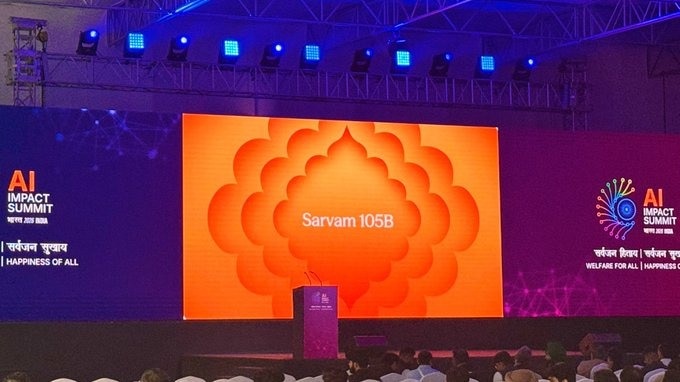
Bengaluru-based artificial intelligence startup Sarvam AI has launched two large language models, Sarvam-30B and Sarvam-105B, as it seeks to establish India’s presence in the global AI landscape. The announcement, made on Wednesday at the AI Impact Summit 2026, marks a notable step for Indian startups aiming to develop domestic AI infrastructure that can compete with established systems such as ChatGPT and other international models. The models are designed for reasoning, multilingual communication, coding, research, and enterprise applications.
Foundational AI models are large-scale neural networks trained on extensive datasets to understand and generate human-like text. Once trained, these models can be adapted for specific applications including coding support, chatbots, content generation, translation, and long-form summarisation. By creating such models in India, Sarvam AI addresses key concerns for domestic enterprises: controlling costs, ensuring data privacy, and supporting multiple local languages, without relying entirely on global APIs. These models can serve as the backbone for various AI-driven services across sectors such as finance, governance, research, and education.
It is worth noting that GPT models, like OpenAI’s GPT-4, are also foundational AI models, trained on massive datasets to perform a wide range of tasks from text generation to reasoning. Sarvam’s models follow the same principle but are designed with Indian languages, enterprise use cases, and accessibility in mind.
Sarvam-30B is the smaller of the two models, with 30 billion parameters and a context window of 32,000 tokens. It has been trained on 16 trillion tokens and designed to operate efficiently, delivering high-quality responses while using fewer computational resources. Benchmark results shared at the launch show the model performing competitively against international models including Gemma 27B, Mistral-32-24B, Nemotron-30B, Qwen-30B, and GPT-OSS-20B across tasks measuring mathematical reasoning, coding accuracy, and general problem-solving.
The model is intended for widespread accessibility. In a live demonstration, Sarvam showcased “Vikram,” a multilingual AI chatbot capable of conversing in Hindi, Punjabi, Marathi, and other Indian languages, even on feature phones. The demonstration highlighted how AI could reach users beyond smartphones, enabling conversational and content generation services for populations previously unable to access advanced AI applications.
The Sarvam-105B model, with 105 billion parameters and a 128,000-token context window, is designed for more complex reasoning and large-scale analytical tasks. During the summit, the model analysed a company balance sheet in real time, providing precise answers to detailed financial and contextual questions. Its ability to process both structured and unstructured data simultaneously positions the model for enterprise use cases such as analytics, research, coding assistance, and summarisation of long documents. This level of performance demonstrates that Indian-built models can match international systems in handling sophisticated business tasks.


It's official. Microsoft co-founder Bill Gates is not delivering his keynote at the India AI Impact Summit. In fact, Gates has been conspicuously absent on the morning of Thursday when global government and tech leaders gathered at Bharat Mandapam. But why? We explain.

OpenAI is pushing into India's top colleges just as Google turns its AI tools toward cracking the IIT entrance exam, suggesting a deeper fight for how the country's students learn.

NCERT has introduced a digital early learning platform for young children. It includes artificial intelligence assistants and play-based activities for foundational learning.

Mark Zuckerberg says he cares about wellbeing of kids, wanted to talk to Apple CEO Tim Cook about it
On Wednesday, Meta cofounder and CEO Mark Zuckerberg testified in a US court during a landmark trial that could change how social media platforms function. Zuckerberg insisted that he cared about the wellbeing of teens and kids who use Meta's services. Here are all the details.

School Assembly News Headlines for February 19: From AI investments in India to rising global tensions, today's news highlights technology, law and international diplomacy.

Google launches Pixel 10a, its most affordable Pixel 10 series phone in India: Price, specs and more
Google has launched the Pixel 10a in India. As you can probably tell from the name, the 10a is the most affordable member of Google's Pixel 10 series, designed from ground up to bring the Pixel experience to more people.

Maruti Suzuki yesterday announced the starting price of its maiden electric SUV, the e Vitara and now the full price list of the e Vitara is out.

Speakers at the India Today AI Summit 2026 warned that India's rapid adoption of AI is outpacing privacy protections, leaving individuals responsible for safeguarding their own data. With weak enforcement and delayed laws, lawmakers and companies are failing to keep up, panellists said.


At India AI Impact Summit, Google has announced that it will connect India with the US through new subsea cables as part of a $15 billion investment spread over five years. It will boost AI connectivity between the two nations. Alongside this, the company plans to expand data centres and cloud capacity, while also rolling out AI skilling programmes and other related initiatives.

Infinix Note Edge launched in India. This is a mid-range phone that comes with a 3D curved display and a massive 6500 mAh battery.

India's Sarvam AI launches its first homegrown foundational models, offering enterprise-grade AI with support for Indian languages. Here are all the details.
