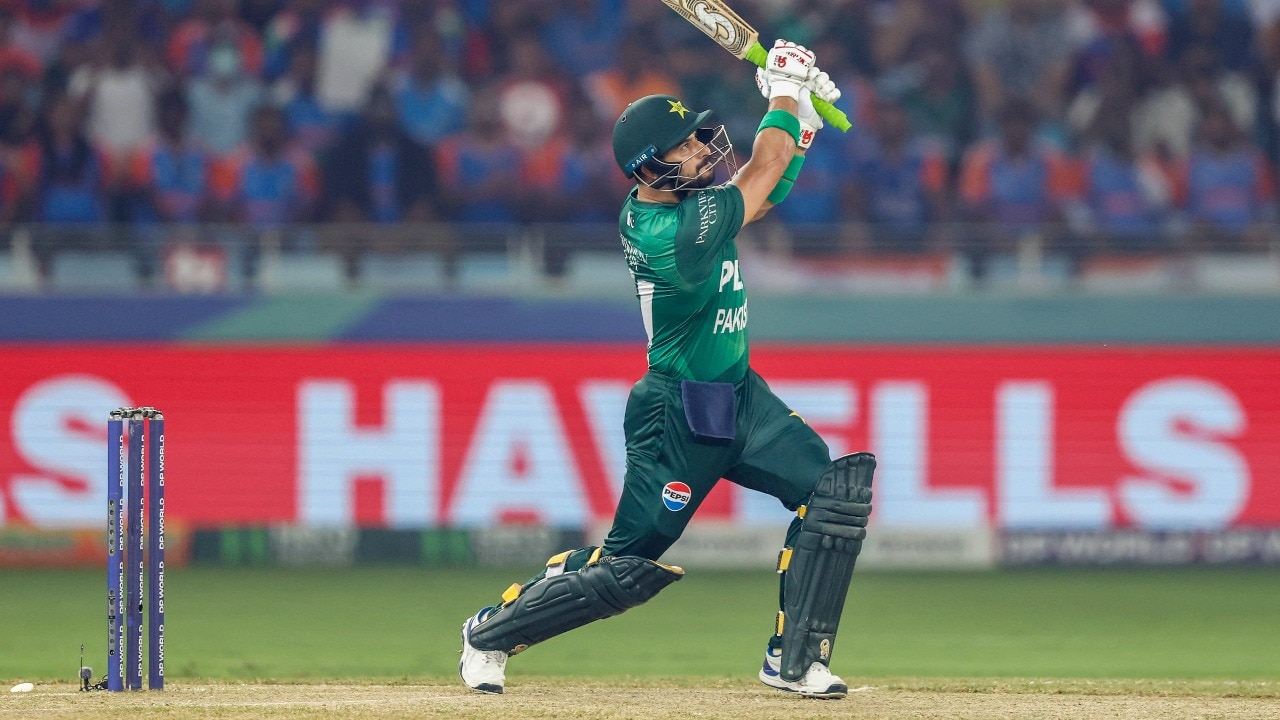
Sahibzada reacts to reports of IPL-owned Hundred teams snubbing Pakistani players
India Today
Pakistani batter Sahibzada Farhan brushed aside questions related to speculation that players from his country could be ignored by at least four Indian-owned franchises in The Hundred auction, saying the matter was beyond their control.
The Hundred's forthcoming auction has sparked debate following reports in British media that four Indian-owned franchises could avoid signing Pakistani cricketers. Pakistan opener Sahibzada Farhan on Tuesday distanced himself from the speculation, stating that players have no control over franchise decisions and remain prepared to play if given the opportunity.
Speaking ahead of Pakistan's T20 World Cup Super Eight clash against England, Farhan said selection calls rest entirely with team management. "See, it's not in our hands to decide who will pick us or not. That is not in our hands. Wherever we get a chance, whoever is interested can pick us and we are ready to play in that league," he said.
When asked about reports suggesting Pakistani players could be overlooked by teams with links to the Indian Premier League, Farhan declined to engage with the premise. "And we are not interested to play with the people - the way you have spoken," he added.
The reports concerned four Hundred franchises, namely Manchester Super Giants, MI London, Southern Brave and Sunrisers Leeds, all owned by Indian business groups. While none of the franchises has issued an official statement, the speculation has renewed focus on the broader absence of Pakistani players in IPL-owned competitions.
No Pakistani cricketer has featured in the IPL since the inaugural 2008 season. The pattern has continued in other IPL-linked tournaments such as the SA20 and the ILT20, where franchises are also controlled by IPL owners.
England and Wales Cricket Board chief executive Richard Gould had previously said he expected "players from all nations to be selected for all teams" in The Hundred and emphasised that "clear anti-discrimination policies" were in place.


IPL 2026: Virat Kohli laughed off claims he sought charter flights to London during IPL 2026, responding to social media rumours ahead of Royal Challengers Bengaluru's season opener in Bengaluru.

Sunil Gavaskar has called on Indian-owned franchises to stop paying Pakistani players, while hitting back at accusations of hypocrisy following his controversial column on the matter.

SRH camp sees a heated moment as Ishan Kishan gets a fiery send-off from teammate Zeeshan Ansari during an intra-squad match ahead of IPL 2026. Kishan has been named as the interim captain for the first few games for SRH.

With the Premier League title race put on hold for the moment, Arsenal and Manchester City will meet in the final of the Carabao Cup 2025-26. With silverware up for grabs, which team willk seize the chance to gain the edge and the title.

IPL 2026: Ashwin's post showing Sanju Samson practising high catches in the deep with no keeping gloves has sparked speculation over his role at with the Chennai Super Kings ahead of the new season.

R Ashwin has suggested that IPL teams should be allowed to cut money from the players' wages if they're unable to fulfill their role for the side. Ashwin used the example of Cameron Green and KKR to drive home the point.

IPL 2026: Abhishek Sharma smashed a quickfire 94 in SRH's intra-squad clash ahead of IPL 2026. The knock signalled his return to form after a mixed T20 World Cup campaign.

Anaya Bangar shared that she has successfully undergone gender-affirming surgery in Thailand. She credited her father Sanjay Bangar and family for their support through the emotional journey.

IPL 2026: Irfan Pathan believes IPL 2026 will be a tougher test for Vaibhav Sooryavanshi. With bowlers now decoding his game, the young star will need to evolve and prove himself again.

IPL 2026: Rishabh Pant and Sanjiv Goenka led Lucknow Super Giants' visit to the Ram Mandir ahead of IPL 2026. The squad offered prayers in Ayodhya as they prepare for the upcoming season.

Following a long injury lay-off, Mayank Yadav returns fitter and wiser, determined to combine raw pace with control as he eyes redemption in IPL 2026.

Shubman Gill heads into IPL 2026 with renewed motivation after his T20 World Cup snub. Cheteshwar Pujara has backed the Gujarat Titans captain to turn the setback into a standout season.