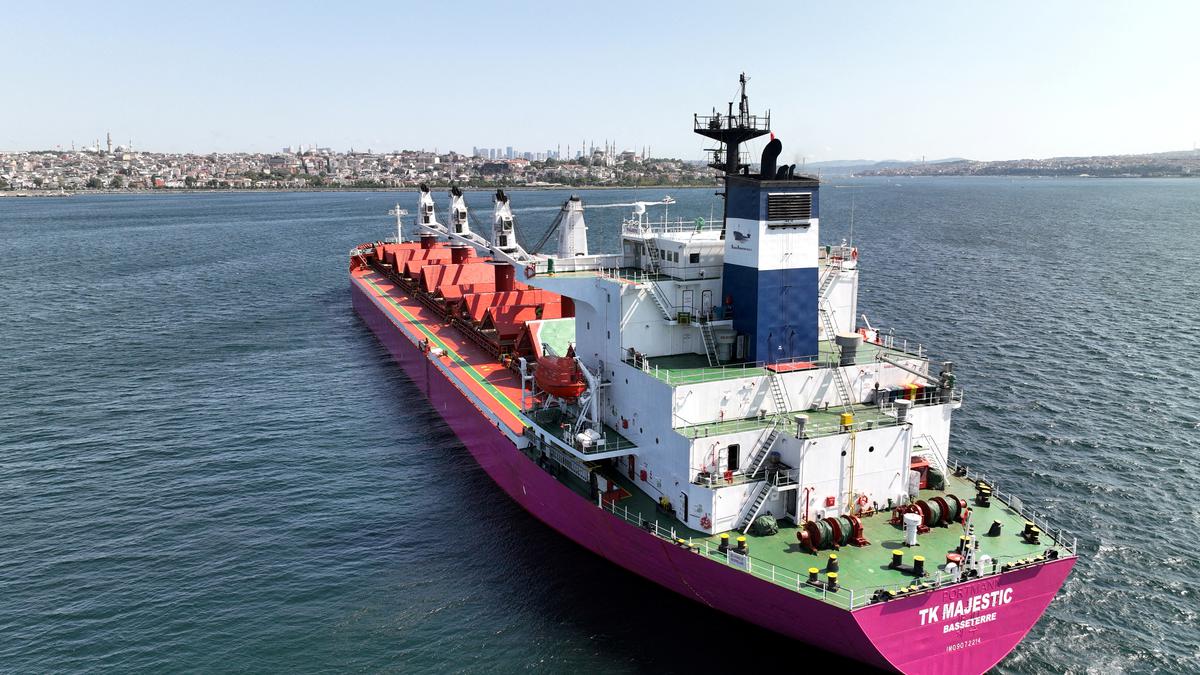
Russia halts wartime deal that allows Ukraine to ship grain in a hit to global food security
The Hindu
Russia halts grain deal from Ukraine to developing nations, citing restrictions. Deal could worsen global food crisis, pushing more people into poverty. UN, Turkiye brokered deal last summer to allow food to leave Black Sea region. Russia has shipped record amounts of wheat, but food insecurity is growing. 45 countries need outside food assistance, with high prices a driver of hunger. Deal allowed 3 Ukrainian ports to export 32.9 million metric tons of grain. Exports dropped from peak of 4.2 million metric tons in Oct. to 1.3 million in May.
Russia said on July 17 it has halted an unprecedented wartime deal that allows grain to flow from Ukraine to countries in Africa, the Middle East and Asia where hunger is a growing threat and high food prices have pushed more people into poverty.
Kremlin spokesman Dmitry Peskov announced halting the deal in a conference call with reporters, adding that Russia will return to the deal after its demands are met.
“When the part of the Black Sea deal related to Russia is implemented, Russia will immediately return to the implementation of the deal,” Mr. Peskov said.
It's the end of a breakthrough accord that the United Nations and Turkey brokered last summer to allow food to leave the Black Sea region after Russia invaded its neighbour nearly a year and a half ago.
A separate agreement facilitated the movement of Russian food and fertiliser amid Western sanctions.
Also Read | Why allowing Ukraine to ship grain during Russia’s war matters to the world
The warring nations are both major global suppliers of wheat, barley, sunflower oil and other affordable food products that developing nations rely on.


Vietnam accelerates its shift to ethanol fuel as rising energy prices from the Iran war impact its economy.

Teenagers sue Musk's xAI, alleging its image-generator created explicit images of them as minors, sparking concerns over AI safety.

Shorts News:Watch: Netanyahu: Israel ‘acted alone’ in Iranian gas field attack

Indonesian billionaire Michael Bambang Hartono, co-founder of Djarum Group, has died at 86, leaving a significant legacy.

European nations, Japan, and Canada unite to ensure safe passage through the Strait of Hormuz and stabilize energy markets.

Some of the estimated 20 billion yuan ($2.9 billion) worth of equipment, including screen-printing production lines, will require export approval from Chinese regulators, according to the people. It wasn't immediately clear how much of the equipment would require approval or how long it would take.

Three men, including a Super Micro VP, charged with smuggling U.S. AI technology to China, threatening national security.

Trump compares U.S. strikes on Iran to Pearl Harbor in meeting with Japan's PM, highlighting the element of surprise.

Iran-Israel war: Follow the latest updates from The Hindu on the West Asia conflict on March 20, 2026

The closure of the Strait of Hormuz disrupts a vital artery of the global economy, triggering price increases and turmoil in energy markets; as supply shocks reshape the geopolitics of energy, countries like India, the U.S., and Russia recalibrate strategies amid shifting oil flows and rising dependence

EU lawmakers advance U.S. trade deal legislation, overcoming delays and adding safeguards amid concerns over compliance from the Trump administration.

Pro-Iran Iraqi group pauses U.S. embassy attacks for five days, imposing conditions amid ongoing regional tensions and strikes.

Russia condemns the Israeli airstrike injuring RT journalists in Lebanon, calling it deliberate amid ongoing regional conflict.