Residents flag health risks over Organic Waste Converter OWC construction at Godrej Eternity in Bengaluru
The Hindu
Residents of Godrej Eternity in Bengaluru raise health concerns over an Organic Waste Converter's proximity to their homes.
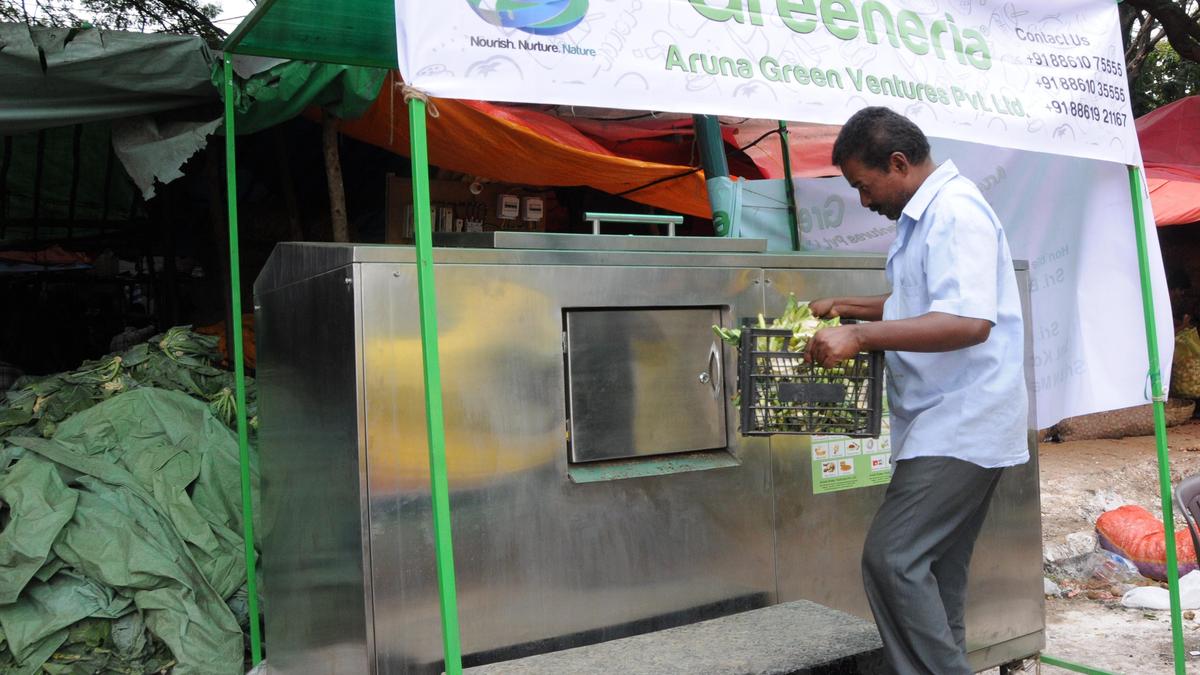
Residents of Godrej Eternity, a residential community with 64 blocks and 880 dwelling units, located off Kanakapura Road in south Bengaluru, have written to the Karnataka State Pollution Control Board (KSPCB) objecting to the construction and proposed operation of an Organic Waste Converter (OWC) within the apartment premises.
In a letter submitted to the Board, the residents stated that the OWC is being constructed in close proximity to residential blocks, with the structure located less than 10 feet from homes in an open area immediately adjoining the apartments. According to the residents, more than 100 households are likely to be directly and severely affected by odour, emission, noise and the constant movement and handling of wet waste in a densely populated residential environment.
The residents have argued that, at the time of booking and sale of the apartments, no disclosure was made regarding the placement of an OWC near residential blocks. While the developer has claimed that the location is part of the approved master plan or blueprint, the residents contend that this information was never communicated or consented to by apartment owners.
The letter further pointed over the nature of the facility being constructed. While the approval, as understood by residents and as claimed by the developer, was for organic waste processing, the structure under construction is described as a 350 square feet enclosed facility proposed to use electric burning or incineration. Residents said that such technology, particularly when handling segregated wet waste in close proximity to homes, could pose serious health and environmental risks.
Residents also flagged the logistical challenges associated with the project, stating that wet waste generated across all 64 blocks and 880 households will have to be manually transported across multiple residential blocks to the OWC, and will increase hygiene risks.
Despite repeated meetings and objections raised by residents, the builder has continued construction, allegedly without adequately addressing environmental, health or safety concerns, the letter stated. The residents have also pointed to what they describe as a regulatory gap, noting that there are no clearly defined guidelines from the government or the Pollution Control Board specifying minimum safe distance for the placement of OWCs from residential blocks. In the absence of such norms, they argue, builders are unilaterally deciding locations that have a direct bearing on residents’ health and well-being.


India AI Impact Summit 2026 LIVE: PM Modi to inaugurate India AI Impact Expo 2026 on February 16, showcasing global AI collaboration and innovation in New Delhi.

During pepper harvest season, children of migrant workers in Karnataka miss school as they need to take care of siblings while parents work.

Following representations from residents, the Cantonment Board and the Tambaram Corporation have coordinated to restore and install street lights along affected stretches of Old Trunk Road

Karnataka's toll revenue from FASTag surpasses ₹11,000 crore in three years, reflecting a major shift to electronic tolling.

Residents of Godrej Eternity in Bengaluru raise health concerns over an Organic Waste Converter's proximity to their homes.

Two women militants arrested in Manipur for extortion, linked to banned outfits, police report on February 16, 2026.

Karnataka's Rohith Vemula Act remains delayed amid Supreme Court's stay on UGC regulations, igniting renewed debates on caste discrimination on college campuses.

PM Modi emphasizes India's leadership in AI transformation, highlighting its impact on various sectors at the AI Impact Expo 2026.

India's first 'cow culture' museum in Mathura will highlight the spiritual and scientific significance of cows and their products.

E-application for Agniveer recruitment in Telangana is now open, inviting eligible candidates to apply until April 1, 2027.

A man dies after an SUV driven by a minor hits his scooter, leaving his wife in critical condition.

Suryakumar Yadav dedicates India's T20 World Cup win over Pakistan to fans, while Salman Agha seeks perspective post-defeat.

The Centre approves over ₹11,000 crore for road projects in Maharashtra, Gujarat, and Telangana to enhance connectivity and reduce travel time.