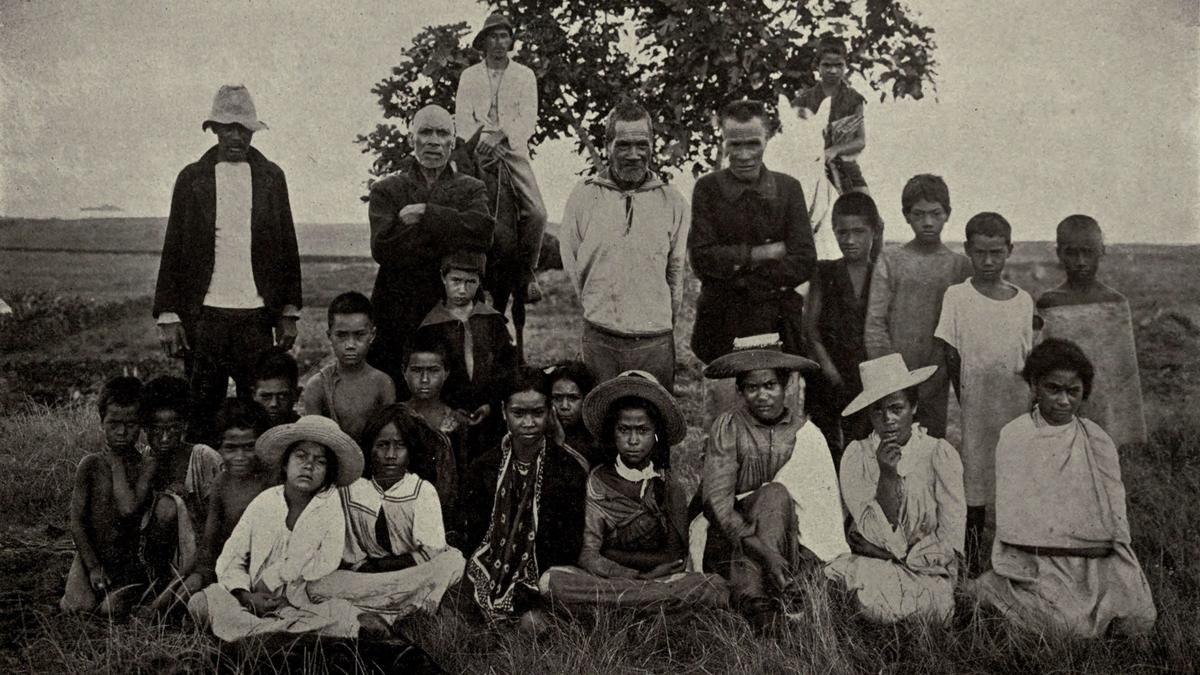
Rapa Nui genomes restore the real history of an old, troubled people Premium
The Hindu
Discover the truth behind the mysterious history of Rapa Nui, challenging the myth of overpopulation and ecological collapse.
The volcanic island of Rapa Nui has long been shrouded in mystery. European sailors first arrived on its shores on Easter Sunday in 1722, giving it its colloquial name: Easter Island. It covers just 160 sq. km and is one of the most remote islands on the planet. Today, Rapa Nui is part of Polynesia and is officially a territory of Chile.
Early Polynesian explorers are believed to have traversed thousands of kilometres of open ocean to reach and settle the island, likely arriving centuries before the Europeans. The island’s geography is harsh and challenging for humans. Its lava-covered terrain is rocky with limited freshwater sources, poor soil quality, and a low diversity of flora and fauna.
Despite these challenges, its first humans likely established a unique society in order to survive their exacting environs. However, the island’s offerings would still have been quite finite and ingenuity could only have taken the people so far. These realities gave rise to a widely held notion that the humans eventually overpopulated the island, resulting in ecological collapse and its people’s demise.
But new evidence suggests this view may be fiction.
Rapa Nui is famous for its large statues called moai. They are shaped like large human heads and erected on stone pedestals. Some moaistand 40 ft tall and weigh 75 tonnes. They were carved in volcanic stone at quarries and then moved to their current locations across the island. Scholars believe the Rapa Nui built the moai between the 13th and the 16th centuries and represented their revered ancestors.
The statues all face inland, towards the people. Over 900 moaihave been found on the island to date; more than half of them were transported across considerable distances from the quarries.
In his book 2004 Collapse, Jared Diamond proposed the population of Rapa Nui collapsed after overexploiting resources. The idea quickly found wide acceptance and became an example of the importance of sustainable living. But some scholars have called into question the feeble evidence to support the hypothesis.


Explore 2026's wallpaper trends in India, highlighting botanicals and handmade designs that enhance modern homes with nature-inspired aesthetics.

Mercedes-Benz CLA 250+ with EQ Technology review: design, performance, range and features explained. Discover how the new electric CLA combines advanced AI, long range, fast charging and futuristic styling for the next generation of luxury EVs.

AI tool for sparrow conservation

BTS’s comeback with ‘Arirang’ marks a major global music event. When does the album release, and where can you watch their concert live stream? We have all the details

The 2026 U.S. cholesterol guidelines urge starting screening and treatment at 30 to prevent cardiovascular disease effectively.

Olam Festival 2026 in Thiruvananthapuram returns March 27-29 with 120+ vendors, music, art, and cultural zones.

A few storytellers in Thiruvananthapuram share their journeys, challenges, and evolving methods on World Storytelling Day, inspiring young minds.

76-year-old Kurian Jacob from Kerala triumphs with seven medals, including five golds, at the Open Masters Games in Abu Dhabi.

Explore the nature of the human mind as an emergent property of brain activity and complex neural interactions.

CERN's Large Hadron Collider discovers the Xi-cc-plus particle, enhancing understanding of quantum mechanics and baryon behavior.

Vibha Batra’s latest book, Spotless (Hachette India) is a novel in verse for young adults

In its first edition, the Madras Art Salon spotlights the works of journalist and artist Narayan Lakshman at The Botanical Club, a social space in the British Deputy High Commission, Chennai

Cholesterol enhances melanoma cell invasion by making nuclei squishier, revealing a potential treatment target in cancer progression.