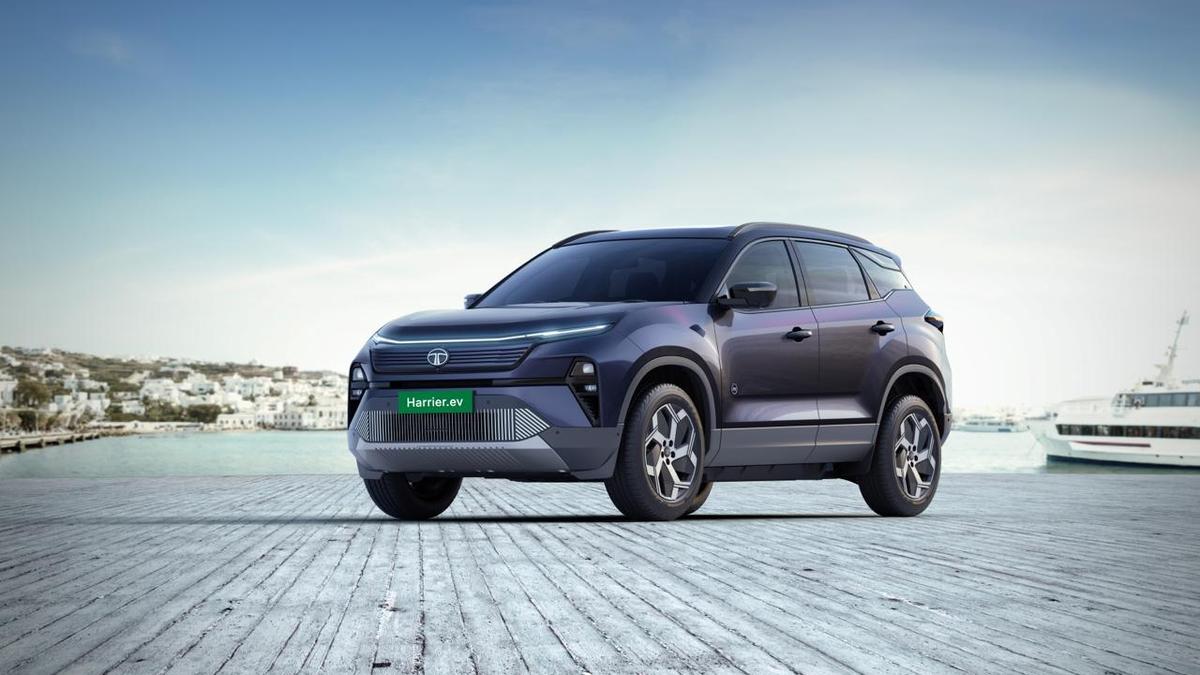
Product strategy helps Tata Motors to have an edge in ePV space, two new EVs to hit market this year
The Hindu
Tata Motors leads the electric vehicle market in India with a diverse and successful lineup, driving industry growth.
While many automobile companies are still banking on transitionary technologies like hybrid and CNG and waiting for the market to mature for electric vehicles (EVs), efforts by Tata Motors to promote electric mobility through a well-crafted product strategy has paid off, making it the leader in the four-wheeler electric Passenger Vehicles (ePV) segment in the country.
The company started off with EVs based on its ICE offerings, maintaining a familiar bodyshell for customers while providing a truly differentiated experience on the inside.
Thus, the Nexon.ev was born. At that time, the Nexon nameplate was a successful product and familiar to customers.
Prior to that, TATA.ev as the electric portfolio is called, had already gained insights through the conversion of the Tigor.ev for the EESL order in 2017. And this experience, along with extensive research and development, made the Nexon.ev the highest selling passenger EV in the country.
To bring EV prices further down, the company introduced Tiago.ev which was crucial in democratising electric mobility, with its hatchback body style at a price of ₹7.99 lakh.
As the EV category matured, TATA.ev saw the confidence in the market to bring in its first pure EV, the Punch.ev, in early 2024. The Punch.ev is based on the advanced made in India Pure EV architecture, acti.ev (advanced connected tech-intelligent electric vehicle).
The acti.ev is a modular and scalable pure electric architecture, which enables multiple new product delivering energy efficiency, range, superior performance and interior package.


Union Minister Ashwini Vaishnaw launches three initiatives to enhance India's creative economy through AI training, citizen platforms, and advanced tech access.

Two Indian-flagged LPG tankers approach the Strait of Hormuz, navigating safely amidst regional tensions to reach Indian ports.

Gold and silver prices plummet over 7% due to West Asia tensions, inflation fears, and a stronger dollar.

Asian shares fall as rising oil prices and escalating Iran conflict diminish hopes for U.S. interest rate cuts.

Japan's SoftBank Group said Saturday it plans to build a huge new gas-fired power plant in the US state of Ohio

Silver prices plunge 9% to ₹2.06 lakh per kg in futures trade amid weak global cues and rising macroeconomic pressures.

OpenAI plans to nearly double its workforce to 8,000 from 4,500 by the end of 2026, the Financial Times reported on Saturday, citing two people with knowledge

Global equity markets plummet as West Asia tensions rise and oil prices surge, triggering significant investor anxiety.

The rupee hits a record low of 93.94 against the dollar amid foreign fund outflows and a crashing equity market.

The Thane police have arrested two co-founders of cryptocurrency exchange platform CoinDCX in connection with an alleged fraud of Rs 71.6 lakh, officials said

Meta Chief Executive Mark Zuckerberg is building a CEO agent to help him do his job, the Wall Street Journal reported

Insurance penetration and density are often misunderstood and do not reveal how many families are insured or whether they would be financially secure if the main earning member were to die. The real issue is not reach but adequacy, as households may have life insurance but not enough cover to replace lost income, leaving them financially vulnerable.

Five top firms lose ₹1 lakh crore in market value, with HDFC Bank experiencing the largest decline of ₹56,124.48 crore.