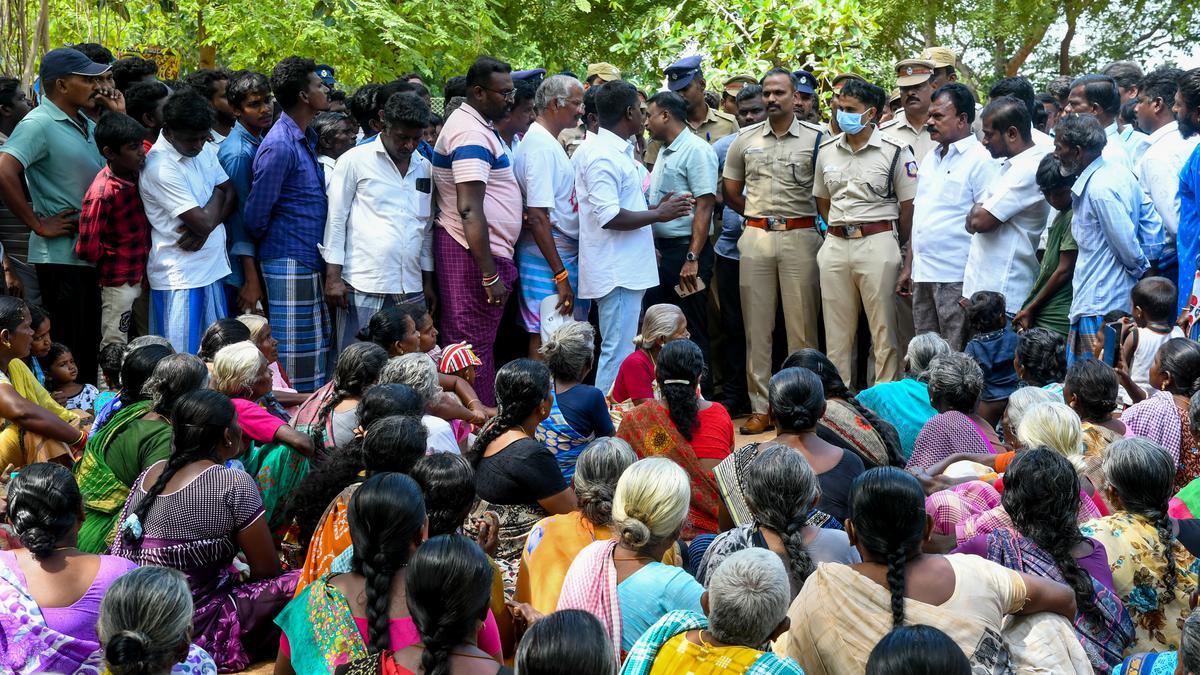
Papering over the caste fault lines in Tamil Nadu
The Hindu
Papering over the caste fault lines in Tamil Nadu
The recent spike in heinous crimes perpetrated against Dalits in Tamil Nadu, especially in the southern districts and increasingly across other parts, has shown that anti-Dalit violence and discrimination continues to be the Achilles heel of the otherwise well-intentioned Dravidian movement, a champion of social justice, rationalism, and equality in Tamil Nadu for over 100 years.
Political organisations, NGOs, and activists agree that the recent trend of crimes against the Scheduled Castes is noticeable not only due to better and improved reporting of cases, but an actual significant increase in heinous crimes against them in Tamil Nadu.
In December 2022, human faeces were found in an overhead water tank used by the Dalits in Vengaivayal village in Pudukkottai district. The case repulsed the majority in Tamil Nadu even while revealing the cracks that the political discourse has long papered over.
In August 2023, there was an audacious attack on a Scheduled Caste school student and his sister at Nanguneri in Tirunelveli district. It shocked the nation. Among the questions raised was: How could three boys attack their own classmate with a machete? As days went on, it became clear that Nanguneri or Vengaivayal or several such incidents in the recent past should not be dismissed as ‘black swan’ incidents, and must be seen as part of an emerging pattern of violence against the Dalits.
A. Kathir, executive director of Evidence, a Madurai-based NGO, says data gathered through the Right to Information Act show that Tirunelveli, Madurai, Pudukkottai, Thanjavur, and Ramanathapuram districts have seen a marked increase in the number of cases of violence against the Dalits between November 2022 and August 2023. According to the data, Tirunelveli has registered 90 cases and Madurai 115 cases, followed by Pudukkottai, Thanjavur, and Ramanathapuram with 88, 58, and 54 cases respectively.
He adds, “In Madurai and Pudukkottai, 10-12 cases are registered every month under the Scheduled Castes and the Scheduled Tribes (Prevention of Atrocities) Act. Around 1,200-1,400 cases are registered every year. In the last one year, between October to November, almost 500 cases were registered across Tamil Nadu. So, the number of cases will reach 2,000 cases in the year. Leaving aside the increase in cases, what we must note is that heinous crimes, such as murders, rapes, attempts to murder, and destruction of property — for which cases are filed under Section 3(2)(V)(a) of the Act — have increased in the last one year. It is clear that violence by the Other Backward Classes [OBCs] against the Dalits is on the rise.”
Mr. Kathir says that there can be a pattern of bias and inefficiency on the part of the police while dealing with cases in which the Scheduled Castes are victims, and the State intelligence mechanism has failed to curb these crimes.


BJP's Vijayendra accuses Congress of using money to influence Bagalkot bypolls, urging voters to reject their tactics.

First randomization of electronic voting machines completed in Tirunelveli and Tenkasi districts for upcoming Assembly elections.

RPF seizes 10.12 kg of unclaimed cannabis worth ₹5.06 lakh from a train in Mangaluru.

Kolar's groundwater levels rise to 50-100 ft due to the K.C. Valley project, ensuring clean water and improved health outcomes.

Three smugglers arrested in Sangareddy with 574 kg of ganja valued at ₹2.87 crore during a police operation.

Mysuru MP urges a 'flex-free Mysuru' by discouraging birthday banners, promoting responsible celebrations to preserve the city's heritage.

Farmers of Kalakudi demand payment for paddy bags procured at DPC

BJP's seal on a 2019 Election Commission letter ignites controversy in Kerala, prompting claims of careless handling by CPI(M).

Transgenders go on rally condemning Transgenders Amendment Bill 2026

Supreme Court dismisses plea challenging Sonam Wangchuk's detention, noting the Centre revoked it on March 14, 2026.

Private medical shops in Telangana government hospitals face eviction due to expired leases and ongoing legal challenges, says Health Minister.

A.P. BIE Secretary reviews answer script evaluation, emphasizing transparency and accuracy to ensure error-free marking and timely results.

Join the walkathon in Puducherry to promote oral hygiene awareness and celebrate World Oral Health Day with community participants.